Members of the State Duma for the first time observed a minute of silence in memory of the last Russian emperor Nicholas II, and all those killed in the Civil War (1917-1922)
Today – 17th July 2019 – Russia’s State Duma for the first time observed a minute of silence in memory of the last Russian emperor Nicholas II and all those killed in the Civil War. (1917-1922)
According to Duma Speaker Vyacheslav Volodin,”reconciliation begins when we all understand that this cannot be repeated and this is unacceptable.”
“Today we are making a proposal to honour the memory of the last Russian tsar, to honour the memory of the innocent victims – all those who died in the crucible of the Civil War,” the speaker addressed his colleagues, who after these words, rose from their seats.
It should come as no surprise that members of the Communist Party of the Russian Federation, did not comply with the moment of silence.
Step to national consolidation
The first deputy head of United Russia’s Duma Andrei Isaev noted that representatives of all political parties, regardless of their ideological positions, honoured the memory of victims of the Civil War by standing, calling it “a very important step towards national consolidation and reconciliation.”
“This means that all political forces represented in Russia’s parliament are against civil confrontation, for settling disputes and conflicts arising through a peaceful democratic process,”
In conclusion, Isaev added, “many deputies are in favour of making 17th July, a memorial day, in memory of the deaths of the Imperial family, and to also honour the memory of all those who died as a result of the Civil War in Russia.”
This is the first time in the history of Russia’s State Duma, that they honored the memory of Nicholas II – truly unprecedented!
The following article is just one of many, which reflect my personal interest in Nicholas II. Since the fall of the Soviet Union in 1991, Russia’s reassessment of his life and reign have shifted significantly. The establishment and distribution of orders and medals in his name is just one indication of the positive direction this reassessment is heading, while at the same acknowledging the enormous contribution he made during his 22+ year (1894-1917) reign.
I have known of two of the three orders for some years now, however, it has been an arduous task to find any documents about any of them. Information provided by a phaleristics group in Russia recently, has now allowed me to complete this article.
I would like to point out that I am not an expert on orders and awards, therefore, I am appealing to readers, who may be able to provide me with additional information. I would also appreciate any errors be brought to my attention at the following email: royalrussia@yahoo.com – PG
***
POSTSCRIPT: shortly after I published this article in 2019, I received a letter from one of Princess Maria Vladimirovna’s goons Stanislav Dumin, who criticized my article, noting that these “so-called orders were nothing but mere trinkets”, and that they had no importance. He further noted that it was only “HIH Grand Duchess Maria Vladimirovna” has the authority to approve of any new Russian Orders . This is absolute nonsense!
For the record, Maria Vladimirovna is a Princess, not a Grand Duchess. The last grand duchess of Russia was Nicholas II’s younger sister Olga Alexandrovna, who died on 24th November 1960, in Toronto, Canada.
Further, it is important to emphasize, that Maria Vladimirovna never had or has any authority to hand out titles or awards as she is not and never has been a ruling monarch. Despite this, Maria actively, and completely illegally distributes orders, medals and even titles of the Russian Empire. While many orders and awards of the Russian Empire have been officially restored in the modern Russian Federation, an ordinary civilian, and not a representative of the state, distributes the same order in appearance and name to her supporters on behalf of the “Imperial House”. – PG (23 July 2023)
* * *
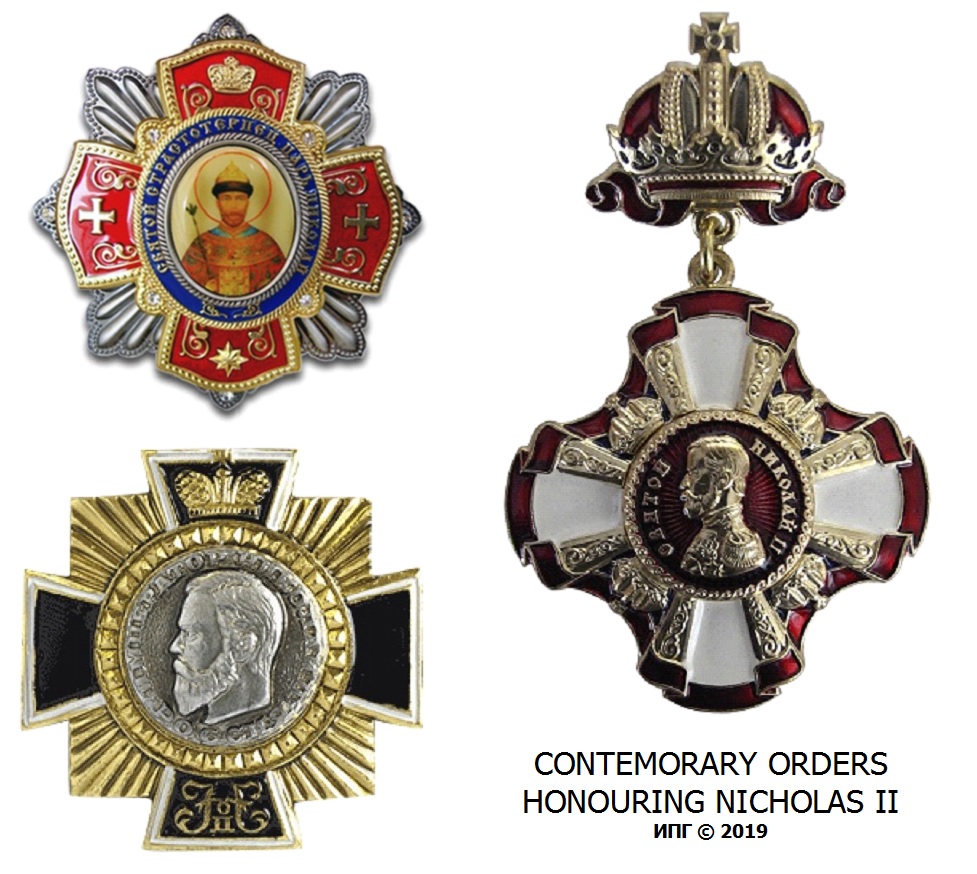
After the canonization of the the Sovereign Emperor Nicholas II and his family by the Russian Orthodox Church Outside of Russia (ROCOR) in 1981, two new orders were established simultaneously: “Order of Saint Nicholas II” and “Order of The Holy Passion-bearer Tsar Nicholas”. Both awards are awarded for merits in the revival and advancement of the finest Russian traditions which contribute to the prosperity of the state. Holders of the order include individuals, politicians, scientists, athletes, artists, among others.
Order of Saint Nicholas II / Святой Николай II
The highest international public award was established in 1988 by the descendants of the Romanov dynasty and the noble family of Dmitrievs, the founders of the Imperial Society of Russia (IOR) charity foundation. The order was was established to mark the 70th anniversary of the murders of the Imperial family in Ekaterinburg. The order is issued on the means and donations of the Board of Trustees. Nominees are approved by the Expert Council of the IOR. Presentation of the laureates is carried out both by state authorities of different levels and by public or business associations. The Order of Saint Nicholas II is presented in a solemn atmosphere, with the involvement of the media and the general public. A number of orders have been issued posthumously. The unique insignia remains in the possession of the recipient for life and can be inherited.
Description
The Order has three degrees, for which the insignia are:
Ist Class: gold, diamonds, white enamel on the rays of the cross, red enamel framing
2nd Class: silver, sapphires or aquamarines, blue enamel on the rays of the cross, red framing
3rd Class: Alloy of non-ferrous metals with gilding, rubies or tourmalines, red enamel on the rays of the cross, blue framing
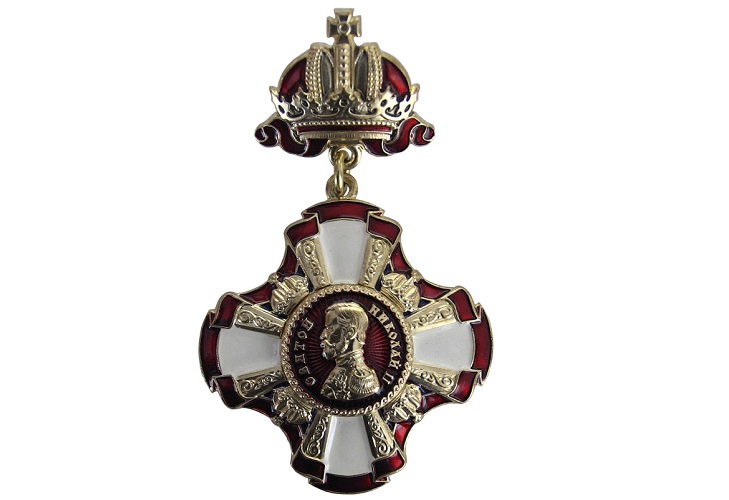
The founder of the Imperial Society of Russia (IOR), hereditary nobleman Valery Dmitriev, the developer and manufacturer of the Heroldmeister Kiev non-state enterprise designed the order. All three Classes represent the so-called Templar Cross, each ray of which is made in the form of three symmetrical folds. The central is covered with enamel, the side ones are made of base metal and decorated with a relief pattern. Between the rays are large imperial crowns inlaid with precious stones. The whole composition is framed with an enamelled ribbon, the color of which depends on the degree of the award.
In the center – a medallion, also trimmed with precious stones along the rim. Inside on an enamel background is a profile portrait of the last Russian tsar and the inscription in a circle: “Saint Nicholas II.” The reverse contains the date of establishment – 1988, the lower beam of the cross is stamped with the serial number of the mark. The pad is a bas-relief image of the imperial crown. The Order is attached to it with the aid of the ear and ring. The size of the cross at the extreme points is 45 mm, the total height of the product is 75 mm.
Order of The Holy Passion-bearer Tsar Nicholas Святой страстотерпец царь Николай
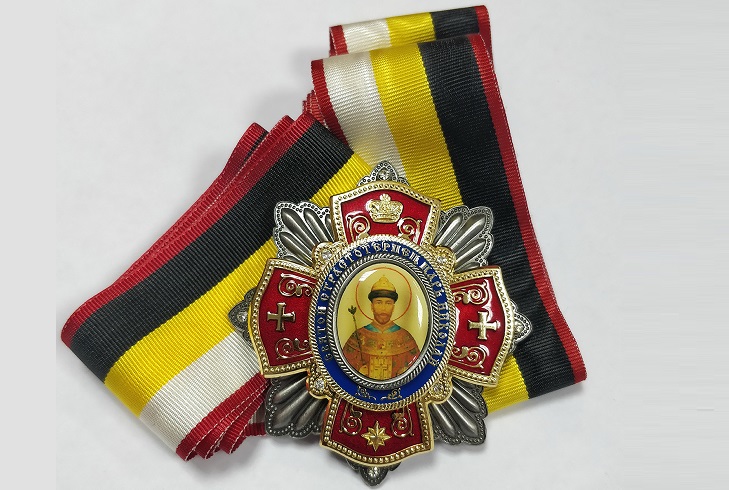
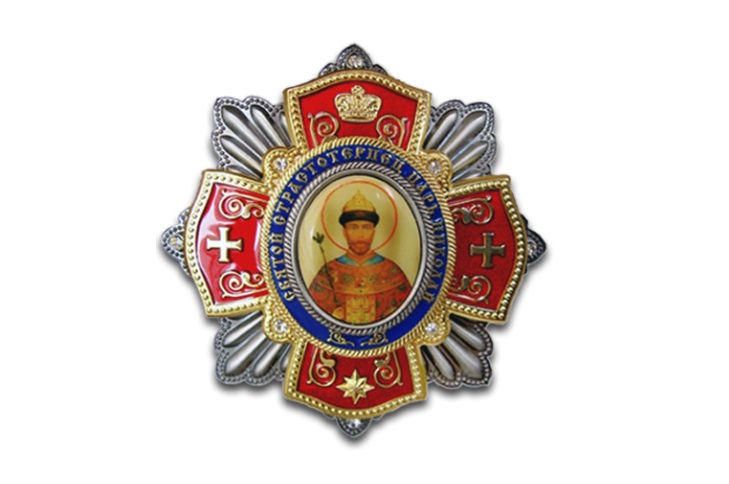
On 19th May 2008, at the initiative of the Russian Orthodox Church Abroad (ROCOR), another order was established, similar to Saint Nicholas II. It received the status of an international religious public award and is awarded to both civilians and the military. The direct founders: the organization Orthodox Mission for the Revival of the Spiritual Values of the Russian People; Orthodox Troop Mission; and the International Award Committee of “Glory to Russia”. The statute of the award states that nominees may be persons whose activities “are aimed at strengthening Russia, the spiritual development of the people, and the protection and preservation of Orthodox values.” Candidates can be nominated to members of the Award Committee, representatives of monarchical organizations in Russia, clergymen of the Russian Orthodox Church Abroad and holders of the Order.
Description
The Order is an eight-pointed silver-plated star, on which is laid a cross, covered with red enamel. On its upper beam is depicted the imperial crown, on the lower is Heaven’s rose, one of the symbols of the Virgin Mary. The right and left sides are decorated with heraldic crosses. In the central part there is an oval medallion trimmed with enamel, inside it there is an image of the Emperor’s canonized face. The inscription on the blue enamel bezel: “Holy Martyr Tsar Nicholas.” The reverse contains the number of the award and the year of establishment “2008”. Medal mount – screw with clip. Holders wear the order on the right side of the chest, below the state awards of the Russian Federation, or around the neck on a ribbon.
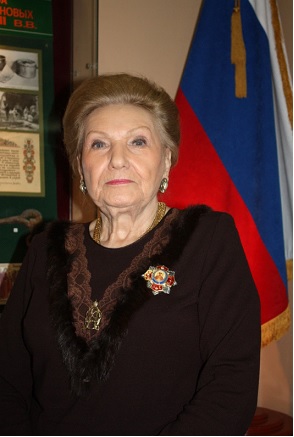
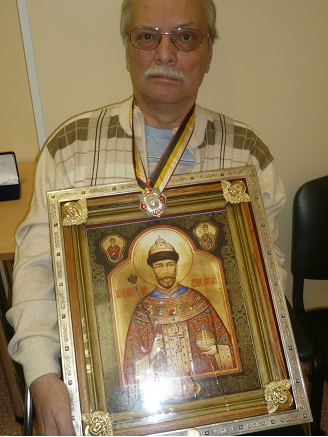
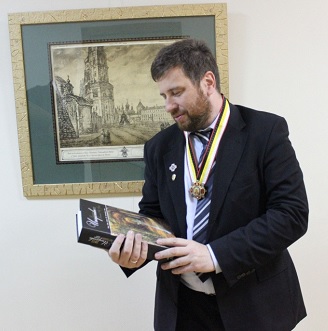
Recipients of the Order of The Holy Passion-bearer Tsar Nicholas include:
Chairman of the Grand Duchess Olga Alexandrovna Charitable Foundation Mrs. Olga Kulikovsky (top)
Russian historian and author Alexander Bokhanov, 1944-2019 (bottom left);
Russian historian and author Pyotr Multatuli (bottom right)
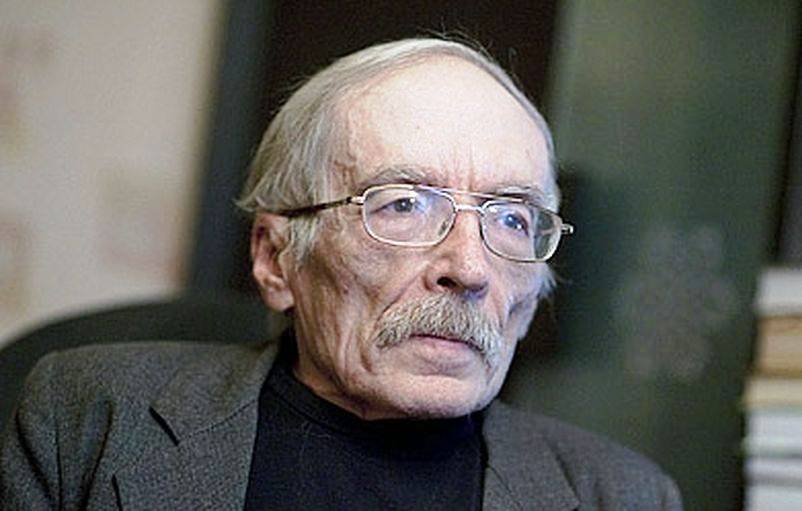
Bokhanov and Multatuli are recognized as Russia’s leading experts on the life and reign of the Sovereign Emperor Nicholas II.
All three recipients have devoted years of research, writing and public speaking to help clear the name of Russia’s much slandered tsar.
Chairman of the Grand Duchess Olga Alexandrovna Charitable Foundation Mrs. Olga Kulikovsky Russian historian and author Alexander Bokhanov, 1944-2019 Russian historian and author Pyotr Multatuli
Holy Royal Passion-bearer Nicholas / Святой страстотерпец царь Николай
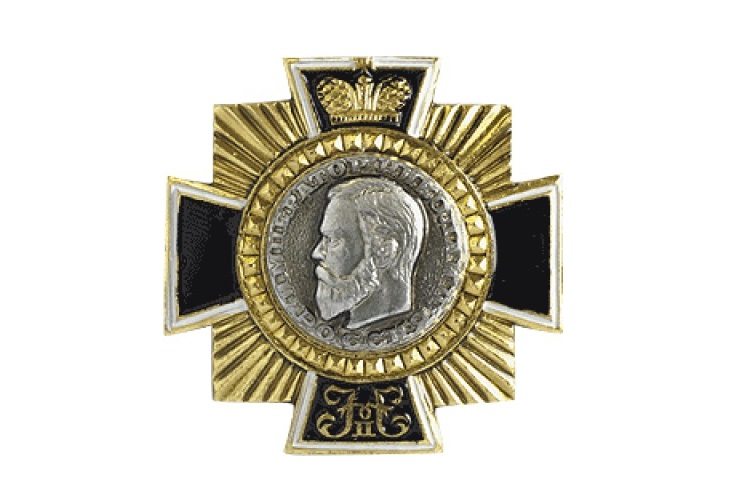
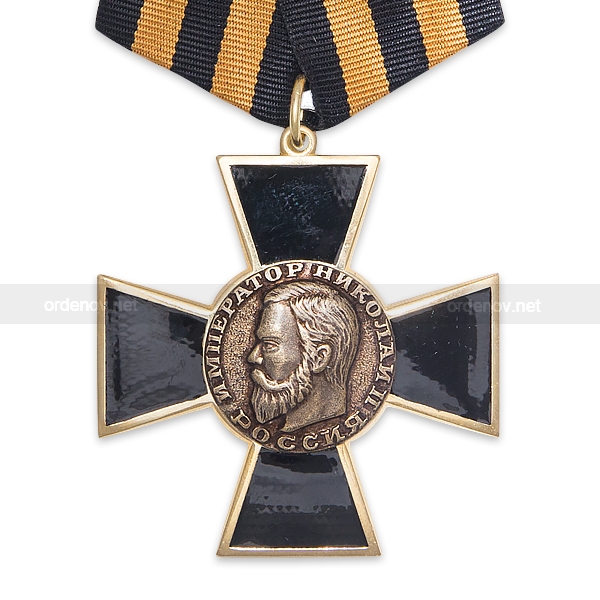
In addition to public awards, there is also a badge honouring the Sovereign Emperor Nicholas II. It is carried out in the form of the St. George Cross, either in form identical to the prototype, or against the background of a four-pointed star. In the center there is a medallion with bearing the tsar’s profile and a circular inscription: “EMPEROR NIKOLAI II RUSSIA”.
The mark is made of brass, the rays of the cross are covered with black enamel. It can be attached to the pentagonal strap with St. George ribbon. In the version with a star, the imperial crown is depicted on the upper beam of the cross, on the lower one – the personal monogram of Nicholas II. In addition to brass, nickel silver alloy is also used.
The order badge was issued twice in a limited edition by order of the St. Petersburg public organization Cossack Convoy in Memory of the Emperor Nicholas II: in 2017 to the 100th anniversary of the death of the Russian Empire; in 2018, to the 100th anniversary of the murder of the Imperial family and at the same time the 150th anniversary of the birth of Nicholas II. A total of 1,200 copies of the jubilee mark were made. In catalogs it is sometimes called an order, but even the price of 400 rubles indicates that this is a mistake.
The following article (click HERE to read) by Georgy Manaev was published in July 12th 2019 edition of ‘Russia Beyond’. Sadly, it is yet another negative assessment of Nicholas II, filled with the same nonsense, myths and lies, which have endured for more than a century now.
Below, are my comments regarding two of Manaev’s misconceptions:
The author Georgy Manaev quotes Alexander Guchkov about the Emperor: “Are we dealing with a normal person?”, yet fails to mention that Guchkov along with Pavel Milyukov, openly discussed a treasonous plot to oust Nicholas II from the throne.
And again, Nicholas II is criticized that his diaries lack “little to no information about politics, international relations or court intrigues.”
Manaev adds: “in other words, the things that should have been of interest to a Russian tsar during one of the most difficult periods of Russian history. Instead, about 90 percent of the diary is dedicated to his daily routines.”
Like a broken record, Manaev rehashes one of the most popular criticisms against Nicholas II.
“For more than 38 years, Nicholas Alexandrovich wrote a few sentences every evening in his diary. After the fall of the monarchy, both scholars and laymen began to study his diaries, interested to learn what kind of man and monarch he was. Sadly, the crushing majority of them stuck with a negative assessment of Nicholas II.
“Their conclusions, however, were based on his diaries, which in all fairness do not offer any broad historical conclusions. Nevertheless they have been made and continue to be made to the present day. In actuality, Nicholas II’s diaries are often nothing more than a daily list of meetings and events which allow one, fully and accurately, to establish only two biographical aspects about him: where he was and whom he dealt with.
“His diaries are a completely personal and official document reflecting the daily events, nothing more. His diary entries rarely reflect any emotion, and with the passage of time they disappear almost completely. Any kind of political judgement or evaluation are extremely rare.
“In keeping a diary, Nicholas II was not thinking about leaving a historical testimony for his descendants. He never would have imagined that his daily, terse, personal remarks would be studied for political purposes. Only during the last months of his life, finding himself in the degrading position of a prisoner, did he record on paper his pain for the fate of his dearly beloved Russia.”
Click HERE to listen to my interview, in which I discuss Guchkov and Milyukov, who openly discussed a treasonous plot to oust Nicholas II from the throne.
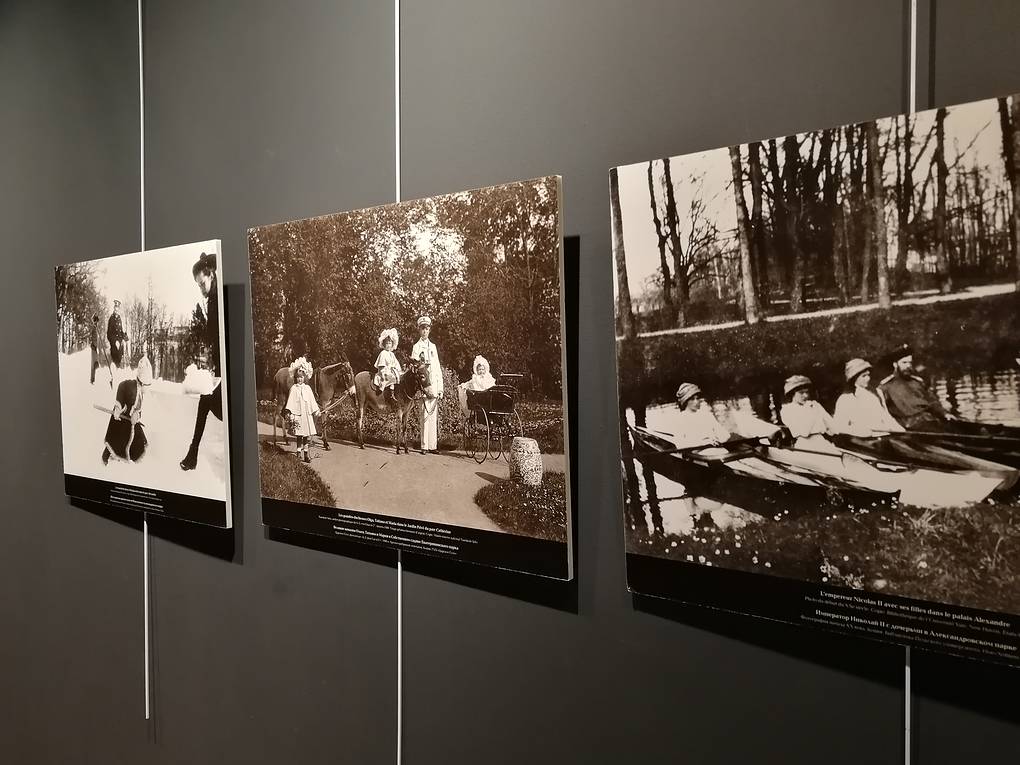
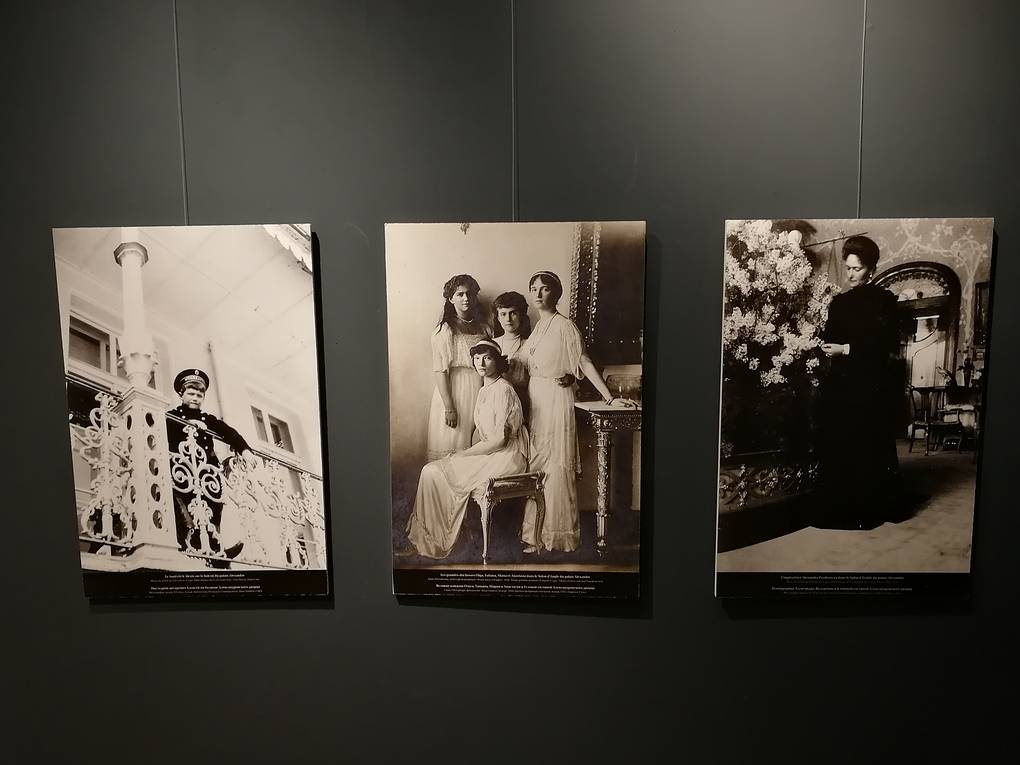
The opening of the photo exhibition Tsarskoye Selo. Residence of the Last Emperor of Russia was held on Friday, 5th July in the Russian Spiritual and Cultural Orthodox Center (RDPC) in Paris. The exhibit features reproductions of unique colour images of the interiors of the Alexander and Catherine Palaces, taken several months after the abdication of Nicholas II.
“Although the Imperial palaces had been nationalized by the Bolshevik government, they were left virtually intact,” said Victoria Plauda, senior researcher at the Tsarskoye Selo Museum-Reserve, at the opening of the exhibition. According to her, it was thanks to the efforts of the creative intelligentsia of Petrograd, which included the artist Alexander Benois (1870-1960), the writer Maxim Gorky (1892-1936) and the singer Fedor Chaliapin (1873-1938), who collectively managed to achieve a thorough inventory of the former Imperial residences during which these photographs were taken.
The photos were taken by military photographer Andrei Zeest. The corresponding task was entrusted to him by the architect and art historian George Lukomsky, who headed the Tsarskoye Selo Artistic and Historical Commission created to preserve and protect the property of the former Palace Administration. Filming in the Catherine Palace began in June 1917, and in the Alexander Palace in August, immediately after the family of the last Russian emperor Nicholas II was exiled to Tobolsk, and continued until October of the same year.
Precision Technology
The reproductions which are currently on display in the RDPC, reflect “stunning clarity and brightness of colours” – which were amazing for that time – are particularly noteworthy. The organizers also brought 11 black-and-white photographs from the collection of the Imperial family (the originals are kept in the library of Yale University in the USA), as well as 27 auto-chromes, not made with ordinary camera film, but with the aid of special glass dies with a special coating. Due to the microscopic size of the elements (about 0.015 mm), the structure of the image is not visible even with an increase in the resulting transparency. Some visitors even asked representatives of the museum if it was just a question of copies of authentic photographs of those times, and not about modern digital photographs.
“These photos are invaluable material for us, because we have already been working on reconstructing the historic interiors of the Alexander Palace for several years. And very soon, after a few months, our visitors will see the first restored halls of the former private apartments of Nicholas II and Alexandra Feodorovna,” the museum representative added. She also noted that the auto-chromes were invaluable to restorers and artists in the recreation of decorative items and furniture for the rooms.
The photo exhibition Tsarskoye Selo. Residence of the Last Emperor of Russia runs until Sunday, 25th August 2019, in the Russian Spiritual and Cultural Orthodox Center (RDPC) in Paris.
Difficult fate of a unique collection
The Tsarskoye Selo State Museum-Reserve currently has more than 90 auto-chromes in their collection. In fact, there were many more of them, but after 1918 the trail of some of them was lost. After Lukomsky left the post of chairman of the Artistic and Historical Commission and went abroad, 843 images from black and white negatives and 83 color slides were transferred to the Kopeyka publishing house for reproduction in a publication prepared by Lukomsky but which never came to fruition. According to Plauda, Lukomsky took some pictures after he left Russia.
Only in the post-war years (late 1950s- early 1960s) was it possible to form a collection of 45 images, transferred to the Tsarskoye Selo Museum by the heirs of the photographer Zeest and a member of the Oxford club by the Englishman G. Barrat. In June 2012, the museum acquired another 48 auto-chromes at an auction organized by the Drouot auction house in Paris.
Click HERE to view MORE colour auto-chromes of the Alexander Palace
Bolshevik leader Vladimir Lenin; Russia’s last Emperor and Tsar Nicholas II
In an interview with the media outlet Рамблер (Rambler), Russian historian Vladimir Khrustalev stated that researchers still lack access to many archival files related to the maintenance and fate of the Imperial family during their final days in Ekaterinburg.
He argues that all the documents of 1918-1919, which mentioned the name of the Romanovs, were carefully removed from all open archival funds. In his opinion, they could not be destroyed, but transferred to special stores, where they remain to this day.
Khrustalev sees no reason to doubt the ultimate tragic fate of Nicholas II and his family which befell them in the Urals on the night of 16/17 July 1918. According to Khrustalev, the purging of archival documents was undertaken by the leadership of the Communist Party in order to cover their tracks and defer any accusations that the top leadership of the Communists , represented primarily by Lenin and Sverdlov, purposefully undertook an act of regicide. After all, the Soviet official point of view for a long time was that the liquidation of the family of the last emperor was carried out on the initiative of the local Ural Soviet leaders, who issued the central power of the Bolsheviks with a fait accompli.
Russian historian Vladimir Khrustalev
Until now, no order issued by Lenin, Trotsky, Sverdlov, or any other Bolshevik party member concerning the massacre of the last Russian tsar and his family has been found in the archives. According to some Russian historians, this is not because no such order was given in writing, but precisely because the order was issued verbally. This was done, so as not to leave any evidence of their heinous crimes.
First, the Bolsheviks gathered almost all the arrested Romanovs (not only Nicholas II and his family, but many of their relatives) in the Urals in order to make it easier to eliminate them. And at some time gave the appropriate order. All evidence of such an order remains in sealed archives.
On 8th June 2019, the Metropolitan Kirill of Ekaterinburg and Verkhoturye opened the exhibition Penza – Paris. The Way of the Tsar’s Investigator N.A. Sokolov, in the Museum and Exhibition Center in Ganina Yama.
The exhibition, is timed to the 100th anniversary of the beginning of the work of the investigator Nikolai Alekseevich Sokolov (1882-1924) in Ekaterinburg and at the Four Brothers mine in 1919.
Metropolitan Kirill reminded guests that the name of N.A. Sokolov is inextricably linked with the Imperial family, since Sokolov was a monarchist, he loved Russia and would not accept the changes brought about by the Bolshevik Revolution in 1917.
Nikolai Sokolov with his wife and daughter Natalia in France, 1920
Nikolai Sokolov (right) with his wife of Varvara Romadanovskaya and Robert Wilton Ileft) in China, 1920
Image of the Ipatiev House and other exhibits on display
“Nikolai Alekseevich crossed the front line to reach the troops commanded by General Vasilyevich Kolchak (1874-1920), who was recognised as the “Supreme Leader and Commander-in-Chief of All Russian Land and Sea Forces” by the other leaders of the White movement from 1918 to 1920. Sokolov became one of the closest assistants to the Supreme Commander, who entrusted him with the investigation into the case of the regicide. This year also marks 95 years since the death of investigator Sokolov, a man who made an enormous contribution in gathering evidence about the last days of the Imperial Family in Ekaterinburg,” noted Kirill.
The ruling bishop said that it was NA Sokolov who was the first to follow the path of the cross from the Ipatiev House to Ganina Yama, and it was he who conducted most of the research at the site of the murder and burial of the Holy Royal Passion-bearers.
“We value his sincere work no less than the work of those who remained faithful to the Tsar, his family and and their faithful retainers – Dr. Botkin, cook Kharitonov, maid Demidova and the tsar’s valet Troupe, and all those who wanted to remain with them, but who were separated from the Imperial Family, at Tsarskoye Selo, Tobolsk and Ekaterinburg,” he added.
In conclusion, Metropolitan Kirill thanked the staff of the museum who preserve the memory of the Imperial family.
Visitors to the exhibit can see unique archival materials that give an idea of the difficult task of the investigator. Also presented are rare family photos of N. Sokolov, which are kept by his descendants in France and in Russia. Many of them are displayed for the first time.
The exhibition will be open to visitors until the end of 2019, admission is free.
PHOTO: Stavros and Artcorpus Interiors firms in St. Petersburg
My latest report on the reconstruction of the private apartments of Nicholas II and Alexandra Feodorovna in the Alexander Palace, and the recreation of their historic interiors, provides an update on the Tsar’s Bathroom – PG
PHOTO: Stavros and Artcorpus Interiors firms in St. Petersburg
A viePHOTO: Stavros and Artcorpus Interiors firms in St. Petersburgw of the tub-platform showing the fireplace, 2019
PHOTO: Stavros and Artcorpus Interiors firms in St. Petersburg
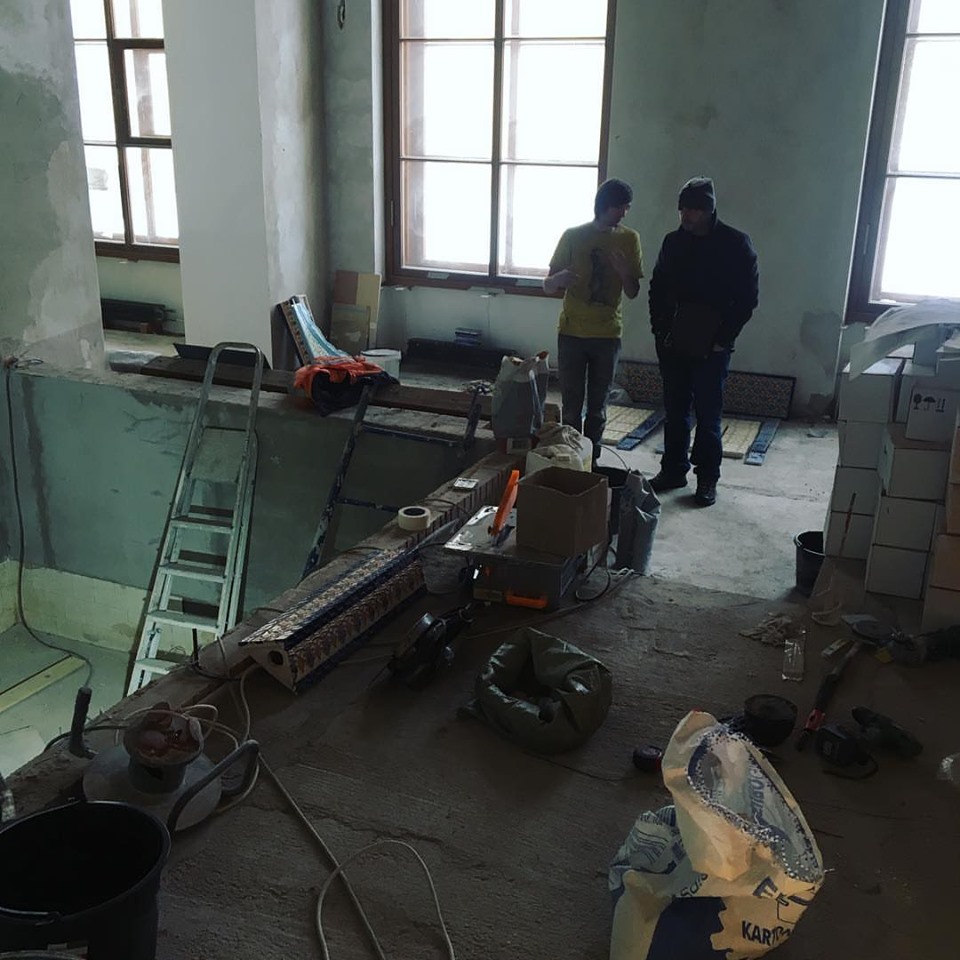
The reconstruction and restoration of Nicholas II’s Bathroom, situated in the eastern wing of the Alexander Palace is nearing completion. The main feature is a giant heated swimming tub – where the Tsar, and Tsesarevich Alexei liked to swim. “This was all lost, but now the restorers, have completely recreated the interior, based on pieces of ceramics from the walls, and photos from the palace-museum archives,” said Director of the Tsarskoye Selo State Museum Olga Taratynova.
Once completed, Nicholas II’s Moorish-style Bathroom will be one of a series of rooms showcasing the private apartments of the last emperor and empress of Russia. Work is being carried out by the Stavros and Artcorpus Interiors firms in St. Petersburg.
PHOTO: Stavros and Artcorpus Interiors firms in St. Petersburg
PHOTO: Stavros and Artcorpus Interiors firms in St. Petersburg
PHOTO: Stavros and Artcorpus Interiors firms in St. Petersburg
According to Bob Atchison’s Alexander Palace Time Machine, “the Tsar’s Bathroom had a giant heated swimming tub on a platform which also led, via a glass and wood door, to his toilet, which was a dark room hung with an assortment of pictures including a humorous cartoon of Nicholas driving a car.
“The bathroom was designed in the Moorish style by Robert-Friedrich Meltzer (1860-1943). The millwork of the room was intricately fabricated in fragrant woods. The ceiling was particularly complex. Meltzer added many interesting touches to the room including hanging glass lanterns in the shape of old mosque oil lamps. For practical reasons they were wired for electricity. He also installed magnificent antique Turkish tiles around the top of the bath. In the arcade of the tub-platform he designed elaborate patterns in Arab style.
Nicholas II posting in front of the his elevated swimming tub in the Alexander Palace
“It was great fun for the Tsar’s children, when they received permission from their father, to use his bath. A thick cord prevented falling into the bath by accident. The swimming bath was huge, it held 500 pails of water [1000 according to the Tsarskoye Selo State Museum Reserve-PG] and had its’ own powerful special hydraulics to rapidly pump hot water from the basement boiler up into the tub. Nicholas ordered the bath to be constructed in the palace in 1896 after seeing a similar bath on one of his estates. He used it almost every day. A special servant was assigned to maintain the equipment below and a second servant was assigned to keep the bath spotless after every use.
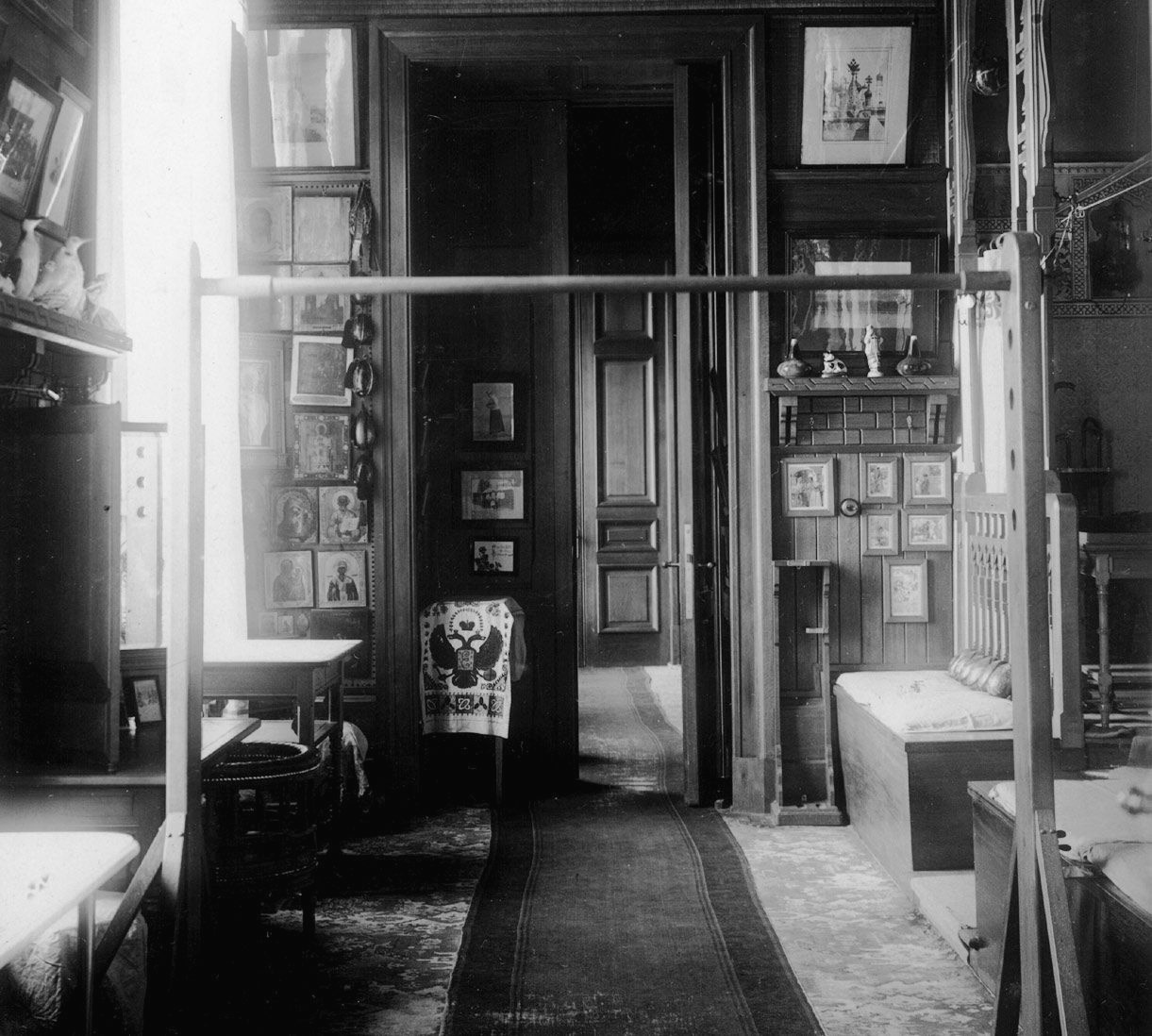
“Outside the tub platform, Nicholas installed a chinning bar (seen in above photo), seen in a photograph, taken in 1917. The Tsar was passionate about exercise and also had a similar chinning bar in his train. He also had weights in his bathroom for working out.
A view of the tub-platform showing the fireplace, 1917
A view of the tub-platform showing the fireplace
“On the back wall, by the left hand side of the door leading to the Tsar’s Working Study, was a collection of ions and hanging Easter eggs. To the right was draped an embroidered cloth with a double-headed eagle, probably the work of Alexandra or one of the girls. [The embroidered cloth with a double-headed eagle, can also be seen in the 1917 posted above-PG]
“Nicholas kept a large collection of Fabergé cigarette cases on the table in front of the window. He put up a display of gifts and small objects from his children in the bathroom. These included porcelain penguins and dancing girls. A floral watercolor painted by his daughter, Marie, and dated May 1917, hung on the door from the bathroom to the Working Study.”
Reconstruction of the Tsar’s Bath or swimming tub
The Alexander Palace, has been closed for restoration since August 2015. The palace was scheduled to reopen in July 2018, however, numerous delays have pushed now back the reopening date to the end of 2019.
“We really want to make everyone happy for the new year. But in any case, the recovery process is underway and has already progressed significantly. So if not at the end of December 2019, then in the first quarter of 2020, the Alexander Palace will open its doors,” says the Director of the Tsarskoye Selo Palace Museum.
For more information on the reconstruction and restoration of the Alexander Palace, please refer to the following articles:
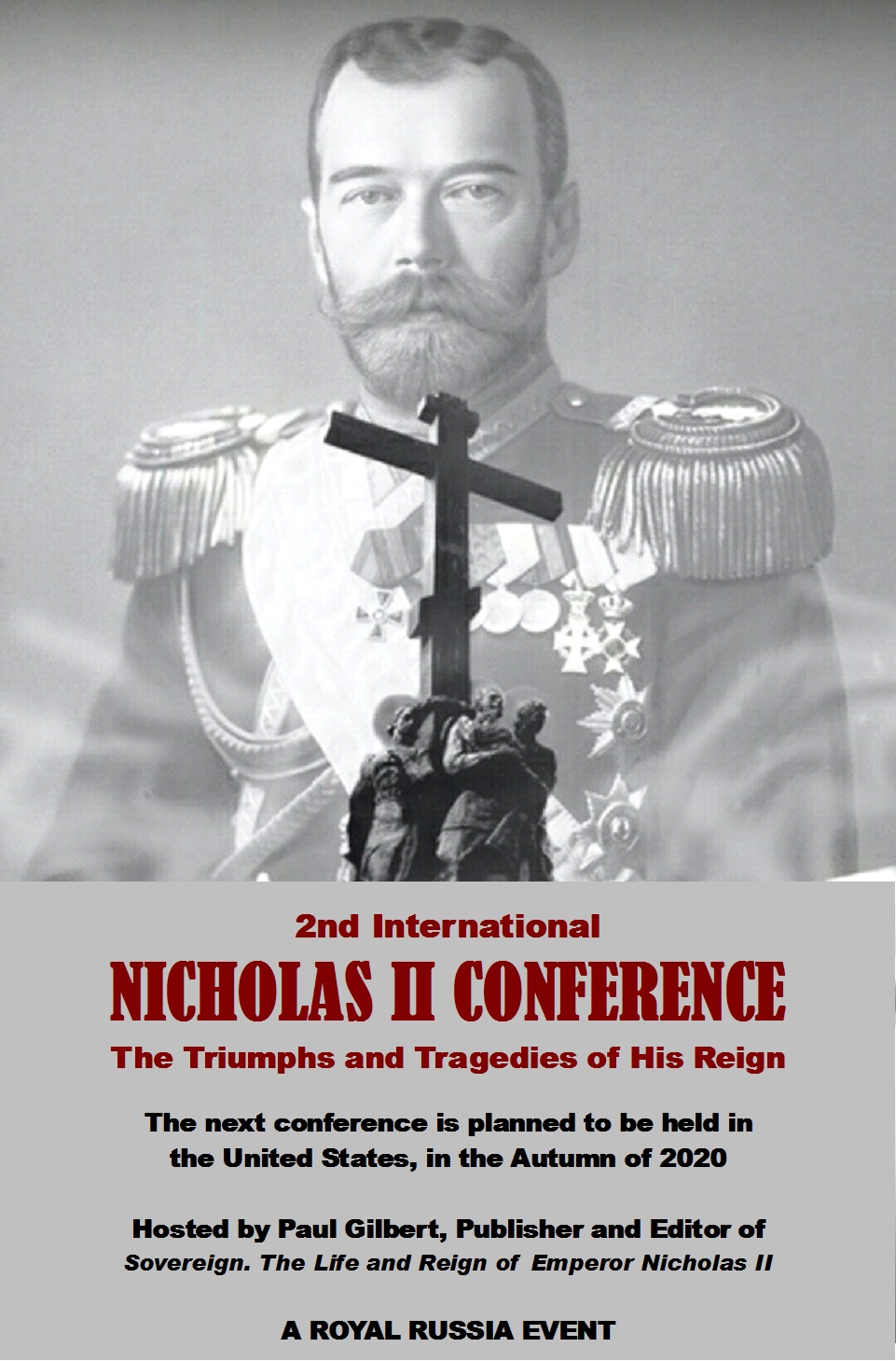
After the success of the Nicholas II Conference, held in Colchester, England last year, I am pleased to announce that I am now planning a second conference, to be held in the United States in the autumn of next year. The Conference is part of my mission to clear the name of Russia’s much slandered Tsar.
The theme of the 2nd International Nicholas II Conference is ‘The Triumphs and Tragedies of His Reign’
Speakers will present papers on a wide variety of topics which cover the triumphs and tragedies of the 22-year+ reign (1 November [O.S. 20 October] 1894 – 15 March [O.S. 2 March] 1917) of Russia’s last monarch. Topics including the Coronation (1896); the Khodynkha Tragedy (1894); the Birth of Alexei and His Hemophilia; Bloody Sunday (1905); Romanov Tercentenary (1913); among others will be discussed.
I am sure that you can appreciate the tremendous amount of work which goes into such an event, therefore, I am reaching out to friends and supporters in the United States for their assistance on the following:
1. I am open to ideas for a venue, preferably in New York state (although other states would be considered), one which could provide seating for 100-200 persons, and lunch
2. As with the Conference held in England, I am particularly keen to have the participation of the Russian Orthodox Church
3. I need speakers: historians, authors, and other experts who will present facts and information, based on new research, which challenges the popularly held negative assessment of Nicholas II. NOTE: speakers will be paid for their presentations
If you can propose a venue, a speaker, or have any ideas or suggestions, please contact me by e-mail at royalrussia@yahoo.com
NOTE: the idea for this Conference is in the very early stages of planning, so for those who are interested in attending this event, I ask for your patience.
The city, venue, date, times, list of speakers, ticket prices, etc., have all yet to be worked out. Further details will be announced as they become available.
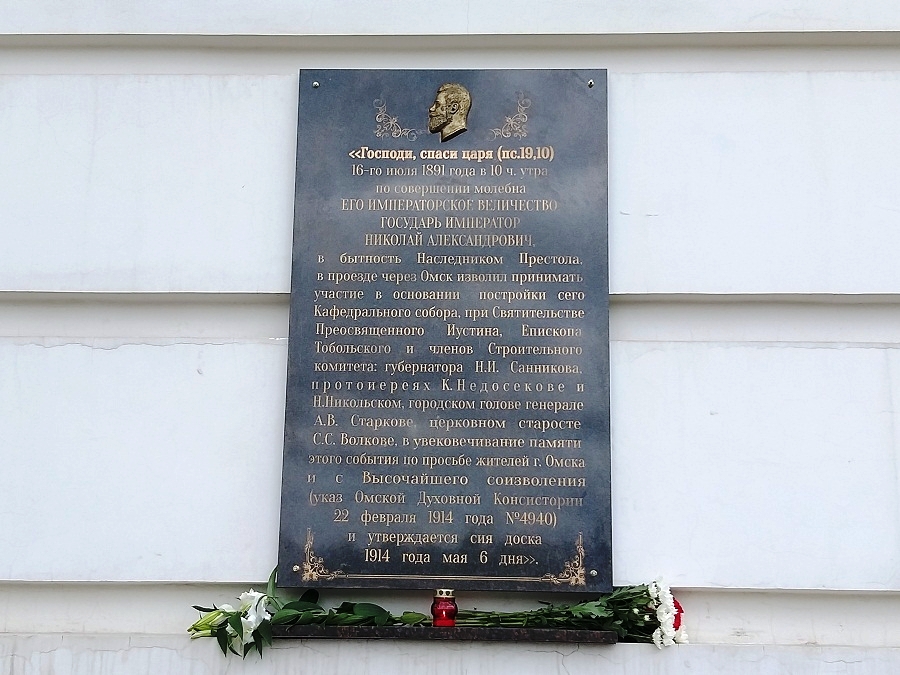
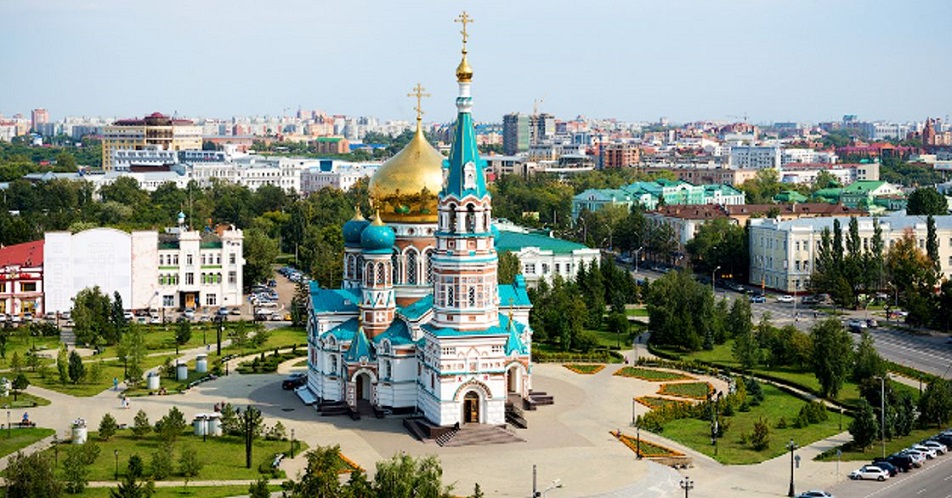
On 19th May, a memorial plaque to Emperor Nicholas II was solemnly unveiled on the facade of the Cathedral in Honour of the Assumption of the Blessed Virgin and the Virgin Mary in the Siberian city of Omsk. The plaque was established to commemorate the laying in 1891, by the then still Tsesarevich Nicholas Alexandrovich (future Emperor Nicholas II), of the foundation stone for the cathedral.
The heir to the throne was traveling across Russia in 1891, and stopped in Omsk. Nicholas Alexandrovich laid the foundation stone for the new cathedral during a ceremony held at 10:00 in the morning on 16th July 1891.
A memorial plaque was installed inside the Omsk Assumption Cathedral on 6th May 1914 – the date marking Nicholas II’s birthday in the Julian Calendar. The plaque was not preserved, as was the cathedral itself – both demolished in 1935. In 2007, the Assumption Cathedral was reconstructed in the same place. The new plaque is the latest addition.
Cathedral in Honour of the Assumption of the Blessed Virgin and the Virgin Mary, Omsk
The idea and financing of the memorial plaque is thanks to the members of the Omsk branch of the All-Russian Society for the Preservation of Historical and Cultural Monuments, the Double-Headed Eagle Society, and the organizing committee for the Tsar’s Days in the Omsk District.
Celebrations began at Cathedral Square in the morning, which was decorated with Imperial flags. A Divine Liturgy was held, followed by a literary and musical composition on the theme of the life of the Imperial family performed by actors of one of Omsk amateur theaters.
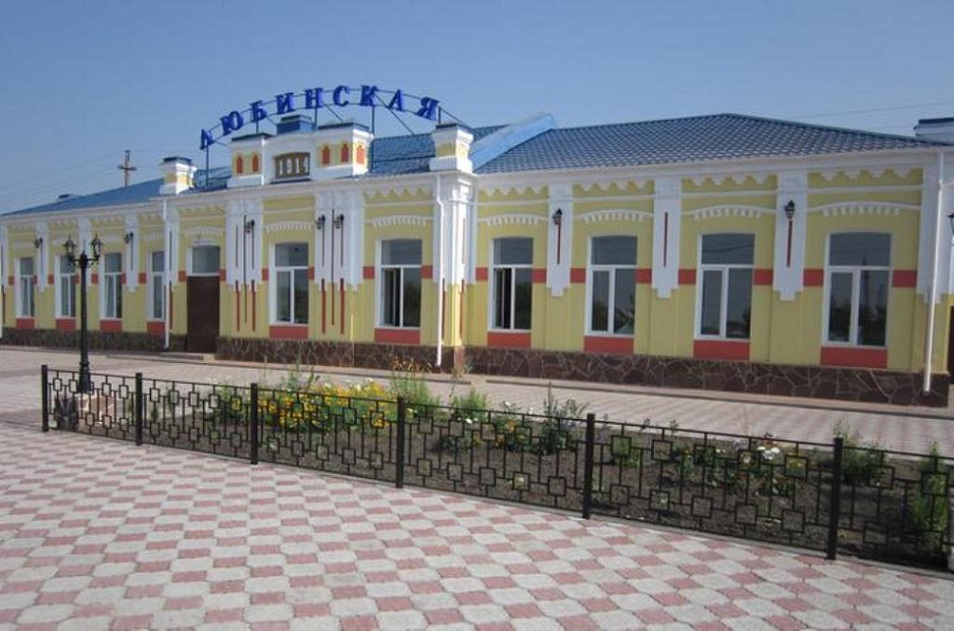
Lyubinskaya Station
The Siberian city of Omsk is forever tied to the last days of Nicholas II and his family. On 28th April 1918, the Emperor, his wife, and their daughter Maria were taken by train from Tyumen to Ekaterinburg. Their route was changed, and the train pulled into Lyubinskaya station, not far from Omsk. It was here that more drama unfolded, as negotiations between Vasily Yakovlev and Moscow took place. The train was eventually turned around, bound for Ekaterinburg, where the last Russian emperor and his family were subsequently shot in the early morning hours of 17th July 1918.
Six months later, anti-Bolshevik White forces seized control of Omsk. The Provisional All-Russian Government was established here in 1918, headed by Admiral Kolchak. Omsk was proclaimed the capital of Russia, and its central bank was tasked with safekeeping the former empire’s gold reserves. Bolshevik forces entered the city in 1919.
It was also in Omsk, that Nicholas Sokolov, a legal investigator of the Omsk Regional Court, interviewed several members of the Romanov entourage in February 1919, notably Pierre Gilliard, Alexandra Tegleva and Sydney Gibbes.
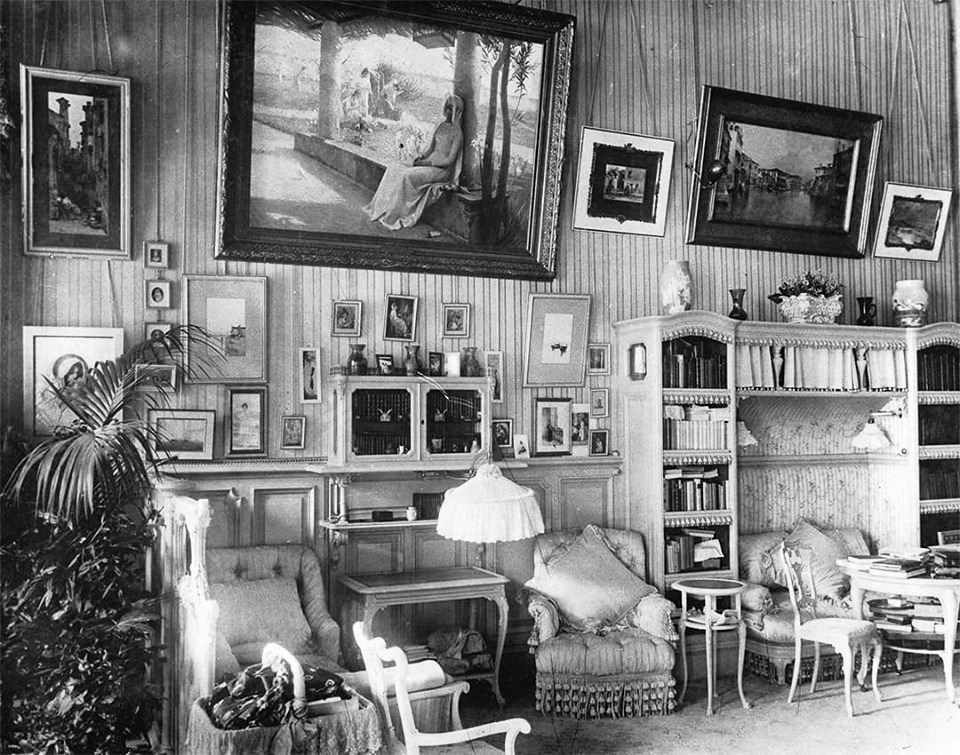
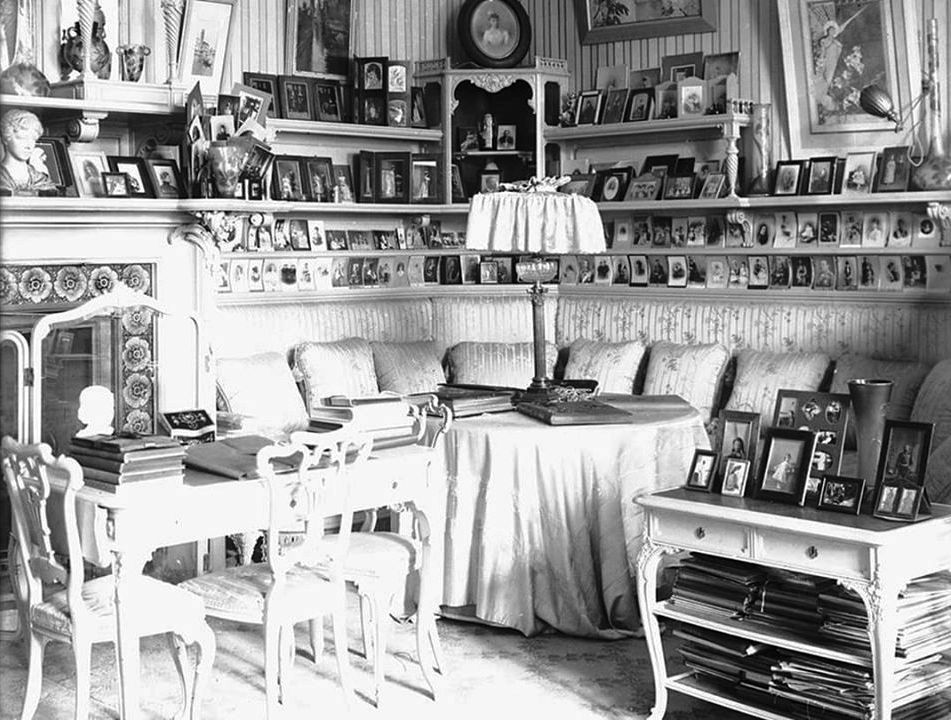
Two views of the Mauve (Lilac) Boudoir in the Alexander Palace, as it looked in 1917
Note the many photos of the Imperial family on the side table and shelves above the sofa
For those of you who have been following the restoration of the Alexander Palace, I am pleased to announce that work on the recreation of furniture for the Empress Alexandra Feodorovna’s Mauve (Lilac) Boudoir is now underway.
According to Stavros (St. Petersburg), the firm commissioned to recreate the furniture for the historic interiors of the Alexander Palace: “We are now creating pieces for the Lilac Room. These include the frame of the sofa and wall panels.”
The Mauve (Lilac) Boudoir suffered greatly during the Second World War. It was located in the suite of rooms, between the Imperial Bedroom and the Pallisander (Rosewood) Drawing Room, and did not have a separate exit to the corridor. At one time, the walls were covered with high-quality gorgon lilac silk fabric, with vertical narrow paired stripes, and the lower part was decorated with wooden panels. During the war years, the room was completely burned out, only a few photographs remind us of it’s former luxury.
The project is part of a recreation of the Private Apartments of Emperor Nicholas II and Empress Alexandra Feodorovna, situated in the eastern wing of the Alexander Palace.
Since the closing of the Alexander Palace in 2015, the Tsarskoye Selo Palace Museum have been very tight lipped about the restoration itself. Very little information has been released to the media, and barely mentioned on their official website. As a result, it has been an endless source of frustration trying to obtain any reliable updates on progress of the restoration. Dates for the reopening of the palace have been delayed on numerous occasions, often simply due to the lack of funding.
According to the latest information, the restoration of the Alexander Palace as a multi-museum complex is not expected to be completed until 2022 – at the earliest!











 Nicholas II
You must be logged in to post a comment.