Nicholas II’s love of bicycles and cycling

PHOTO: Nicholas II riding his American-made bicycle, purchased in July 1895, from the Pobeda Trading Company in St. Petersburg

One of the many physical pastimes of Russia’s last Tsar was cycling, an exercise which he enjoyed with all of his children. Even his son Alexei partook in this activity, on a specially made three wheel bicycle.

In the late 19th century members of the Russian Imperial Family showed great interest in two-wheeled vehicles and bicycles, including Russia’s last Tsar, who began to ride a bicycle while still a teenager. Vintage photographs show Nicholas II riding bicycles with his Danish and Greek relatives, and later on the grounds of the Alexander Palace at Tsarskoye Selo.

The first shop to offer bicycles in the Russian capital was the Pobeda Trading House, which was situated at 81 Morskaya Ulitsa (Street). In 1895, it received the status of a Supplier to the Imperial Court. It was here, in July 1895 that Nicholas II purchased for his own use a high-quality bicycle made by the American company Dayfon, at a cost of 253 rubles, a considerable sum at that time. The bicycle was equipped with a special seat, a lamp, a bell, and an air tube.

Surviving records of the Pobeda Trading House include invoices signed and paid by Nicholas II, which include delivery, cleaning and adjustment of his bicycle, as well as it’s upkeep and maintenance, in order to keep it in perfect order.

One invoice for 24 rubles, included: cleaning the bicycle, adjustments and delivery (10 rubles), a bicycle cover (8 rubles), a bicycle stand (5 rubles) and engine oil (1 rub.).
The following month, in August 1895, another invoice records that the Tsar paid for a new shift for changing gears for 10 rubles, a bicycle chain for 12 rubles and additional maintenance work for 5 rubles.

The shops accounts also indicate that the Tsar paid for a special weather-proof cover and storage for his bicycle stored during the winter months were also paid.

PHOTOS: view of the Pobeda Trading House at Morskaya Ulitsa (Street), 81 in St. Petersburg

PHOTOS: view of the Pobeda Trading House – Supplier to the Imperial Court

On 31st December of that year, the Tsar decided to have his bicycle fully enamelled for 15 rubles, and the “full nickel plating of the bike” for an additional 30 rubles. Additional maintenance on the bicycle including “turning the hulls, checking the wheels, cleaning and assembly” for 8 rubles, the purchase of spare “pneumatic tires” for 45 rubles, another bicycle cover for 8 rubles. and a bicycle pump for 2 rubles. 50 kopecks.

Thus, by the end of 1895, Nicholas II had spent 381 rubles on his bicycle and spare parts. All these purchases, as well as after-sales service, were carried out in the Pobeda Trading House. The storage conditions for the Tsar’s expensive toy is also noteworthy – at the “end of the season”, the Tsar’s bicycle was packed by specialists in special covers and moved to the shop for repair and storage until the new season began in the spring.

In later years, Nicholas II ordered other models of bicycles for his wife and children, complete with special enameling and nickel plating. Among them was a two-seater, which he shared with his wife – this bicycle has survived to the present day, and is now in the Collection of the Peterhof State Museum.

The last bicycle bill was signed by “Citizen Romanov” – during his house arrest at the Alexander Palace – on 10th May 1917, when he bought rubber glue and “bicycle valves” for a modest 4 rubles 80 kopecks.
PHOTO: Nicholas II riding his bicycle on the grounds of the Alexander Palace, 1914

PHOTO: Nicholas II riding his bicycle on the grounds of the Alexander Palace, 1914

PHOTO: Nicholas II and his son Alexei riding their bicycles in the Alexander Park, 1914

The Tsar’s passion for bicycles and cycling was shared by his children. Each of them had their own bicycle, all of which were serviced by specialists of the Pobeda Trading House. The grand duchesses had girls bicycles of the same model, only different sizes, based according to their age and height. The grand duchesses bicycles had a special protector on the chain, which prevented the hems of their skirts from getting caught in the bike’s chain as they peddled.

Due to his illness [haemophila], Alexei had a special three-wheel bicycle made, which afforded him protection from falling and hurting himself, as any injury could prove fatal. His doctors also maintained the cycling would be a good exercise for his sore leg.

In 2004, the Peterhof Museum-Reserve opened an Imperial Bicycle Museum, which presents 12 rare bicycles, including those which belonged to the last three emperors: Alexander II, Alexander III and Nicholas II.

In 2013 Nicholas II’s bicycle was presented at an exhibition marking the 2014 Olympic Games in Sochi.

© Paul Gilbert. 12 July 2023

Romanov Memorial Hall to be moved to new location in Ekaterinburg

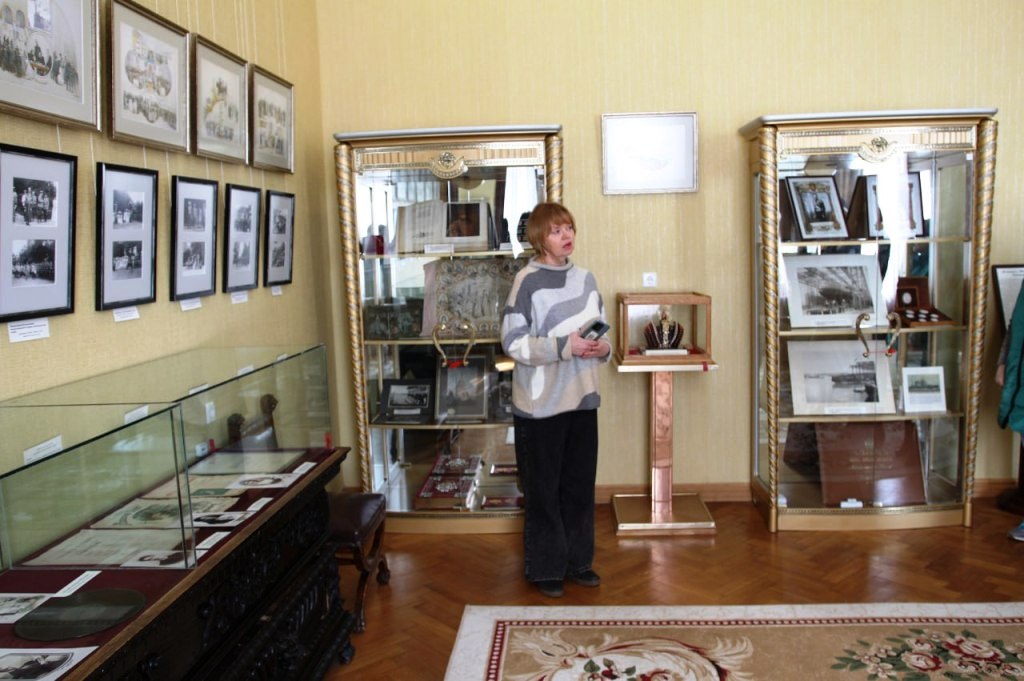
PHOTO: view of the Romanov Memorial Hall in the Museum of History and Archaeology of the Urals, a branch of the Sverdlovsk Regional Museum of Local Lore in Ekaterinburg

In the days leading up to this years Tsar’s Days events the Romanov Memorial Hall – which is currently located in the Museum of History and Archaeology of the Urals – will be moved to the Sverdlovsk Regional Museum of Local Lore in Ekaterinburg.

On 14th July 2023, the museum will present a new permanent exhibition “The Romanovs in the Urals” dedicated to the stay of Emperor Nicholas II and his family during their house arrest in the Ural city from April to July 1918.

According to the head of the public relations department of the museum Tatyana Mosunova, items from the museum’s funds, one way or another connected with the Imperial Family, will be exhibited. Among them is a unique sculpture of Alexander III by Kasli Foundries, the last time this figure was exhibited was more than a hundred years ago.

PHOTO: the former Poklevsky-Kozell mansion will be the new venue for the Romanov Memorial Hall in Ekaterinburg

According to Mosunova, the exhibition will be transferred to the 19th century Poklevsky-Kozell mansion on Malyshev Street. Local historians will help in creating an exhibition space, an agreement with the Ural State University based on the consultations of experts from the Museum of History and Archaeology of the Urals.

The General Director of the museum Alexander Emelyanov explained that the new exhibition will be extensive and will occupy five halls. The museum believes that the organization of the permanent exhibition will help both locals and visitors to the city to have a better understanding of the final days of Russia’s last Imperial Family in the Ural capital.

***

My Visit to the Romanov Memorial Hall in June 2016

PHOTO: a miniature copy of Zurab Tsereteli’s sculpture, “Night at the Ipatiev House” greets visitors to the Romanov Memorial Hall

Situated at Ulitsa Lenina 69/10 is the Museum of History and Archaeology of the Urals, a branch of the Sverdlovsk Regional Museum. From the street, the museum resembles one of the hideous buildings from the Soviet era – but if you blink, you may miss it! Admission is 200 rubles, an additional fee is charged if you want to take photographs. One must climb a steep circular staircase to reach the Romanov Memorial Hall on the 4th floor. The ascent is definitely worth it!

A miniature copy of Zurab Tsereteli’s sculpture, “Night at the Ipatiev House” greets visitors at the entrance to the hall.

The Romanov Memorial Hall was opened in 2006. The exposition tells of the Romanov dynasty during the reign of Emperor Nicholas II (1894-1917), the tragic events of 17 July 1918 and secret burial of the remains of the royal family.

This is a very interesting museum, as it contains personal items of Nicholas II, his family and their retainers, discovered in the Ipatiev House by the White Army. It also contains many elements of decor, decoration and fittings salvaged from the Ipatiev House before its demolition in September 1977, notably the cast iron fireplace from the dining room, and the iron grille from the window of the murder room.

PHOTO: scale model of the Ipatiev House -renamed House of Special Purpose by the Bolsheviks – on permanent display in the ‘Romanov Memorial Hall’

Aside from the items from the Ipatiev House, are many additional exhibits of interest, including a scale model of the Ipatiev House; the reconstructed model of Nicholas II’s head by Russian forensic expert Dr. Sergei Nikitin; the Mauser pistol which belonged to the murderer Pyotr Ermakov; a portrait of Princess Louise of Hesse-Kassel (the future Queen of Denmark), maternal grandmother of Nicholas II, which formerly hung in the study of Emperor Alexander III in the Anichkov Palace in St. Petersburg.

The exposition further explores the history of the investigation of the murder case of the last of the Romanovs in the Urals, which lasted more than 100 years.

It is interesting to note that the hundreds of exhibits on display in the glass display cases in the Romanov Memorial Hall include descriptions in both Russian and English – a rarity in Russian museums.

A small adjacent room contains a photo exhibit dedicated to Grand Duke Mikhail Alexandrovich and his secretary Brian Johnston. Efforts to locate their remains near Perm are ongoing by the S.E.A.R.C.H. Foundation.

© Paul Gilbert. 11 July 2023

Program for the XXIII Tsar’s Days in the Urals – 2023

The 23rd annual Tsar’s Days will be held from 8th to 21st July 2023 in Ekaterinburg and Alapaevsk. The festival includes a series of solemn events [16th to 18th July] dedicated to Emperor Nicholas II and his family, who met their death and martyrdom in Ekaterinburg 104 years ago, on 17th July 1918.

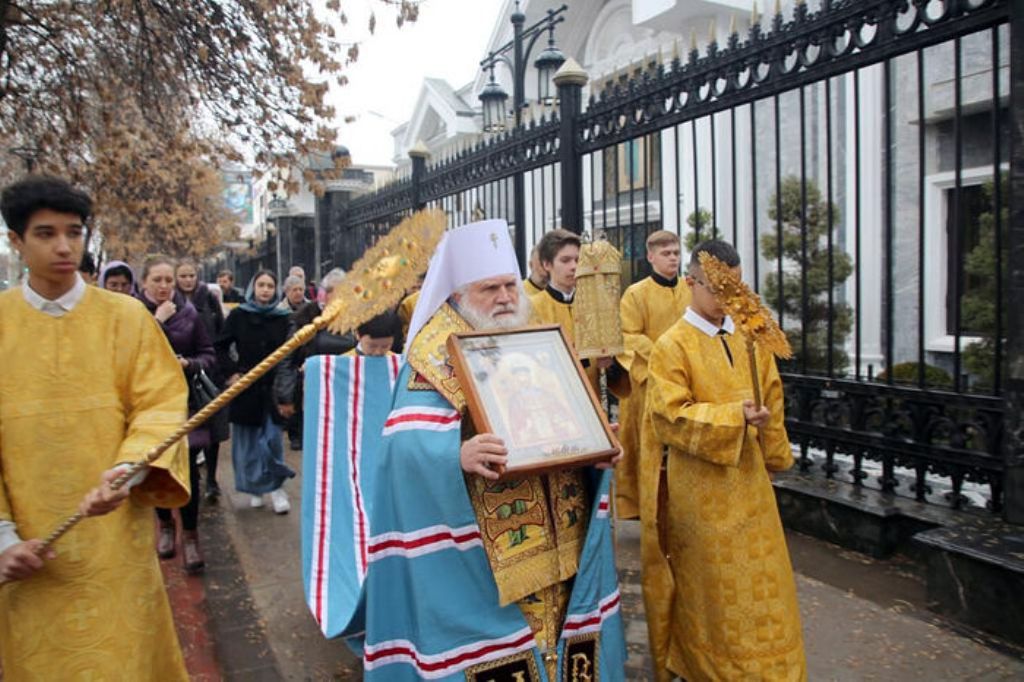
The main events include the outdoor night Divine Liturgy, which will be performed n the square in front of the Church on the Blood, built on the site of the Ipatiev House, where members of the Imperial Family and their faithful subjects ended their earthly days, followed by the 21-km [13 miles] Cross Procession – led by Metropolitan Yevgeny of Yekaterinburg and Verkhoturye – to the Monastery of the Holy Royal Martyrs at Ganina Yama, on the site of which the regicides first disposed of the Imperial family’s remains, before returning the following day to exum thre remains and bury them in two separate graves at *Porosenkov Log.

On 18th July, similar events will be held in Alapaevsk, where 8 additonal members of the Romanov dynasty and their faithful servants [see below] met their death and martydom.

In addition, the XXII International Festival of Orthodox Culture will be held in Ekaterinburg from 12th-20th July. Aside from divine services and religious processions, the festival will feature many events in honour of the Holy Royal Martyrs, including concerts and musical evenings, attended by artists and musicians from various regions of Russia and neighboring countries. A number of conferences hosted by well-known historians, theologians and authors are also planned.

The extensive cultural and educational program includes exhibitions at the Museum of the Holy Royal Family [located in the Patriarchal Compund], the Museum of the Royal Monastery [Ganina Yama], the multimedia park “Russia My History”, the regional museum of local lore; and the XIX International Orthodox Exhibition and Forum “From Repentance to the Resurrection of Russia”.

As part of the Tsar’s Days, the Festival of Bell Ringing “Evangelize, the Ural Land!” will be held, as well as the V Children’s Sailing Regatta named after Crown Prince Alexy, in which more than 200 young yachtsmen of the Ural Federal District will take part; VI tournament “Russian Silometer” and other events.

The Ekaterinburg Martyrs – 11 victims

Emperor Nicholas II, Empress Alexandra Feodorovna, Grand Duchesses Olga, Tatiana, Maria, Anastasia, Tsesarevich Alexei Nikolaevich, and their four faithful retainers Dr. Eugene Botkin (court physician), Alexei Trupp (footman), Ivan Kharitonov (cook), and Anna Demidova (Alexandra’s maid).

The Alapaevsk Martyrs – 8 victims

Grand Duchess Elizabeth Feodorovna, Grand Duke Sergei Mikhailovich, Princes of the Imperial Blood Ioann, Konstantin and Igor Konstantinovich, Prince Vladimir Paley (son of Grand Duke Paul Alexandrovich), and two faithful servants: sister of the Marfo-Mariinsky Convent Varvara Alekseevna (Yakovleva), and Fyodor Semyonovich (Mikhailovich) Remez, secretary of the Grand Duke Sergei Mikhailovich.

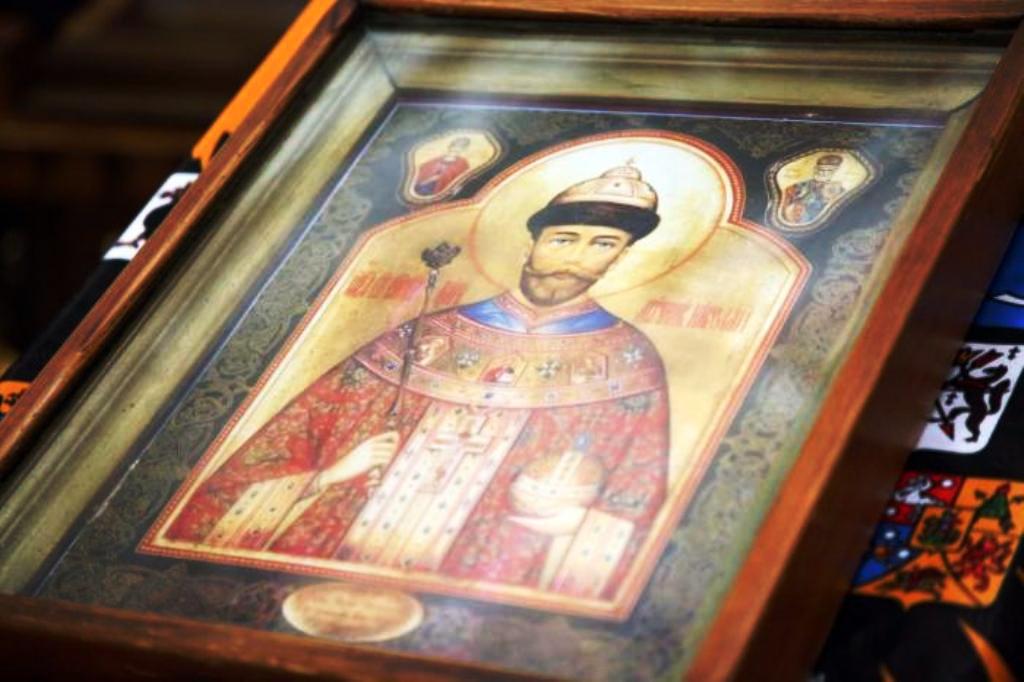
PHOTO: icon depicting the Ekaterinburg and Alapaevsk Martyrs

SERVICE CALENDAR

Sunday 16th July

09:00 – Divine Liturgy at the altar of the Holy Royal Martyrs, situated in the Lower Church of the Church on the Blood in Ekaterinburg.

13:00 — Cross procession along the route in which the Holy Royal Martyrs travelled upon arriving in Ekaterinburg [from Tobolsk] on 30th April 1918, from the Shartash Train Station [Kuibysheva street, 149-a] to the Church on the Blood. Route: [Tsarskaya street, 10] along the route: railway station Shartash – Kuibyshev street – Vostochnaya street – Chelyuskintsev street – Sverdlov street – K. Liebknecht street).

15:00 – Small Vespers with Akathist to the Holy Royal Martyrs. Confession. In the Lower Church of the Church on the Blood.

16:30-20:00 – All-night vigil, on the square in front of the Church on the Blood.

17:00-20:00 – All-night vigil, at the Monastery of the Holy Royal Martyrs at Ganina Yama.

23:30-02:00 – Divine Liturgy, on the square in front of the Church on the Blood.

Monday 17th July

~ 02:30 – Traditional 21-km [13 miles] Cross Procession from the Church on the Blood to the Monastery of the Holy Royal Martyrs at Ganina Yama Route: Tsarskaya street, 10 – st. Tolmacheva – Lenin Ave. – V. Isetsky Boulevard – st. Kirov – st. Bebel – st. Technical – st. Reshetskaya – Railway forest park – pos. Shuvakish – Ganina Yama.

Upon the arrival of the procession, a Liturgy to the Holy Royal Martyrs will be performed at the Field kitchen.

06:00 – Divine Liturgy (early). Church on the Blood. In the Lower Church, altar at the site of the martyrdom of the Holy Royal Martyrs aka the Imperial Room [built on the site of the murder room, located in the basement of the Ipatiev House].

09:00 – Divine Liturgy (late). Church on the Blood, Upper Church

09:00 – Divine Liturgy. Monastery of the Holy Royal Martyrs at Ganina Yama.

17.00 – All-night vigil. Church of St. Sergius of Radonezh, at Ganina Yama.

17.00 – All-night vigil. Holy Trinity Cathedral (Alapaevsk).

Tuesday 18th July

00:00 – Divine Liturgy. Holy Trinity Cathedral, Alapaevsk.

02:30 – Procession from the Holy Trinity Cathedral to the Monastery in the Name of the Holy New Martyrs and Confessors of the Russian Church, Alapaevsk.

06.00 Arrival of the procession to the Monastery in the Name of the Holy New Martyrs and Confessors of the Russian Church, Alapaevsk. Diving Liturgy at the mine.

09:00 – Divine Liturgy with the Episcopal Rite. Monastery in the Name of the Holy New Martyrs and Confessors of the Russian Church, Alapaevsk.

Tsar’s Days in the 21st century

The first procession in memory of the Holy Royal Martyrs, headed by Metropolitan of Ekaterinburg and Verkhoturye Kirill, took place in 2002, in which more than 2 thousand pilgrims and about 100 clerics participated. In 2012, for the first time since the construction of the Church on the Blood in Ekaterinburg, an all-night vigil and Divine Liturgy were performed in the open air.

In 2017 an estimated 60,000 people took part; in 2019, 60 thousand participated; in 2020, 10 thousand people [due to COVID], and in 2021, 3 thousand people [once again, due to COVID]. In addition, up to 2 thousand people gathered an alternative religious procession of the schismatic and tsarist monk Sergius (Romanov) in the Sredneuralsk Convent in Honour of the Icon of the Blessed Virgin Mary.

In 2018, more than 100,000 Orthodox Christians, monarchists, among others from across Russia and around the world took part in the Patriarchal Liturgy and procession of the cross from the Church on the Blood to the Ganina Yama.

Click HERE to read my article What is Tsar’s Days? – published on 15th May 2021

*NOTE: due to the fact the Moscow Patriachate does not yet recognize the Ekaterinburg Remains as authentic, the Cross Procession does not stop at Porosenkov Log, where the remains of the Imperial family were unearthed in two separate graves in the late 1970s and 2007.

The Holy Synod of the Russian Orthodox Church (ROC) have confirmed that the Bishops’ Council, will meet in Moscow at at a future date, during which they will review the findings of the Investigative Commission and deliver their verdict on the authenticity of the Ekaterinburg Remains.

© Paul Gilbert. 9 July 2023

Of Bygone Days: The Memoirs of an Aide-de-Camp to the Emperor Nicholas II

*This title is available from AMAZON in the USA, UK, Canada, Australia,
France, Germany, Spain, Italy, Netherlands, Poland, Sweden and Japan
*Note: prices are quoted in local currencies

CLICK HERE TO ORDER THE PAPERBACK EDITION @ $20.00 USD

English. 214 pages, 10 black & white photos

First English translation with introduction and notes by William Lee

NOTE: The first Russian-lanaguage edition of Fabritsky’s memories was published in Berlin in 1926. The first English-language edition of Fabritsky’s memoirs was published in Canada in 2016. This title has been out of print for many years, so I am delighted to offer this new edition.

The time I spent with Their Majesties – over the course of many years and under varied circumstances – will always be the source of my most precious memories, and I am very happy to be able to share those memories now with a wide public. I hope at least to give an absolutely truthful account of what I saw and heard” – Semyon S. Fabritsky. 1926

Semyon Semyonovich Fabritsky (1874-1941) had a fascinating career during the twilight years of Imperial Russia. He began his naval career in the very first days of the reign of Emperor Nicholas II.

In 1909, Fabritsky was personally appointed Aide-de-Camp by the Emperor himself, a position he served with immense pride and devotion.

During his service to Nicholas II, Fabritsky earned both the trust and friendship of the Emperor. Through his often uninterrupted contact with Russia’s last sovereign and observing him at all hours and under a variety of conditions, Fabritsky was able to form a clear picture of Nicholas II and his family, through his own personal eye-witness observations.

He also served aboard the Imperial yachts, partaking in holidays with the Emperor and his family to the Crimea and the Finnish skerries. He shares interesting details and anecdotes about the Alexandria, Polar Star, and Standart.

This book will also be of great interest to any one with an interest to the Russian Imperial Yachts and the Russian Imperial Navy.

Fabritsky provides great insight to the treachery, cowardice, and deceit which prevailed every where. He acknowledges ministers and generals who were either unworthy of their posts or unfit for them. Sadly, it was these men who surrounded Nicholas II during his 22+ year reign, who contributed to the downfall of monarchy and the destruction of the Russian Empire in 1917.

©  Paul Gilbert. 4 July 2023

Nicholas II in the news – Spring 2023

Russia’s last Emperor and Tsar continues to be the subject of news in Western media. For the benefit of those who do not follow me on my Facebook page, I am pleased to present the following 8 full length articles and news stories published by American and British media services, in addition to videos and articles about Nicholas II’s relatives and faithful retainers.

Below, are the articles published in April, May and June 2023. Click on the title [highlighted in red] and follow the link to read each respective article:

Children of the last Russian emperor. Curator’s Choice + VIDEO

Yulia Plotnikova, a leading researcher at the Department of the History of Russian Culture, takes us on a guided tour of the exhibition ‘OTMA and Alexei. Children of the Last Russian Emperor’, which is currently running at the State Hermitage Museum in St. Petersburg.

The exhibit features more than 300 items, including Alexei’s regimental uniforms, as well as Court dresses and other accessories worn by the Grand Duchesses from the State Hermitage Museum’s Costume Collection. In addition are many personal items of the August children. Duration: 26 minutes, 5 seconds. Russian.

Source: State Hermitage Museum. 19 June 2023

Why did the Russian emperors call themselves “we”?

The phrase “We, Nicholas II” is used only ironically. However, monarchs did call themselves “we” instead of “I,” which was the tradition.

Source: Russia Beyond. 19 June 2023

Birthday of Emperor Nicholas II + VIDEO

In honour of the 155th anniversary of the birth of Nicholas II on 19th (.S. 6th) May, a Russian history channel has prepared the following VIDEO – with musical background – featuring photos reflecting the life and reign of Russia’s last Tsar. Duration: 2 minutes, 24 seconds

Why was Russia’s first anthem ‘copied’ from the British? + VIDEO

The Russian Empire did not have an official anthem until 1816. It was Emperor Alexander I – an “Anglophile” – who decided to establish a new, unified anthem. It remained Russia’s national anthem until 1833, when, by order of Emperor Nicholas I, composer Alexei Lvov (1798-1870) wrote new music and Vasily Zhukovsky slightly changed his original text – thus, the anthem ‘God Save the Tsar!’ appeared, which was used until 1917.

Source: Russia Beyond. 17 June 2023

Children of the last Russian emperor. Pages of life + VIDEO

The State Hermitage Museum presents a short film created for the exhibition ‘OTMA and Alexei. Children of the Last Russian Emperor‘, which runs until 10th September 2023, in the Manege of the Small Hermitage, in St. Petersburg. Duration: 16 minutes, 46 seconds. Russian.

Source: State Hermitage Museum. 30 May 2023

Favorite dishes of Nicholas II and his family + 13 PHOTOS

The last Russian emperor liked chicken roast but couldn’t stand caviar; while his spouse, Alexandra Feodorovna, didn’t eat meat at all.

Source: Russia Beyond. 21 May 2023

What St. Petersburg looked like during the 1917 revolutions + 29 PHOTOS

The city that used to be known as Petrograd was undergoing a very tumultuous period, filled with political unrest and violence.

Source: Russia Beyond. 11 May 2023

Uncovering the story of an icon given to the son of the Tsar

Originally published in 2016, this article describes the four-month process to establish the true significance of a 17th-century icon and its links to Tsesarevich Alexei Nikolaevich (1904-1918). The extremely rare icon was offered in Christie’s (London) Russian Art sale on 28 November 2016.

Source: Christie’s (London). 28 November 2016

***

For MORE articles, please refer to the following links:

Nicholas II in the news – Winter 2023
9 articles published in January, February and March 2023

Nicholas II in the news – Autumn 2022
7 articles published in October, November and December 2022

Nicholas II in the news – Summer 2022
12 articles published in July, August and September 2022

Nicholas II in the news – Spring 2022
7 articles published in April, May and June 2022

Nicholas II in the news – Winter 2022
6 articles published in January, February and March 2022

Paul Gilbert’s Romanov Bookshop on AMAZON – UPDATED with NEW titles!!

I have published more than 30 titles to date through AMAZON – featuring one of the largest selections of books on Nicholas II, the Romanov dynasty and the history of Imperial Russia.

Please CLICK on the BANNER or LINK above to review my current selection of titles in hardcover, paperback and ebook editions. Listings provide a full description for each title, pricing and a Look inside feature.

© Paul Gilbert. 30 June 2023

Ottoman recreated for Working Study of Emperor Nicholas II in the Alexander Palace

PHOTO: view of the ottoman recreated for the Working Study of Emperor Nicholas II in the Alexander Palace. Photo © Tsarskoye Selo State Museum Reserve

The Tsarskoye Selo State Museum continue to recreate items lost from the Alexander Palace during the Second World War . . . the latest addition is the beautiful ottoman, recreated for the Working Study of Emperor Nicholas II.

The large Persian Farahan carpet has been recreated by modern Iranian craftsmen using traditional technologies. The soft velvet upholstery features a variegated pattern of stylized plants on a dark blue background in the middle, and a border along the edge, with variegated figured medallions and stylized flowers on a light green background; edged along the plinth with a variegated cord. This description has been preserved in the museum’s inventory records.

PHOTO: detail of the ottoman recreated for the Working Study of Emperor Nicholas II in the Alexander Palace. Photo © Tsarskoye Selo State Museum Reserve

The recreation of the ottoman was made possible by archival photographs dating back to the 1930s, when the Alexander Palace was a museum. In the photographs, however, the details of the pattern of the central part of the carpet are not clearly visible, which made it difficult to recreate. Anna Tarkhanova, a senior researcher at the Tsarskoye Selo State Museum, conducted a study, the result of which it became obvious that a Farahan carpet made in the 1880s was used to upholster the ottoman of Nicholas II in 1896. Thus, a historical analogue for making a copy was of a carpet from the collection of Muranovo, the country estate of the famous Russian poet and diplomat Fyodor Ivanovich Tyutchev (1803-1873).

According to this museum model, a copy for the Alexander Palace was made in accordance with the traditional Persian technology of hand weaving. The order of the Farahan carpet made in Iran, was organized by Janusz Szymaniak, General Director of the Renaissance Restoration Workshops for the Reconstruction of Ancient Monuments, a long-time partner of the Tsarskoye Selo State Museum.

Persian carpets, which were usually presented as diplomatic gifts, traditionally decorated the interiors of the Alexander Palace. In addition, Russian Oriental style carpets based on Caucasian and Turkmen designs, also decorated the palace.

PHOTO: view of the Working Study of Emperor Nicholas II in the Alexander Palace as it looks today – the recreated ottoman can be seen on the left

The Farahan district of Persia, which has a long history of carpet weaving, is located in the central part of Iran, about 580 km south of Tehran. Active production of carpets was established in the region of Saruk, famous for its craftsmen. The export of Farahan carpets to Europe began in the 19th century. Similar Persian carpets are now represented in the largest Russian and foreign museum collections.

Until now, Farahan carpets are made by hand, by knotted weaving (160,000 knots per square meter) from woolen threads dyed with natural paints of mineral origin. This allows you to achieve identity when copying old samples.

When creating the carpet for the Alexander Palace, Iranian craftsmen used sheep wool with the addition of camel, from natural dyes – oak bark, fruit trees, lemon leaf, dates.

Among connoisseurs, such carpets are highly valued for their rich dark blue background and green shades of pattern elements resembling green copper. This colour is is represented in the carpet which has been recreated for the ottoman in the Working Study of Emperor Nicholas II.

PHOTO: view of the original ottoman in the Working Study of Emperor Nicholas II in the Alexander Palace, c. 1930s

Nicholas II often used the ottoman to rest when his work dragged on until nightfall or when he returned to Tsarskoye Selo from St. Petersburg late and preferred not to disturb his family.

Click HERE to read my article The History and Restoration of the Working Study of Nicholas II in the Alexander Palace, published on 2nd December 2020

© Paul Gilbert. 28 June 2023

‘The Empress’s Balcony’ and ‘The Empress’s Chair’ become bestsellers on AMAZON

On 16th June 2023, ‘The Empress’s Balcony in the Alexander Palace‘ and ‘The Empress’s Chair in the Alexander Palace‘ claimed the No. 1 and No. 2 positions on Amazon’s ‘New Releases in Historical Russia Biographies’ Bestseller list. My two latest books held these spots for 10 consecutive days in a row – setting a new record for any of my previously published books.

Based on the number of posts on my Facebook page, both titles have been well received and enjoyed by readers from all over the world. One Australian reader wrote: “Who would have thought a chair and balcony could be the subject of a book, but you did it!”

Each richly illustrated pictorial features a new 8-1/2″ x 8-1/2″ paperback format with glossy cover. The price is $12.99 USD, both titles are available from AMAZON in the United States, Canada, Great Britain, Australia, France, Germany, Italy, Spain, Netherlands, Sweden, Poland and Japan.

The Empress’s Balcony – 110 pages – is a unique pictorial dedicated to the famous balcony where the Imperial Family spent so much time together and a favourite spot for family photographs.

The text on pages 3 to 14 explores the history and restoration of the Maple Drawing Room, which led out onto the balcony. It explains the construction of the iron grille balcony in 1896, and why it was dismantled between 1947-49 by the Alexander Palace’s new Soviet caretakers. The selection of nearly 100 vintage photographs presented in this album, are all we have left of this once happy and peaceful sanctuary for the Imperial Family while they were in residence at Tsarskoye Selo. Click HERE to order.

The Empress’s Chair – 120 pages – explores yet another iconic spot found in Empress Alexandra Feodorovna’s favourite room: the Mauve Boudoir.

The text on pages 3 to 14 explores the history and restoration of the Mauve Boudoir. More than 100 black and white photographs record nearly 30 members of the Imperial Family, their relatives and guests, all posing in the iconic corner chair. Neither the Mauve Boudoir of the Empress’s chair survived, however, both have recently been recreated. Click HERE to order.

© Paul Gilbert. 28 June 2023

Faithful to the End: Klimenty Nagorny and Ivan Sednev 

170a

Klimenty Grigorievich Nagorny (left). and Ivan Dmitriyevich Sednev (right)

On this day – 28th June 1918 – two faithful servants to Emperor Nicholas II and his family – Klimenty Grigorievich Nagorny and Ivan Dmitriyevich Sednev – were murdered by the Bolsheviks in Ekaterinburg. 

Klimenty Nagorny and Ivan Sednev selflessly served the Tsar’s children. Nagorny in particular, lay the great responsibility of protecting the Tsesarevich, even the slightest injury could put the heir to the Russian throne in danger, due to his hemophilia. Alexei was very fond of Nagorny, who in turn showed complete devotion to the Tsesarevich, faithfully sharing with him all the joys and sorrows.

170b

Nagorny and Tsesarevich Alexei in Tsarskoe Selo, 1907

Klimenty Nagorny and Ivan Sednev voluntarily stayed with the Tsar’s family during their house arrest in Tsarskoe Selo, and then followed them to Tobolsk, where Nagorny shared a room with the Tsesarevich, serving him day and night. Together with the Imperial family, Nagorny also attended all the divine services, and the only member of the family’s retinue who was a member of the choir organized by the Empress: he sang and read for the Imperial family during services held in the house church.

In the spring of 1918 Nagorny and Sednev once again, voluntarily followed the Imperial family to Ekaterinburg. They spent only a few days in the Ipatiev House, and then were separated from the Imperial prisoners. They were arrested and imprisoned, their sole crime had been their inability to hide their indignation on seeing the Bolshevik commissaries seize the little gold chain from which the holy images hung over the sick bed of the Tsesarevich.

On 28th June 1918, they were shot in the back by the Bolsheviks, in a small wooded area behind the Yekaterinburg-2 railway station (modern name – Shartash). Nagorny and Sednev were “killed for betraying the cause of the revolution” – as indicated in the resolution on their execution. The murderers left their bodies unburied.

When Ekaterinburg was occupied by the Whites, the the half-decayed bodies of Nagorny and Sednev, were found and solemnly buried near the Church of All the Afflicted (demolished). Witnesses at the funeral recall that the graves of the former sailors of the Imperial Yacht Standart were strewn with white flowers. Their graves were not preserved – they were destroyed when the Soviet authorities built a city park on the site of the cemetery.

Both Nagorny and Sednev were canonized by the Russian Orthodox Church Outside Russia (ROCOR) on 14 November 1981, and both rehabilitated by the Prosecutor General’s Office of the Russian Federation on 16 October 2009. They have yet to be canonized by the Moscow Patriarchate. 

Memory Eternal! Вечная Память!

170c

Sednev and Alexei Nikolaevich, in the Finnish skerries, 1914 

Nagorny, Klementy Grigorovich (1887—1918) – from 1909, he served on the Imperial yacht Standart and appointed as a footman to the imperial children. He received the Court title Garderobshik (wardrobe keeper) in 1909 and accompanied the Imperial family on every tour. In November 1913, he was appointed assistant dyadka to guard the Imperial children. He travelled with the Tsesarevich Alexei to Mogilev during 1914-16. After the Tsar’s abdication, he lived under detention with the Imperial family in Tsarskoe Selo, Tobolsk and Ekaterinburg.

Sednev, Ivan Dmitrievich (1881—1918) – was recruited into the Russian Imperial Navy in 1911, where he began as a machinist on the Imperial Yacht Polyarnaya Zvezda (Polar Star) then transferred onto the Imperial yacht Standart. By invitation he became a Lakei (liveried footman) to the Grand Duchesses, and subsequently to the Tsesarevich. Ivan lived under detention with the Imperial family in Tsarskoe Selo, Tobolsk and Ekaterinburg.

579-4

On 13th June 2022, a new monument (seen in above photo) to four faithful servants – including Nagorny and Sednev – of Emperor Nicholas II, was installed and consecrated on the grounds of Novo-Tikhvin Convent in Ekaterinburg.

© Paul Gilbert. 28 June 2023

Vsevolod Yakovlev: first curator of the Alexander Palace

PHOTO: Vsevolod Alexandrovich Yakovlev (1884-1950)

Between April and July 1918, Emperor Nicholas II and his family were living under deplorable conditions in the Ipatiev House in Ekaterinburg. It was during the final days of the their house arrest in the Ural city, that their favourite residence, the Alexander Palace was opened to the public as a museum.

The palace was opened in two stages: the first on 23rd June 1918, when the State Halls were opened to visitors; the second, five years later, in 1923, when the private apartments of Emperor Nicholas II and Empress Alexandra Feodorovna became part of the museum.

The first curator of the Alexander Palace was Vsevolod Alexandrovich Yakovlev (1884-1950), a noted Russian and Soviet architect, artist, art critic, and museum worker.

Yakovlev was born in St. Petersburg on 21st January (O.S.) 1884. In 1901 he graduated from the drawing school of the Imperial Society for the Encouragement of Artists. In 1904 he entered the architectural department of the Higher Art School at the Imperial Academy of Arts in St. Petersburg. In 1912 he was awarded the title of artist-architect.

From 1914 he worked as an architect in St. Petersburg and Tsarskoye Selo. In 1918 he was appointed director of the Museum of Palaces and Parks of the Detskoye (Children’s) Selo (formerly Tsarskoye Selo), a position he held until 1931.

Yakovlev, a man of great enthusiasm and energy, carried out his duties during the most difficult of the post-revolutionary years. It was thanks to his efforts that the contents of the Alexander Palace were not destroyed by the Bolsheviks.

“We will fulfill our duty only when we make superhuman efforts to save these exceptional monuments in the name of progress, in the name of a beautiful and happy future not only for the citizens of great Russia, but also for the peoples of the world,” Vsevolod Alexandrovich wrote.

During his tenure as director, Yakovlov meticulously catalogued every item in the Alexander Palace. Not only did he save thousands of pieces of objects d’art, furniture, artwork, porcelain, books and documents from destruction, he also helped to lay the foundations for the future of the Tsarskoye Selo palace-museums.

Yakovlev was the author of a number of Russian-language books, including Охрана царской резиденции (Protection of the Tsar’s Residences (1926) – 169 pg.

His most popular work, however, is лександровский дворец-музей в Детском селе (Alexander Palace-Museum in the Children’s Village (1927) – 211 pg. [above left]. The following year, he published a companion volume, dedicated to the palace interiors – 560 pg., which featured a comprehensive catalogue of the interiors and the thousands of items of each room of the Alexander Palace. In the 1990s, both titles were reissued in a handsome one-volume hard cover edition – 794 pg., with the original photographs and illustrations [above right].

In addition he wrote numerous articles for Soviet magazines and newspapers, on the history of architecture, providing detailed descriptions of the interiors, art collections and valuables stored in the palaces of Tsarskoye Selo, Pavlovsk and Peterhof. 

In 1931, he was arrested,  but thanks to the intercession of George Kreskentievich Lukomsky (1884-1952), chairman of the Commission for the Acceptance and Registration of Property of the Tsarskoye Selo Palace Administration, he was released a month later. He was not permitted to return to his old job, so from 1931 to 1933, he worked as an architect of GIPROGor in Leningrad. He then switched to pedagogical work in Leningrad. In 1947 he was awarded the degree of Doctor of Architecture.

In the autumn of 1949, Vsevolod Alexandrovich Yakovlev was diagnosed with terminal cancer. He died on 10th June 1950, aged 66, and was buried at the Volkovskoye cemetery in Leningrad (St. Petersburg).

***

Upon the outbreak of the Great Patriotic War in 1941, the Alexander Palace Museum was closed. Sadly, a number of the palace’s interiors were lost during the Nazi occupation of Pushkin (Tsarskoye Selo).

In the spring of 1946, the Leningrad Executive Committee issued an order for the transfer of the Alexander Palace to the Institute of Russian Literature of the USSR Academy of Sciences. This provided the palace with some degree of protection from being abandoned or demolished.

In 1947–1949 the Alexander Palace became a literary museum and a repository of the priceless manuscript collection of the Pushkin House. It was during this time that a number of changes were made to the interiors, including the removal of Empress Alexandra Feodorovna’s famous balcony. In addition the Maple Drawing Room was divided into two rooms.

In 1951, by a government decree, the Alexander Palace was transferred to the Ministry of Defense. The Naval Department used the building as a top-secret, submarine tracking research institute of the Baltic Fleet. As a result, the former palace would be strictly off-limits to visitors for the next 45 years.

It was not until October 2009, according to the order of the Federal Property Management Agency, that the Alexander Palace was placed under the administration of the Tsarskoye Selo State Museum Reserve.

In 1997, the first museum exposition “Memories in the Alexander Palace” was opened in the east wing of the Alexander Palace. Since almost all the historic interiors of Nicholas II and his family were lost, large floor to ceiling photos depicting the original look of each room, served as backdrops, against which items of furniture were displayed.

In 2009, the Alexander Palace was transferred to the administration of the Tsarskoye Selo State Museum-Reserve. In June 2010, the year marking the 300th anniversary of Tsarskoye Selo, the Portrait, Semi-Circular and Billiard Halls were opened to the public after an extensive restoration.

The Alexander Palace reopened to visitors on 14th (O.S. 1st) August 2021, marking the 104th anniversary since the Imperial Family left the palace for the last time. Visitors can now see thirteen reconstructed and restored interiors of the private apartments of Emperor Nicholas II and Empress Alexandra Feodorovna located in the eastern wing of the palace.

© Paul Gilbert. 27 June 2023

Ekaterinburg celebrates White Flower Day in honour of the Imperial Family

PHOTO: Metropolitan Yevgeny of Yekaterinburg and Verkhotury opens the White Flower Festival on the square in front of the Church on the Blood

On 18th June 2023, with the blessing of Metropolitan Yevgeny of Yekaterinburg and Verkhoturye, the 10th annual White Flower Day Festival, founded 112 years ago by the Imperial Family, was held in Ekaterinburg. The festival was celebrated annually until the 1917 Revolution, but was revived in the Ural capitial in 2013.

This year marks the 300th anniversary of Ekaterinburg. In honour of this historic date, this year’s festival took on a special meaning, receiving the support of the regional government and the city administration. Festival organizers include the Ekaterinburg Diocese, the regional branch of the World Russian People’s Council, the Sverdlovsk Regional Medical College, the Orthodox Mercy Service, the Ekaterinburg branch of the Russian Red Cross, the Tsarsky Cultural and Educational Center, the St. Catherine’s Ring Community and the regional branch of the Imperial Orthodox Palestinian Society (IOPS).

PHOTO: the 10th annual White Flower Day Festival was held in Ekaterinburg on 18th June 2023

The organizers emphasized that the festival honours the Holy Royal Martyr Family. “It is our mission to restore the historical memory of the Imperial Family in Ekaterinburg, and to follow the traditions of mercy and charity which they shared,” said one of the organizers.

This year’s program included the opening ceremony featuring the Alexander Pavlov Orchestra and the regional Children’s Philharmonic, a musical procession, a parade of baby carriages decorated with white flowers, a choral festival of sacred music, the “Waltz of Flowers” dance marathon, concerts, charity fairs and master classes. At the end of the festival, the combined choirs sang “God Save the Tsar“.

PHOTO: more than 150 volunteers helped organize this year’s White Flower Day in Ekaterinburg

In this jubilee year for the Ural capital, festive events were held at three venues in the city – on the square in front of the Church on the Blood, on the square near the Monument to the Holy Blessed Princes Peter and Fevronia, as well as in the Park of the Literary Quarter. Policing at the sites was provided by members of the Orenburg Cossack Military Society.

It is on this day that city residents and visitors can make a donation by purchasing white flowers made in advance by parishioners, volunteers and sisters of mercy, as well as handicrafts from the “From Heart to Heart” project. All proceeds from the sale of the white flowers are distributed to help in the fight against cancer, tuberculosis and other diseases.

PHOTO: a volunteer demonstrates to children how the white flowers are made out of paper and satin ribbons

Addressing the guests of the holiday with a welcoming speech, Metropolitan Yevgeny (Eugene) told how the residents of the city appreciated this good tradition 112 years ago:

“I was told that when the first White Flower Festival was held in 1911, the population of Ekaterinburg was only 70 thousand people. Some 50,000 white flowers were made and distributed. Not only does the white flower symbolize mercy – it is also a reminder of the of acts of charity which the Holy Royal Martyrs held so dear to their hearts.

“I would like there to be love in our city of Ekaterinburg, so that children are brought up in good traditions. And so that the bearers of the white flower and the goodness that this flower symbolizes become greater with each passing year,” he added.

***

PHOTO: a procession of motorcars and carriages adorned with white flowers pass through Ekaterinburg in 1911

In 1910, on the initiative of Emperor Nicholas II, a branch of the European League for the Fight Against Consumption was created by the Red Cross in Russia. As a result, the first White Flower Day was held in St. Petersburg on 20th April (O.S.) 1911. Following the example of the capital, residents of the Ural city wished to take an active part in the fight against tuberculosis. The first White Flower Festival was held in Ekaterinburg on 21-22 May (O.S.) 1911.

 A description of the event in the Ural capital has been preserved in the archives: “The holiday began with a Divine Liturgy on the square in front of St. Catherine’s Cathedral [demolished in 1930], which was served by His Grace Mitrofan, Bishop of Yekaterinburg and Irbit. After the liturgy, Dr. A.M. Spassky spoke about the significance of the holiday. Then the ladies began selling the flowers. The sale was brisk. By evening, it was impossible to meet a single person who did not have at least one flower pinned. The net collection of the holiday amounted to 7,443 rubles 13 kopecks.”

PHOTO: a motorcar adorned with white flowers, Ekaterinburg 1911

It was also in 1911, at Livadia in Crimea, members of the Imperial Family made white flowers with their own hands. The Romanov children eagerly participated in the event, walking through Yalta receiving donations and handing out flowers in return. The proceeds of which were used to build hospitals for tuberculosis patients.

Within the first few years, the festival was celebrated in 104 cities across the Russian Empire, including Ekaterinburg. In the first year, some 50,000 white flowers were made and distributed in the Ural capital, however, according to the Yekaterinburg Vedomosti newspaper, “it was not enough – many people wanted to contribute to this great and worthwhile charitable effort”.

PHOTO: up until 1917, White Flower Day became a favorite holiday of the townspeople in Ekaterinburg

During the first White Flower Day in Ekaterinburg in 1911, a procession was held on the city’s streets, in which motorcars and carriages were adorned with white flowers. In addition the townspeople pinned them to their clothes. The proceeds were used to fight tuberculosis and help the poor in the city. The charity holiday became one of the favorite of the townspeople and was celebrated in Ekaterinburg until the revolution of 1917.

Following the dissolution of the Soviet Union in 1991, the White Flower Festival was revived. In recent years, the festival has made a comeback, and today the White Flower Day is held in many cities across Russia, including Ekaterinburg, which revived the festival in 2013.

© Paul Gilbert. 19 June 2023