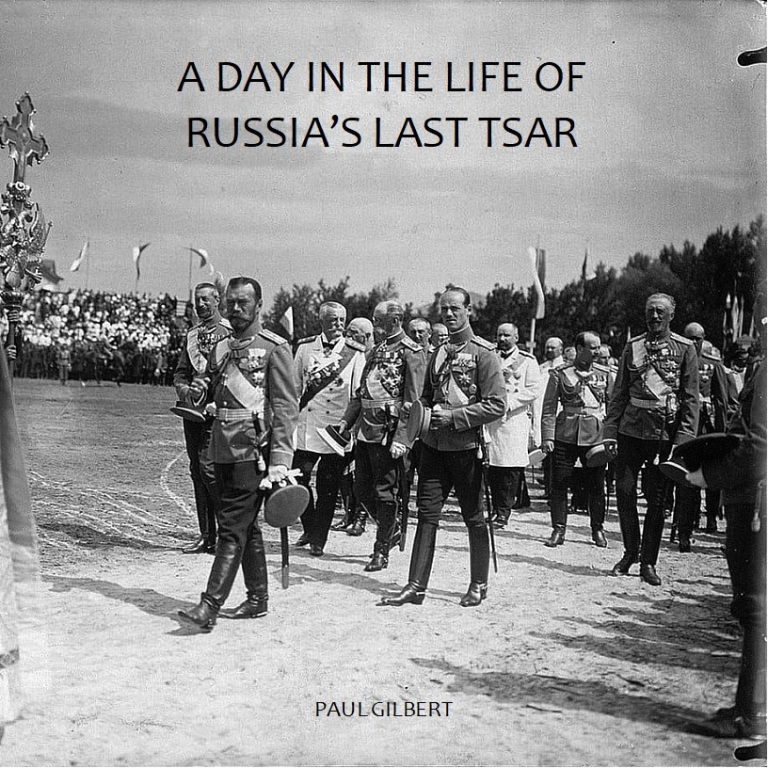
Nicholas II attends opening of a sanatorium in Alupka, 1913

In 1913 – the year marking the 300th anniversary of the Romanov Dynasty – Emperor Nicholas II and his family arrived in Crimea for a 4-month stay. From 14th August to 17th December, the Imperial family lived at the beautiful Livadia Palace, situated on the southern coast overlooking the Black Sea.

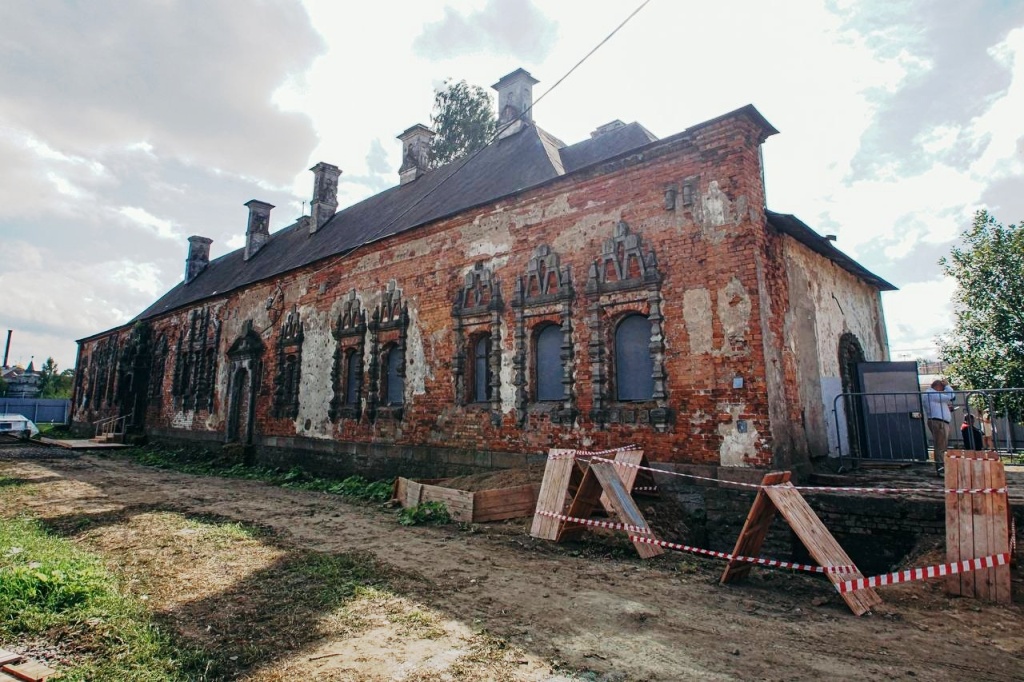
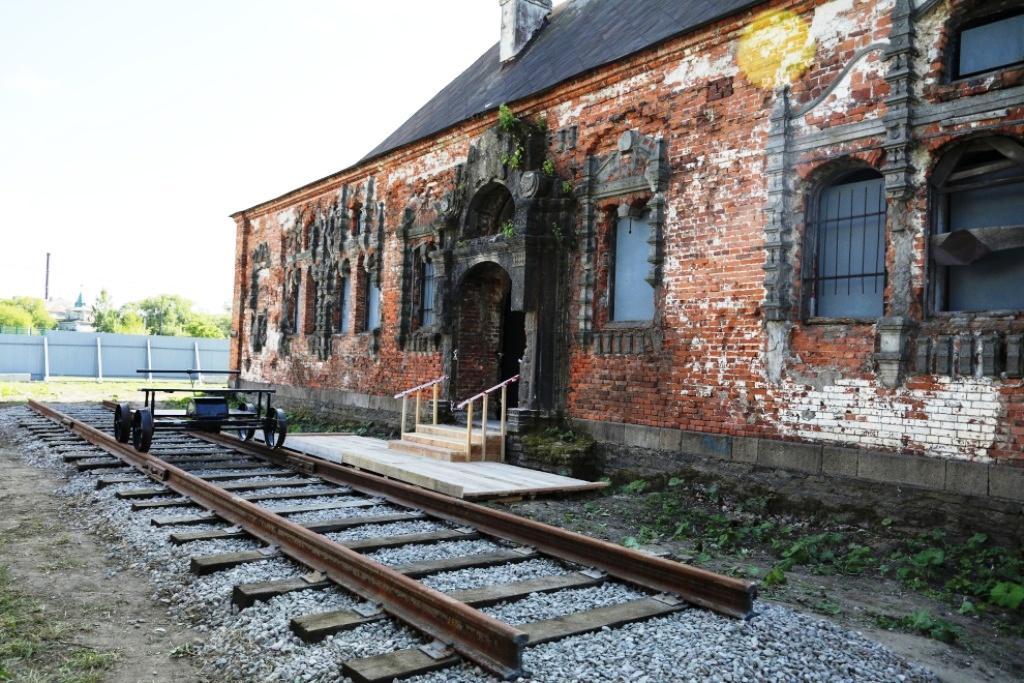
At the end of September 1913, a sanatorium named after Emperor Alexander III (1845-1894) was opened in Alupka for students and teachers of theological schools in Russia. It was an elongated three-story building, where on the east side the premises of the third floor were intended for the church. The interior of the church was illuminated by a large bronze chandelier, and featured a marble iconostasis and solea[1].

This sanatorium was located in the western part of Alupka on land that once belonged to the Vorontsovs, whose heirs at the beginning of the 20th century divided it into plots for long-term lease. Plot No. 72 was rented free of charge by the Synod for a climatic sanatorium for teachers of parochial schools. In 1913, here, according to the project of the architect N.P. Kozlov, at the expense of the School Council of Russia, a sanatorium building was erected, designed for 100 guests. The sanatorium had separate rooms, a well-equipped kitchen, a common refectory, and, most importantly, its own five-domed Church of St. Alexander Nevsky.

The church was consecrated in memory of the Emperor and his heavenly patron Saint Alexander Nevsky. The grand opening of the sanatorium in Alupka was attended by Emperor Nicholas II, his daughter Grand Duchess Maria Nikolaevna, Minister of the Imperial Court Count Vladimir Frederiks, local dignitaries and members of the clergy.

Here is an excerpt from the diary of Nicholas II for 22nd September 1913: “At 9 ½ I went with Maria and Frederiks to Alupka for the consecration of the Church of the Climatic Sanatorium for students of church schools. A beautifully arranged big house for 80 and even up to 100 guests.”

Nicholas II accompanied by Grand Duchess Maria Nikolaevna, and his retinue arrived in front of the main entrance, which was decorated with garlands of flowers and canvases with imperial monograms. They were solemnly greeted by representatives of the city authorities, their wives and the clergy, headed by V.K. Sabler, who in 1911-1915 served as chief prosecutor of the Synod.

To perpetuate the historical event of Nicholas II’s attendance at the consecration, court photographer K.F. Hahn and Alupka photographer A.E. Zimmerman, captured the historic event on camera.

Several photographs have survived to this day which show a general view of the sanatorium and the Church of St. Alexander Nevsky, the interior of the church and the arrival and procession headed by Emperor Nicholas II.

After the advent of Soviet power, by order of the Chief Commissioner for Crimea, the sanatorium for clergy, along with the church, among other noble estates of Alupka, were nationalized and became the property of the Russian People’s Republic. In June 1923, the Presidium of the Executive Committee of the Crimea issued a decision to close the Alexander Nevsky Church and transfer the movable property of the temple to the Special Storage of the Yalta District Executive Committee. The liquidated church was transferred to the property of the administration of the sanatorium of the People’s Commissariat of Railways (NKPS). In Soviet times, a climatic sanatorium named after V.I. F.E. Dzerzhinsky.

The Church of St. Alexander Nevsky suffered neglect and disrepair, and in 1927, the building sustained significant damage during an earthquake.

In the spring of 1996, through the efforts of the Crimean and Simferopol Metropolitan Lazarus, the building was returned to the Church, and now a sanitarium named after St. Luke of Crimea is located here. The Church of Alexander Nevsky was also restored, in which divine services are held, as well as a Sunday school.

Today, the five onion-shaped domes of St. Alexander Nevsky Church are visible from different vantage points in Alupka.

NOTES:

[1] a platform or a raised part of the floor in front of the inner sanctuary in an Eastern Orthodox church on which the singers stand and the faithful receive communion.

© Paul Gilbert. 18 May 2022

Russian archival documents shed new light on Nicholas II

I am reaching out to those who follow my Nicholas II blog and Facebook pages. During the month of May 2022, I am running my annual appeal for donations in aid of my research. It is no coincidence that I chose May, as it is the month marking the 154th anniversary of the birth of Emperor Nicholas II on 19th (N.S.) 6th (O.S.) 1868.

For more than 70 years, the Romanov archives were sealed, with access denied even to Soviet historians – unless of course for propaganda purposes. Since the fall of the Soviet Union in 1991, a new cache of documents – including memoirs, diaries, and letters – have been discovered, many of which shed new light on the legacy of Emperor Nicholas II. These documents both challenge and disprove many of the popular held negative myths and lies which perpetuated during the 20th century and endure to this day.

During the years (2015-2020) that I published my semi-annual periodical Sovereign, I focused on having new works by Russian historians translated and published in English for the first time. Now that I am retired, I can devote more time to the translation of previously unpublished documents from Russian archival sources, and thus providing English readers with new works, which offer a very different assessment than that of the negative one which has endured for more than a century now.

Let us work together in helping to clear the name of Russia’s much slandered Emperor and Tsar!

Summer 2022 Appeal

If you enjoy my articles, news stories and translations, then please help support my research by making a donation in US dollars to my project The Truth About Nicholas II – please note that donations can be made by PayPal or credit card. Thank you for your consideration – PG

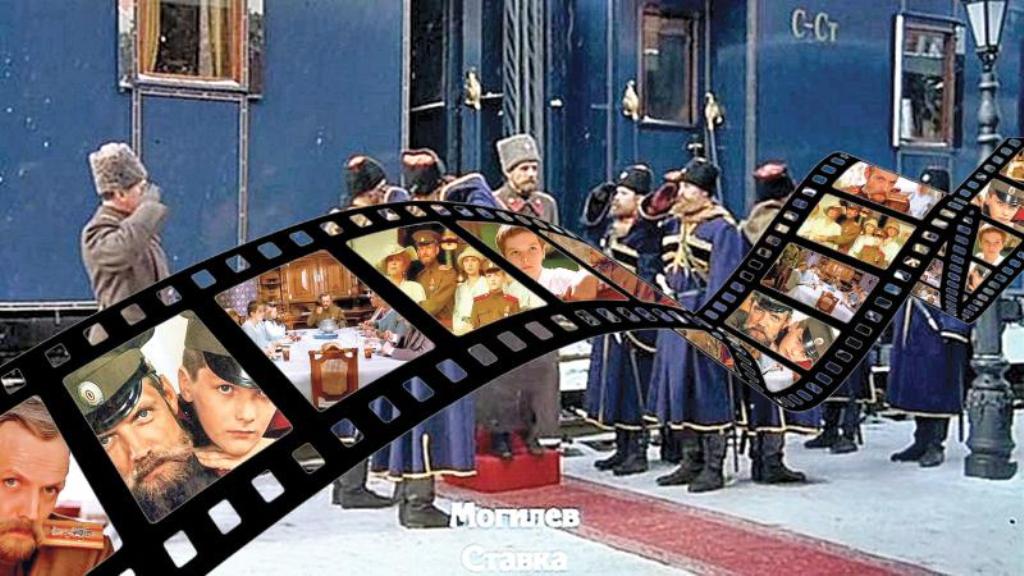
PHOTO: the proposed cover of the English translation, features this photo of Emperor Nicholas II and Vladimir Voeikov at the Stavka, the headquarters of the Russian Imperial Army, in Mogilev. 1915-1916

I have already embarked upon a major translation project: WITH THE TSAR AND WITHOUT THE TSAR by Major General Vladimir Nikolaevich Voeikov (1868-1947) – the first three chapters have already been translated into English by a Russian friend who lives in Ekaterinburg.

Originally published in Russian in 1936, this will be the first English translation of the sad but captivating story, about the man who, from 1913-1917, served as the last palace commandant to Emperor Nicholas II. Voeikov was the son-in-law of the Minister of the Imperial Court Vladimir Borisovich Frederiks (1838-1927). He was one of the few men at Court, who remained faithful to the Tsar.

His memoirs describe the events the February and October 1917 revolutions and their consequences for the Russian Empire and the Tsar; foreign policy intrigues and the chain of events that led to the First World War and Russia’s participation in it; Court vanity and envy; the private lives of the Tsar and his family at Peterhof, Tsarskoye Selo and Livadia; and Voeikov’s ordeals as he fled Bolshevik Russia.

Translations are very costly – this book is 330 pages – which is why I am reaching out to those who share an interest in the life and reign of Nicholas II.

Please consider making a donation to help fund the translation of Voeikov’s memoirs, a very important historical record on the life and reign of Russia’s much slandered Tsar.

Summer 2022 Appeal

If you enjoy my articles, news stories and translations, then please help support my research by making a donation in US dollars to my project The Truth About Nicholas II – please note that donations can be made by PayPal or credit card. Thank you for your consideration – PG

© Paul Gilbert. 1 May 2022

Nicholas II attends consecration of Naval Cathedral in Kronstadt in 1913

PHOTO: Emperor Nicholas II speaking with an officer in front of the Naval Cathedral

One of the most iconic cathedrals constructed during the Tsarist era, one which has survived to the present day has to be the magnificent 20th-century Byzantine-style Naval Cathedral of St. Nicholas the Wonderworker, situated on Anchor Square in Kronstadt, a town and naval base on Kotlin Island, just west of St. Petersburg.

Kronstadt has been a place of pilgrimage for Orthodox Christians for more than 100 years due to the memory of Saint John of Kronstadt (1829-1909), one of the most venerated Russian saints, served there as priest from 1855 to 1908.

The Naval Cathedral of Saint Nicholas the Wonderworker in Kronstadt is a Russian Orthodox cathedral built between 1903–1913 as the main church of the Russian Imperial Navy and dedicated to all fallen seamen.

PHOTO: Emperor Nicholas II attends the ceremony for the laying of the foundation stone for the Naval Cathedral of St. Nicholas the Wonderworkder, Kronstadt, 21st (O.S. 8th) 1903

Father John of Kronstadt, who was then justly regarded the major figure in the ecclesiastical guidance of the Russian Imperial Navy, prayed for many years: “Let the house of God be created for naval ranks in Kronstadt, not hurriedly but steadily and befitting the glorious fleet. Let the blessing of the Almighty spread from it on the entire naval force.” In 1898 he urged: “You must hurry to build the Church, in the same way as you hurry to build ships. The Church is also the ship led by God Himself with the Father and the Holy Spirit, and it can protect not only the Navy, but the entire army and Russia as a whole, too.”

PHOTOS: the Imperial Family arriving at the Naval Cathedral of St. Nicholas the Wonderworker for the consecration ceremony, 23rd (O.S. 10th) June 1913

If Father John of Kronstadt regarded the Naval Cathedral as an implemented prayer, for Emperor Nicholas II, who energetically supported the idea of building the memorial naval cathedral, it became his dearest creation. On 7th March 1897 the Tsar opened a subscription for the construction of a stone cathedral in Kronstadt and allotted for its building a large sum of money together with the Imperial family. Moreover, Nicholas II ordered to provide timber, cannon bronze and copper kept in the Kronstadt Port for the construction of the new cathedral. In the same year the Committee for Collecting Donations was established, on behalf of which its chairman, Vice-Admiral Nikolay Kaznakov, appealed for a feasible financial help “to all classes of Russian society”. Father John of Kronstadt, who actively participated in the creation of the church, supported him – he was a member of the Council of Trustees responsible for the construction of the cathedral and donated a large sum of money for this purpose. Father John addressed his compatriots with the following words: “Beloved brothers-sailors and all Orthodox Russians! Living in Kronstadt for forty-two years and seeing all this time how small, poor and ramshackle it is, I’ve felt deep concern about it and a desire of a vast, durable and splendid church, and now I’ve made a donation of 700 roubles for the construction of such a church. And you, too, show good will that is within your powers to provide help for its construction.” A large contribution to this common cause was made by major commanders of the Kronstadt Port – Admirals Nikolay Kaznakov, Stepan Makarov, Alexey Birilov and Konstantin Nikonov, Minister of the Navy Ivan Grigorovich, and Admiral Robert Viren. All the ranks of the Navy took a decision to remit 0.25 per cent of their salaries without indemnity for the construction of the cathedral. Ship crews donated to the future church their articles of worship and icons without compensation. In total Russian sailors collected 280,000 roubles.

PHOTOS: the Imperial Family leaving the Naval Cathedral following the consecration

All Russia made voluntary contributions for the construction of the cathedral, but it was largely funded by the state – the general cost of the building at the time of its consecration was 1,995,000 roubles, of which 1,675,000 roubles were provided by the government.

Yakornaya (Anchor) Square in the centre of Kronstadt, between the old (Peter’s) and the new Admiralty, was chosen as a site for the construction of the cathedral. For many years it served as a warehouse of anchors, hence its name. The area was so vast that it became possible to arrange a park behind the cathedral and create a square for religious processions near the building. Besides it was decided to locate the cathedral building so that there would remain enough space for military parades.

After several competitions on 3rd June (O.S. 21st May) 1901 the project of the cathedral building designed by Vasily Kosiakov, Professor of the Institute of Civil Engineers, was approved by the Tsar. In March 1902 the Committee for the Collection of Donations was transformed into the Construction Committee supervised by Vice-Admiral Stepan Makarov. On 14th (O.S. 1st) September 1902, Archpriest St John of Kronstadt held a prayer service for the beginning of the work on cleaning the territory and preparing the foundation. On 21st May (O.S. 8th May) 1903, in the presence of the Emperor, Empresses Alexandra Feodorovna and Maria Feodorovna, Grand Duke Mikhail, son of Alexander III, and Grand Dukes Alexey and Vladimir, sons of Alexander II, a ceremony of the foundation of the cathedral’s brick walls was held. After the end of the service a 31-gun salute was made from the fortress and from ships on the Kronstadt roadway. On the same day Nicholas II and members of his suite planted 32 one-year-old oak trees in the garden around the cathedral. In 1907, the building’s construction was complete, and work on the interiors began.

PHOTO: early 20th century view of the Naval cathedral of Saint Nicholas the Wonderworker in Kronstadt

On 23rd (O.S. 10th) June 1913, which marked the 300th anniversary of the Romanov dynasty, there was a great festive event in Kronstadt – the consecration of the naval cathedral. Father Georgy Shavelsky, the Proto-Presbyter of the military and naval clergy, consecrated the cathedral in the presence of Emperor Nicholas II and members of the Imperial family, thousands of Orthodox Christians and members of the naval ranks. The service was concelebrated by the mitred Archpriest Alexey Starovsky, Senior Priest of the Cathedral of St Spyridon of Trimithoundos at the Main Admiralty, and the entire Kronstadt clergy. Father John of Kronstadt, who had prophesied that “when the Cathedral will be roofed”, he would be dead, but that moment had already left this transitory life in December 1908.

The cathedral was closed in 1929, first converted to a cinema, then a House of Officers (1939) and a museum of the Navy (1980).

The Russian Orthodox Church attempted to repossess the cathedral in the 1990s, however, it took many years for the transfer to take place.

In 2002, the Russian Orthodox Church reinstalled the cross on the main dome and (for the first time since 1929) served the Divine Liturgy in the cathedral in 2005. In 2013, Patriarch Kirill of Russia, with Prime Minister Dmitriy Medvedev and his spouse attending, conducted the ceremony of grand reconsecration in the now fully restored cathedral.

© Paul Gilbert. 14 April 2022

Why did Nicholas II not have Lenin executed?

PHOTO: Russia’s last emperor Nicholas II and Bolshevik leader Vladimir Lenin

The Russian Empire experienced an explosion of terrorist activity during the reign of Emperor Nicholas II (1894-1917), a period of changing times and political unrest, when over 17,000 people were killed or wounded by revolutionary extremists[1]

By the late 1890s, capital punishment for murder in the Russian Empire was seldom carried out, instead a sentence of 10 to 15 years imprisonment with hard labour was served. Capital punishment, however, was still carried out for treason. For example, in the spring of 1887, Alexander Ilyich Ulyanov (1866-1887) was executed by hanging for conspiring to assassinate Emperor Alexander III. 

The death penalty in Tsarist Russia at that time was applied only in extreme cases of serious state crimes and only after lengthy legal proceedings, which often in the end acquitted even those whose guilt was obvious.

Alexander’s execution, however, drove his younger brother Vladimir Ilyich Ulyanov (Vladimir Lenin) to pursue the Russian revolutionary struggle ever more fervently. Vladimir was already active in politics prior to his older brother’s arrest. Lenin also remembered how his family had been shunned by liberal circles in Simbirsk following his brother’s arrest.

Any family member related to a terrorist was rarely persecuted by the authorities. As a result, in the autumn of 1887, Vladimir Ulyanov entered the Faculty of Law at Kazan Imperial University, where he began to organize anti-government meetings.

For this, he was expelled from the university and sent into exile. Instead of being sent to one of the harsh penal colonies in Sakhalin, Solovki, or Magadan, the future Bolshevik leader was exiled to the comfort of Kokushkino estate, which served as his family’s summer residence during Lenin’s childhood.

In September 1889, the Ulyanov family moved to the city of Samara, where Lenin worked first as a legal assistant for a regional court and then for a local lawyer. He then took his exams externally from the Faculty of Law at the University of St Petersburg, where he obtained the equivalent of a first-class degree with honours. 

Upon graduating, however, Lenin continued to with his revolutionary agenda. So why did the Tsarist police not take Lenin’s revolutionary activities more seriously? Sadly, those who served to protect the Emperor continued to underestimate Lenin’s importance and growing influence.

As it turned out, Lenin was considered small fry, the Tsar’s agents did not see him as much of a threat. He was not considered a terrorist, so the authorities did not pay attention to him, as they were busy with the Social Revolutionaries and anarchists. Among these were the bombers and anarchists of Narodnaya Volya[2]. The government was more occupied with the threats from the Savinkovs, the Figners, the Chernovs, the Spiridonovs, the Bakunins, and the Kropotkins—those who plotted the assassination of key government figures in the Russian Empire. But even many of them were spared execution, and instead exiled to hard labour.

A few years later, Lenin organized an alliance of struggle for the liberation of the working class, holding impassioned speeches to the workers and writing anti-government leaflets.

The authorities then took notice, which resulted in Lenin’s arrest, and sent to a St. Petersburg remand prison for a year. Here, he is of course interrogated, but his jailers do not torture or beat confessions out of him, nor is he starved.

His time in prison [including his exile to Siberia] served as the perfect melting pot for his revolutionary agenda. Dozens of books were transferred to him in prison, and it was here that Lenin wrote the bulk of The Development of Capitalism in Russia. It was published in 1899 under the pseudonym of “Vladimir Ilyin”. It established his reputation as a major Marxist theorist. In addition, he became a regular contributor to Marxist journals.

Lenin asked for a government allowance, which was granted, and paid for his needs. In addition, his rather wealthy mother Maria Alexandrovna Ulyanova (1835-1916), who in her youth served as a maid of honour at the Imperial Court, sent her son everything he requested.

Lenin’s life in exile created the ideal lifestyle for a revolutionary: fresh air, healthy food, an abundance of meat, milk, vegetables, and hunting. His day to day routies required no duties, no service. It was in exile that he was cured of his gastric disease, which he suffered from his youth. 

Vladimir Ilyich, his wife and mother-in-law did not strain during their exile: a young peasant girl was paid 2.5 rubles a month, to clean, cook and carry out other household duties. 

Soon Lenin was allowed to live in Pskov, a little later he was allowed to travel around Russia. The police saw no reason not to issue a foreign passport to the future leader of the revolution.

Lenin repeatedly held anti-government meetings, carried out subversive activities against tsarism, wrote leaflets and writings for Marxist journals, instead of rotting in prison or being executed.

Another reason that Lenin escaped more harsher sentences and even execution, was the lesson he learned from his older brother. Vladimir Ilyich, was cunning and crafty, never leaving a paper trail of his activities, so as not to get his hands dirty or implicate him in any illegal activity. This would serve him well in the summer of 1918, when he ordered the murder of Emperor Nicholas II, his wife, and their five children. Lenin did not want his name linked with the murder of the Tsar or his family, particularly his five children – the latter of whom were innocent of any politics

Lenin and the Bolsheviks did not really carry a primary threat, nor was it Lenin who put an end to tsarism, the latter was that of the Provisional Government. The Bolsheviks gained power following the overthrow of the Kerensky government in October 1917. Once he had seized power, Lenin put a bounty on members of the Russian Imperial Family. To this day, many historians believe that the order to kill Russia’s last Tsar came directly from Lenin himself. In addition, he ordered that all remaining members of the Imperial Family should be killed, for fear that any survivors would be a beacon for the restoration of monarchy. These actions thus earned him the title of “terrorist”!

One question thus remains: had Nicholas II had Lenin executed, would it have spared the Tsar and his family the violent and horrific murder that they endured in 1918?

NOTES:

[1] Thou Shalt Not Kill: Revolutionary Terrorism in Russia, 1894-1917 by Anna Geifman. Published by Princeton University Press, 1993

[2] Narodnaya Volya (‘People’s Will’) was a 19th-century revolutionary political organization in the Russian Empire which conducted assassinations of government officials in an attempt to overthrow the autocratic system and stop the government reforms. Their acts of revolutionary violence culminated in the successful assassination of Emperor Alexander II in March 1881—the event for which the group is best remembered.

© Paul Gilbert. 12 April 2022

Nicholas II in the news – Winter 2022

PHOTO: Emperor Nicholas II, by the contemporary Russian artist Vladimir Kireyev

Russia’s last emperor and tsar continues to be the subject of news in Western media. For the benefit of those who do not follow me on my Facebook page, I am pleased to present the full length articles and news stories published by American and British media services.

Below, are the articles published in January, February and March 2022. Click on the title [highlighted in red] and follow the link to read each respective article:

5 curses that haunted the Romanovs

In a 300-year history of the Romanov dynasty, there were dozens of predictions and prophecies about its future and fate. The Editors at ‘Russia Beyond’ picked the five most haunting.

Source: Russia Beyond. 28 March 2022

Rare PHOTOS of Russia’s last tsar Nicholas II + 31 PHOTOS

The art of photography was developing fast during his times, so we are lucky to see lots of images of the Emperor, both official and from everyday life.

Source: Russia Beyond. 28 March 2022

“It is our duty not to anger God and not offend His saints by refusing to recognize their relics” – Archpriest Valentin Asmus on the Royal Martyrs’ remains and the controversy surrounding them

Twenty-two years ago, Emperor Nicholas II and his family were canonized by the Moscow Patriarchate. In May 2022, the Council of Bishops of the Russian Orthodox Church will meet to deliver their verdict on the authenticity of the Ekaterinburg Remains.

Why were the remains not recognized as relics immediately? How do the clergy feel about recognizing them? Archpriest Valentin Asmus, rector of the Church of the Protecting Veil of the Most Holy Theotokos in Krasnoye Selo (Moscow), a Ph.D. in Theology, has kindly agreed to answer these and other questions.

Source: Orthodox Christianity. 23 March 2022

Here’s how the luxurious train of Nicholas II looked inside + 35 PHOTOS

In the late 1890s, a brand new train was built for the imperial family. It was a 10-car train that included a bedroom for the Emperor and Empress, a reception room, office, kitchen, dining room, the children’s room, rooms for family members, servants, railroad workers, luggage room, and a specially equipped prayer room.

Emperor Nicholas II was the first and the last tsar to use the train. The following article features 35 extraordinary photos of this ‘palace on wheels’.

Source: Russia Beyond. 22 March 2022

Emperor Nicholas II’s favourite sport + 12 PHOTOS

Tennis came to the Russian Empire from Great Britain in the 1860s and soon became very popular among the local aristocracy. Members of the Russian Imperial Family also played the game. None of them, however, was as obsessed with it as Nicholas II.

In another life, the tsar could have been a professional tennis player. He competed almost as equals on the court against renowned champions.

Source: Russia Beyond. 18 March 2022

How tsarist treasures were saved from being sold to the West + 16 PHOTOS

Having established Soviet power and finishing the Civil War, the Bolsheviks had to take care of the economy of the new country, which was gripped by hunger, poverty and devastation. In the second half of the 1920s, the large-scale “Stalin sales” of the Russian Empire’s art treasures to the West began. Tsarist crowns, diamonds, Faberge eggs, icons and paintings by Old Masters and Impressionists from Russian museums, including the Hermitage, were sold literally wholesale to millionaires in the United States and Europe.

Museum workers risked their lives trying to keep precious relics from being taken out of the country.

Source: Russia Beyond. 7 March 2022

Paul Gilbert’s Romanov Bookshop on AMAZON – UPDATED with NEW titles!!

I have published nearly 30 titles to date through AMAZON – featuring one of the largest selections of books on Nicholas II, the Romanov dynasty and the history of Imperial Russia.

Please CLICK on the LINK above to review my current selection of titles in hardcover, paperback and ebook editions. Listings provide a full description for each title, pricing and a Look inside feature.

© Paul Gilbert. 31 March 2022

“Nicholas II should have listened to Rasputin” – Metropolitan Hilarion

PHOTO: Grigory Rasputin and Emperor Nicholas II

The head of the Synodal Department for External Church Relations, Metropolitan Hilarion, believes that Nicholas II should have followed the advice of Grigory Rasputin and not entered the First World War, and thus saved both the monarchy and Russia.

“Rasputin was an ardent opponent of Russia’s entry into the war, and he *warned the Tsar that if Russia entered the war, it would threaten the entire country with catastrophic consequences,” the metropolitan stated during an interview on the Church and Peace program, aired recently on the Russia-24 TV channel.

*In July 1914, while still lying in bed in Siberia recovering from stab wounds he received during an attempt on his life, he telegraphed, “Let Papa [Nicholas II] not plan war, for with the war will come the end of Russia and yourselves and you will lose to the last man.” Anna Vyrubova, who delivered the telegram to the Emperor, reported that he angrily tore it to pieces.

The hierarch recalled that Tsar did not listen to Rasputin’s stark warning, “Russia entered the war and had every chance of winning by military means, but other factors entered the course of history, and as a result, Russia lost not only part of it’s lands, but the collapse of the Russian Empire.”

“A new state, a totalitarian state, was formed in Russia, and nothing remains of that old great Russia, of that Holy Russia which survived for many centuries, except, of course, the Russian Orthodox Church,” the bishop said.

At the same time, Metropolitan Hilarion noted that he had an ambivalent attitude towards the figure of Rasputin. In particular, he admitted that Rasputin committed all sorts of inappropriate acts, including drunkenness, which took place in front of many witnesses. “All this is documented, it would be impossible, it seems to me, to represent this as some kind of slander against a holy man,” he added.

© Paul Gilbert. 21 March 2022

14th March marks a day of treason against the Tsar

PHOTO: Grand Duke Kirill Vladimirovich and Emperor Nicholas II

On this day – 14th (O.S. 1st) March 1917 – Grand Duke Kirill Vladimirovich (1876-1938) committed treason against Emperor Nicholas II

* IMPORTANT – Click HERE to read more about Grand Duke Kirill’s act of treason against Emperor Nicholas II in greater detail, published on 26th May 2021

Before the Emperor’s abdication, Grand Duke Kirill Vladimirovich was one of the first Russian officers to commit an act of betrayal to his oath of loyalty to the Sovereign and to his dynastic duty. While commanding the Marine of the Guard, which was responsible for guarding the Imperial Family at Tsarskoye Selo, Kirill Vladimirovich marched them into Petrograd to declare their allegiance to the new Provisional Government.

Prior to that, the Grand Duke sent notes to the chiefs of the military units at Tsarskoye Selo, with a proposal “to join the new government”, following his own example.

In June 1917, Grand Duke Kirill was the first Romanov to flee Russia, along with his pregnant wife and their two children. Not only was his desertion “illegal”, Kirill, who was serving as a rear admiral in active military service in a country at war, had thus abandoned his honour and dignity. It is interesting to add, that the Kirillovich were the only branch of the Imperial Family who managed to escape the Bolsheviks, without losing any family members.

Not only was Grand Duke Kirill a moral coward, he was clearly a man who lacked a moral compass and a traitor to his Sovereign and to Russia. His acts of treason and desertion, and later his support of Adolf Hitler and the Nazis during his years in exile, thus deprived his descendants any rights to the Russian throne.

* Click HERE to read my article “The Russian Imperial House ended with the murder of Nicholas II” , published on 17th February 2021

© Paul Gilbert. 14 March 2022

Nicholas II’s battle with typhoid in 1900

PHOTO: Emperor Nicholas II recovering from typhoid at Livadia, December 1900

During Tsarist times, typhoid, or “spotted fever”, affected every one from paupers to emperors—the often fatal illness did not discriminate. This intestinal infection caused by a specific type of Salmonella bacterium was a frequent guest in the imperial residences. And all because of poor sanitation. For example, the kitchen of the Winter Palace in St. Petersburg, only stopped taking water directly from the Neva River in 1868, while mineral filters and urns for boiling water were only installed in the palace in the 1920s! And we are talking here only of the water used by the Imperial Family: servants, valets, stokers and porters lived in, and bustled in and out of, the Winter Palace. The common folk and acquaintances that came to visit the Imperial Family in their tiny rooms had a very careless attitude to personal hygiene and as a result, the palace was teeming with lice, bedbugs, cockroaches and, of course, mice.

It is not surprising then that under these conditions that Empress Maria Alexandrovna, the spouse of Emperor Alexander II, their son Alexander Alexandrovich (future Alexander II) and the latter’s daughter Xenia Alexandrovna all caught typhoid fever.

During his stay in Livadia[1] in the autumn of 1900, Nicholas II became gravely ill with typhoid. Initially, doctors were afraid to diagnose the disease for a long time and then they argued about what medication to prescribe.

The Emperor fell ill with what proved to be a rather serious from of typhoid. The Empress had a great horror of the illness, but a crisis always found her self-possessed and resourceful. She nursed the Emperor herself, even doing the night nursing, and acted as his private secretary when he was able to attend to papers, transmitting his decisions to his Ministers. The Empress wrote to her sister, Princess Louis [aka Victoria of Battenberg], at the time:

“Nicky really was an angel of patience during his wearisome illness, never complaining, always ready to do all one bid him. His old valet and I nursed him. The shock of his illness and feeling myself necessary gave me new strength, as I had been very wretched before. I rebelled at a nurse being taken and we managed perfectly ourselves.”

Orchie [Alexandra’s old nurse] would wash his face and hands in the morning. She would bring the Empress her meals, where she would take them while resting on the sofa in her husband’s room. She suffered from head and heartache, the latter from nerves and many sleepless nights. When Nicholas began getting better, she read to him.

He first had a digestive upset on 22nd October 1900, and almost immediately the Emperor’s temperature rose to 39-40 degrees Celsius (102-104 degrees Fahrenheit). The high temperature and severe headache, coupled with food poisoning, continued until 12th November.

PHOTO: Alexandra Feodorovna standing behind her husband, who is seated in a wheelchair while recovering from typhoid. Nicholas II is seated in front of a table, wearing a dressing gown, and a rug placed over his legs. Livadia, Crimea. December 1900

The Emperor actually received no treatment. Despite being pregnant for the fourth time and in a lot of pain, Alexandra nursed him back to health, rarely leaving his side. While Alexandra Feodorovna was the one who looked after him, his sister Grand Duchess Xenia Alexandrovna, recorded her brother’s illness and recovery:

“Poor Nicky is lying in bed, he didn’t sleep at all at night because of terrible pains in his back. In the morning his temperature was 38.2 – during the day 38.7. His eyes are tired and pale! [Dr.] Girsh says that it’s influenza! Thank God there’s nothing in the lungs, or in general anywhere else. Poor Alix [Alexandra Feodorovna] – she looks very tired.” – Xenia’s diary, 27th October 1900

“Later on I drove to Livadia and looked in on Nicky for a minute. The back of his neck hurts terribly, and he doesn’t know where to turn his head. All the pain from his back and legs has gone upwards, and he is suffering terribly. Poor Alix has forgotten about her own sickness and is moving around more. Girsh is adamant, that it isn’t typhoid (we asked him). Girsh asked Nicky to call someone else, to put everyone’s mind at rest – it was decided to call for [Dr.] Tikhonov.” – Xenia’s diary, 29th October 1900

“We met Tikhonov, who told us that several symptoms of typhoid had developed, and that they were almost sure that it was typhoid! At Livadia we immediately questioned Girsh. It’s astounding that influenza should suddenly turn into typhoid!

“At Livadia we immediately questioned Girsh. It’s astounding that influenza should suddenly turn into typhoid! With Alix’s permission Professor Popov was sent for; we had lunch alone together downstairs; a little later [Count] Fredericks arrived, tearing his hair and saying he was in a terrible position, that everyone wanted news, while he was not allowed to tell anyone anything. He wanted us to persuade Alix to allow a bulletin to be published, which we were able to do. She agreed that there is nothing worse than trying to conceal things! We telegraphed poor Mama. Thank God Alix is so calm.” – Xenia’s diary, 31st October 1900

“Thank the Lord, Nicky had an excellent night – he slept until morning, his temperature was 38.7 and he felt well. Alix called me to see Nicky – he was in remarkably good spirits, and chatted and joked. Alix was also in a good mood, having slept well. They didn’t want to let me go, but in the end I left of my own accord, as he needs complete rest and had been talking to much.

“All the unnecessary furniture has been removed from the bedroom, and will be taken into Alix’s drawing room this afternoon. Alix is now sleeping in another bed, at least the doctors have achieved that much.” – Xenia’s diary, 1st November 1900

“They are not happy that Nicky’s temperature is so low 36°, but the pulse is good at 66. They are afraid of a haemorrhage, God preserve us! It’s so terrifying, help us God, save our Nicky!” – 13th November 1900

PHOTO: Nicholas II recovering from typhoid fever, with his sister Grand Duchess Xenia Alexandrovna. Livadia, Crimea. December 1900.

Against this background, discussions about who should succeed Nicholas II, in the event that he should die. The Empress attempted to persuade her husband to change the Laws of Succession to allow females to inherit the throne in the absence of any male heirs in order for their four-year-old daughter Grand Duchess Olga Nikolaevna [2] to inherit the empire, as opposed to her uncle, Grand Duke Michael Alexandrovich. Ultimately, these changes did not take place.

After 13th November, the Tsar’s temperature started coming down and on 30th November, for the first time, Nicholas spent half an hour on his balcony. “It was sunny, warm and still… Thank God my typhoid was mild and I didn’t suffer at all during the whole time. I had a strong appetite and now my weight is increasing noticeably every day…”

Nicholas recovered six months later, in May-June 1901, however, little Olga came down with typhoid. Alexandra would nurse their eldest daughter through her illness.

On the 24th November 1900 Nicholas wrote to his mother:

“About my little wife I can only say that she was my guardian angel, looked after me better than any sister of mercy!”

NOTES:

[1] Up until 1911, Nicholas II and his family stayed in the Small Livadia Palace during their visits to Crimea, after which they lived in the iconic white stone palace, which was constructed on the site of the Large Livadia Palace. The Small Palace survived until the Great Patriotic War (1941-45).

[2] The Succession Prospects of Grand Duchess Olga Nikolaevna (1895-1918) by Carolyn Harris, published in Canadian Slavic Papers, Volume 54, 2012 – Issue 1-2

© Paul Gilbert. 6 February 2021

Tsar’s Days: Journey to Ekaterinburg

*This title is available from AMAZON in the USA, UK, Canada,
Australia, France, Germany, Spain, Italy, Netherlands and Japan

CLICK ON THE LINK BELOW TO ORDER FROM AMAZON

HARD COVER EDITION @ $40 USD

PAPERBACK EDITION @ $25 USD

BOOK DESCRIPTION

Hardcover and Paperback editions. 152 pages + Richly illustrated with nearly
200 COLOUR PHOTOS, 65 of which were taken by the author

***

On 17th July 1998, independent researcher and writer Paul Gilbert travelled to St. Petersburg, for the interment of Emperor Nicholas II and his family. Twenty years later to the day, he journeyed to Ekaterinburg, to take part in Tsar’s Days and the events marking the 100th anniversary of the Tsar’s death and martyrdom.

In his own words and photographs, he shares his own personal experiences and impressions of the places associated with the last days of Emperor Nicholas II and his family, including the Church on the Blood, Ganina Yama, and Porosenkov Log. In addition, he writes about his visits to no less than three museums dedicated to the Holy Royal Martyrs, exhibitions, and the Patriarchal Liturgy performed on the night of 16/17 July by His Holiness Patriarch Kirill of Moscow and All Russia.

This book is complemented with 24 illustrated news articles about events leading up to Tsar’s Days in the Urals, from 1st to 31st July 2018.

Gilbert’s solemn journey to the Urals allowed him to experience history in the making, and to honour the memory of the Holy Royal Martyrs, a century after their death and martyrdom.

It may be years before most of us can visit Russia again, in the meantime, you can visit Ekaterinburg through the pages of this book from the comfort of your favourite chair.

© Paul Gilbert. 26 February 2022

Protecting the Tsar – Part 2: the security of Nicholas II in the Alexander Palace

PHOTO: security at the main gate leading to the Alexander Palace

This is the second of a two-part article, which explores efforts to ensure the safety and security of Russia’s last Tsar. Click HERE to read Part 1: How Nicholas II was Protected – PG

Following his father’s assassination in March 1881, Emperor Alexander III was advised that it would be difficult for him to be kept safe at the Winter Palace in St. Petersburg. As a result, he relocated his family to the Gatchina Palace, located 30 kilometres (20 mi) south of St. Petersburg. The palace was surrounded by moats, watch towers, and trenches, and soldiers were on guard night and day. Under heavy guard, he would make occasional visits into St. Petersburg, but even then he would stay in the Anichkov Palace on Nevsky Prospect, as opposed to the Winter Palace.[

In November 1894, Nicholas II ascended the throne. He had spent his youth in Gatchina Palace, however, he did not really like the fortress-like building, and returned to the capital, where, according to tradition, he settled in the Winter Palace.

In 1904, Russia was at war with Japan, and the newborn Tsesarevich Alexei was secretly ill; Nicholas and Alexandra permanently abandoned the Winter Palace, for the greater comfort, security and privacy of Tsarskoye Selo, where they settled into the Alexander Palace.

PHOTO: Emperor Nicholas II and Empress Alexandra Feodorovna, review His Imperial Majesty’s Own Convoy – the Cossack unit which served as the Tsar’s elite guard – on the parade ground in front of the Alexander Palace

External security of the Alexander Palace

Up until 1917, the Alexander Park (and the palace on its territory) was guarded along the outer contour by 26 round-the-clock and 3 temporary (daytime) posts. In addition, 5 Cossack patrols constantly covered the palace from nearby villages (Aleksandrovka and Bolshoye Kuzmino).

The intersections of the streets of Tsarskoye Selo which faced the park were also subject to constant surveillance; during the day, agents of the Palace Police dressed in civilian clothes walked along them, always on the alert for suspicious activity. In total, there were 13 additional such “hidden” posts (although all the locals were well aware of them).

If any members of the Imperial Family wanted to go for a walk in the Alexander Park, any employees (gardeners, etc.) were removed, and 3 more additional posts from staffed by local police officers were set up along the fence.

From 1906, at night, guard dogs began to be released into the Alexander Park from a specially created dog kennel in the village of Aleksandrovka. It turns out that even members of the Imperial Family could not just leave the palace during the evening, because the park was full of aggressive security dogs.

PHOTO: the Imperial Bedroom, situated in the eastern wing of the palace

Internal security of the Alexander Palace

The most important post of the internal security of the Alexander Palace was a secret guard post, located in the basement directly under the bedroom of Nicholas II and Alexandra Feodorovna. An alarm was installed in the Imperial Bedroom, which linked it to the guard room below. If the alarm was pressed, it triggered a signal in the guard post below. The guard on duty, regardless of any circumstances, had to immediately break into the room.

Until 1917, only two panic button signals were received by guards at their post: on the first occasion, the Empress accidentally placed a book on top of the alarm bell, and the other time, a curious Grand Duchess Anastasia pressed it. On both occasions, the guard immediately acted according to the instructions (and subsequently received the highest gratitude for vigilance).

In total, by 1914, there were 13 permanent (round-the-clock) guard posts inside the Alexander Palace, and at night an additional post was set up at the entrance to the private rooms of the August couple. A hidden security unit of 15 non-commissioned officers of the guard regiments also operated in the palace, disguised as palace servants.

PHOTO: plan of the underground tunnel, connecting the palace with the kitchen building, used by palace employees

PHOTO: the tunnel, through which palace employees used before the Revolution, it was filled in during the Soviet era and is now in the process of restoration

Palace employees entered the Alexander Palace only through a special underground tunnel (built during the time of Empress Catherine II), connecting the main residence with the kitchen building. The appearance of each employee who entered the palace was first checked against a photograph in a special catalogue (which was kept by security officers), and then thoroughly searched.

More senior visitors to the palace (officials, persons close to the Imperial Family, etc.) entered the building through the main palace entrances, but 95% of these people were also searched (even the personal dressmaker of the Empress Madame Bezac).

In order for a visitor to the palace not to be searched, a personal order of the Emperor or the Empress (temporary or permanent) was necessary. The privilege to enter the palace without being searched was, however, limited to few, for example, the court jeweller Peter Carl Faberge (1846-1920) and the court architect Roman Meltzer (1860-1943).

The security system turned out to be quite effective, and from 1906 until 1917 there were no special incidents in the Alexander Palace and Park.

© Paul Gilbert. 27 February 2022