How British intelligence tried to get Nicholas II out of Russia

PHOTO: King George V and Emperor Nicholas II

In 1917, British intelligence officers developed several options for evacuating Tsar Nicholas II from Russia without delay, but the British government and King George V did not have enough resolve to carry out this operation. An article published by the BBC News русская служба [Russian Service], by Russian journalist Olga Ivshina, revealed some interesting new details from recently declassified secret service documents and the Royal Archives,

Discussions on the possible evacuation of Nicholas II from Russia began almost immediately after the Tsar’s abdication from the throne on 2nd March 1917. Already on 19th March, British General Sir John Hanbury-Williams met with Nicholas II’s mother, Dowager Empress Maria Feodorovna.

Britain’s concerns for the Romanov family is explained by the fact that King George V was a cousin of both Nicholas II and his wife Alexandra. The two monarchs were close and often corresponded, calling each other ‘old Nicky’ and ‘dear Georgie’. In addition, Britain and Russia were allies in the First World War.

The British general and the dowager empress agreed that the abdicated tsar should leave Russia as soon as possible. Maria Feodorovna – born in Copenhagen and holding the title of Danish princess before marriage – advocated that her son be evacuated to Denmark. She expressed concern that in the event of a longer sea voyage, that the ship carrying her son could be sunk by a German submarine. The British general assured Maria Feodorovna that he could ensure the safety of the Tsar. He even offered to personally accompany the Imperial Family out of Russia to England. Maria Fedorovna agreed. The British Ambassador to Russia Sir George Buchanan began negotiations with representatives of the Russian interim government on possible evacuation routes.

Several obstacles remained. First, it was necessary to convince Nicholas II of the need to leave, who, judging by his diary entries, still wanted to stay and dreamed of spending the rest of his days in Crimea with some kind of special honourary status. Secondly, it was necessary to obtain the final confirmation of the operation from London. And thirdly, it was necessary to figure out how to get the Romanovs out of Russia by passing the armed detachments of the Bolsheviks.

The fact is that at that moment the Provisional Government did not fully control the volatile situation in the country. It was strongly opposed by the influential Petrograd Soviet of Workers ‘and Soldiers’ Deputies, which were against the departure of Nicholas II and demanded that he be tried.

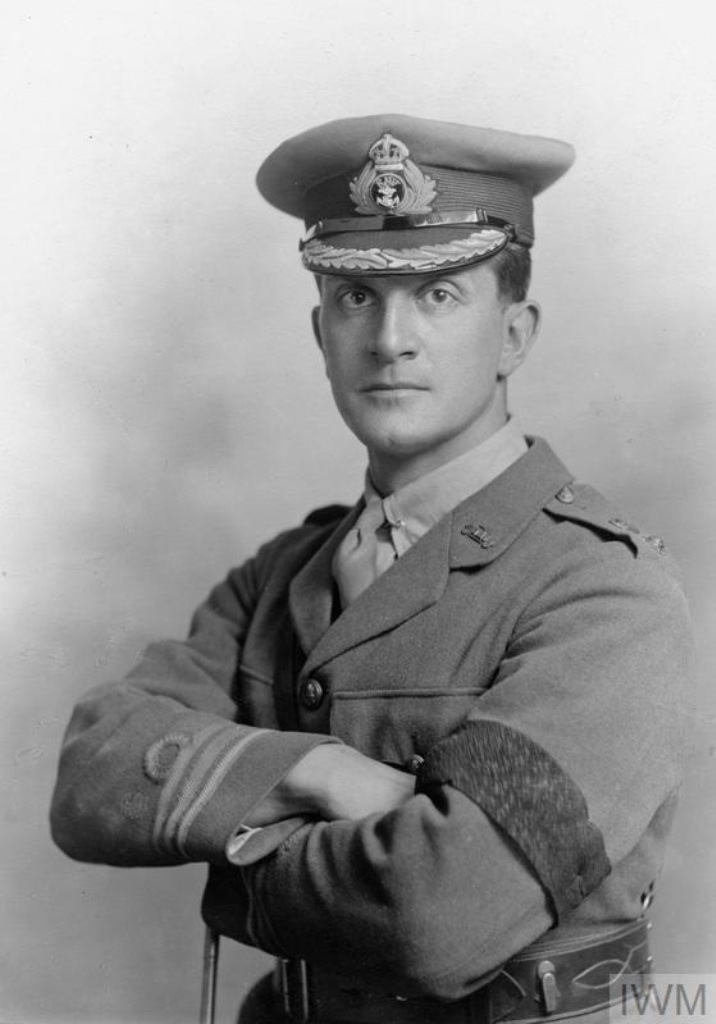
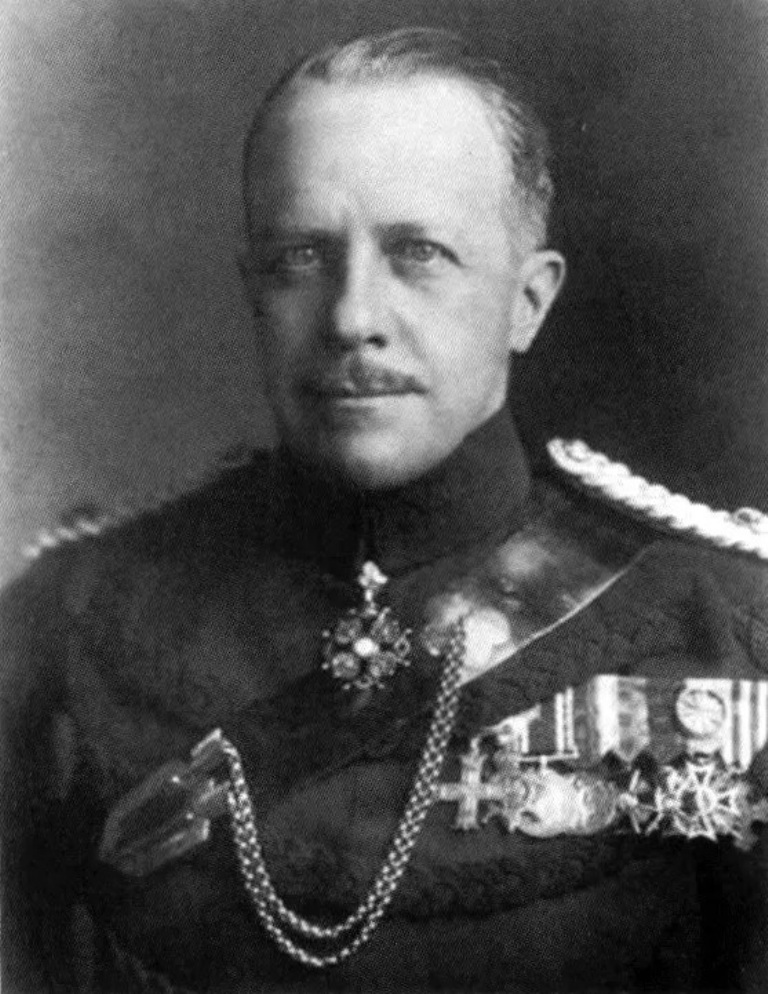
PHOTO: Oliver Locker-Lampson (1880-1954)
© Imperial War Museum

Plan one – creative

While the politicians were negotiating, intelligence scouts got to work. Some of the documents shedding light on the events of those days remain classified. Researchers Richard Aldrich, Rory Cormac and Andrew Cook managed to piece together the details of several plans.

One of them was proposed by Oliver Locker-Lampson (1880-1954), an officer of the Royal Navy. He was simultaneously the commander of a division of machine-gun armoured vehicles and a member of the British Parliament.

In 1916, the Locker-Lampson[1] division was transferred to Russia, where he immediately took action. According to his memoirs, in 1917 he was instructed to develop a plan for the rescue of Nicholas II.

By this time, Locker-Lampson managed to recruit one of the servants who worked in the Alexander Palace – it was there that the Imperial Family were being held under arrest after the Tsar’s abdication. According to the intelligence plan, on the designated day, the servant was supposed to come, shave off Nicholas II’s beard, change clothes with him and attach himself a false beard, similar to that of the emperor.

Nicholas II then had to calmly leave the palace and walk to the place where British intelligence officers would be waiting for him in a motorcar. Then the Tsar would be transferred to an armoured vehicle, then taken to Arkhangelsk under the protection of the British military and sent to London.

At first glance, the plan looked naive. But, as subsequent events showed, Locker-Lampson had previous experience of evacuation operations. In 1933, he helped Albert Einstein escape from Nazi persecution, and in 1936 he transported Emperor Haile Selassie of Ethiopia to England so that he would not fall into the hands of Italian dictator Benito Mussolini. During World War II, Locker-Lampson evacuated dozens of Jewish families from Germany.

The officer’s plan had one weak point – it meant the salvation of only Nicholas II himself. A devout husband and father, the forsaken Emperor had made it very clear, that he would not leave Russia without his beloved wife and children.

There was still one other obstacle to Lampson’s plan: it was necessary to get the approval of London and send a warship to Russia to evacuate the Romanovs. Time was quickly running out for both the Imperial Family and the scouts. General Hanbury-Williams sent an urgent telegram after telegram to Britain, but there was still no answer.

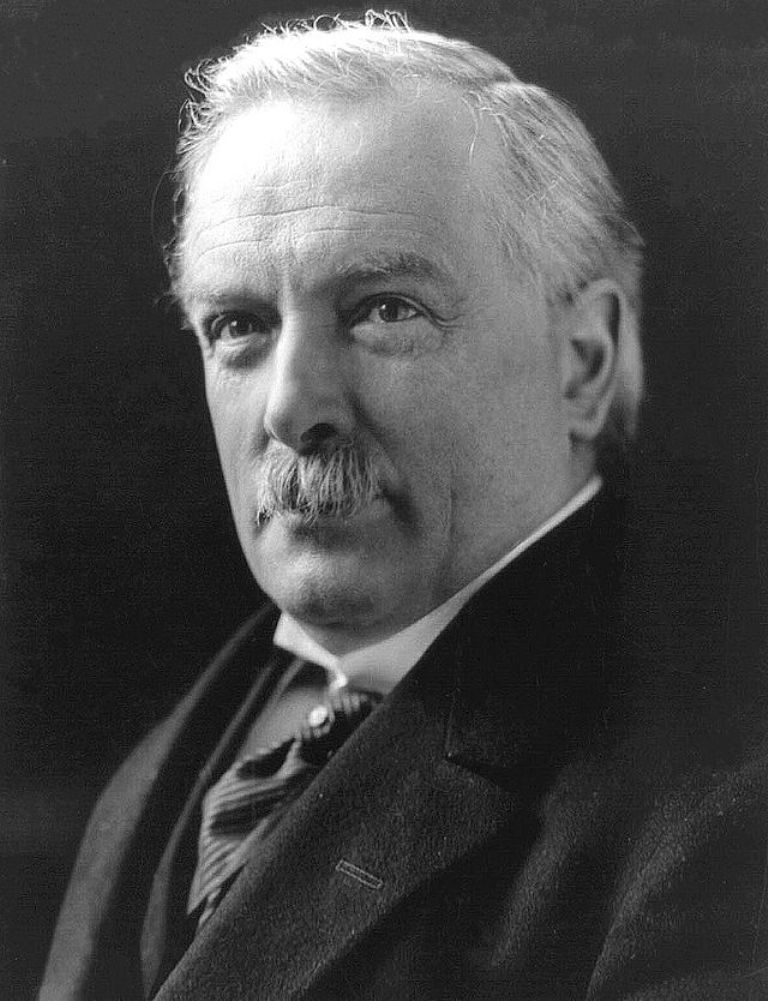
PHOTO: Prime Minister David Lloyd George

Wasteful and bloody

The General’s telegrams reached Downing Street, but the government was in no hurry to make a decision. So, in a note from the King’s secretary, Lord Stamfordham, for example, it is mentioned that Prime Minister David Lloyd George was very interested in the question of how much money Nicholas II would need to live in England. The First World War drained Britain’s budget and the prime minister did not seem to be pleased with the prospect of any additional burden on the treasury.

“Can you find out what private savings the emperor has?” – the prime minister asked the British ambassador to Russia, George Buchanan.

At that time, there were legends in London about the extravagant wealth of the Russian Imperial Family in British and other foreign banks. The British negative perception of the Romanovs was influenced by stories about the adventures of their “friend” Grigory Rasputin.

Lloyd George also expressed concerns about the presence of the Romanovs in Britain. At that time, the socialist movement was gaining popularity in Britain. After the dispersal of the procession of St. Petersburg workers in 1905, left-wing politicians spoke of Nicholas II only in a negative way, often referring to him as “Nikolai the Bloody”. Lloyd George – among others – feared that the arrival of the Tsar would provoke an increase in revolutionary sentiments in Britain itself.

The Provisional Government in Petrograd repeatedly asked London to provide the Tsar and his family with asylum, at least for the duration of the war. Lloyd George paused for a long time, but Petrograd continued to be Britain’s ally in the First World War. As a result, the government still officially invited Nicholas II and his family to London.

By now, King George V was against any plan to bring his cousin to Britain. The monarch’s secretary in his papers notes that when he heard about the government’s decision, the king “fell into a panic.” The fact is that George began to receive more and more information from his personal secretary and acquaintances that the possible evacuation of the Romanov family to Britain is being widely discussed by workers, Labour MPs, and even members of the British nobility in a negative way.

Not only were people worried about Nicholas II, but also by his wife Alexandra Feodorovna, a German by birth. Having married Nicholas, the German princess converted to Orthodoxy and, as far as can be judged, imbued with love and respect for her adopted Russia. However, rumours continued to circulate in society that she secretly sympathized with Germany, her detractors often claiming that she was a Germn spy.

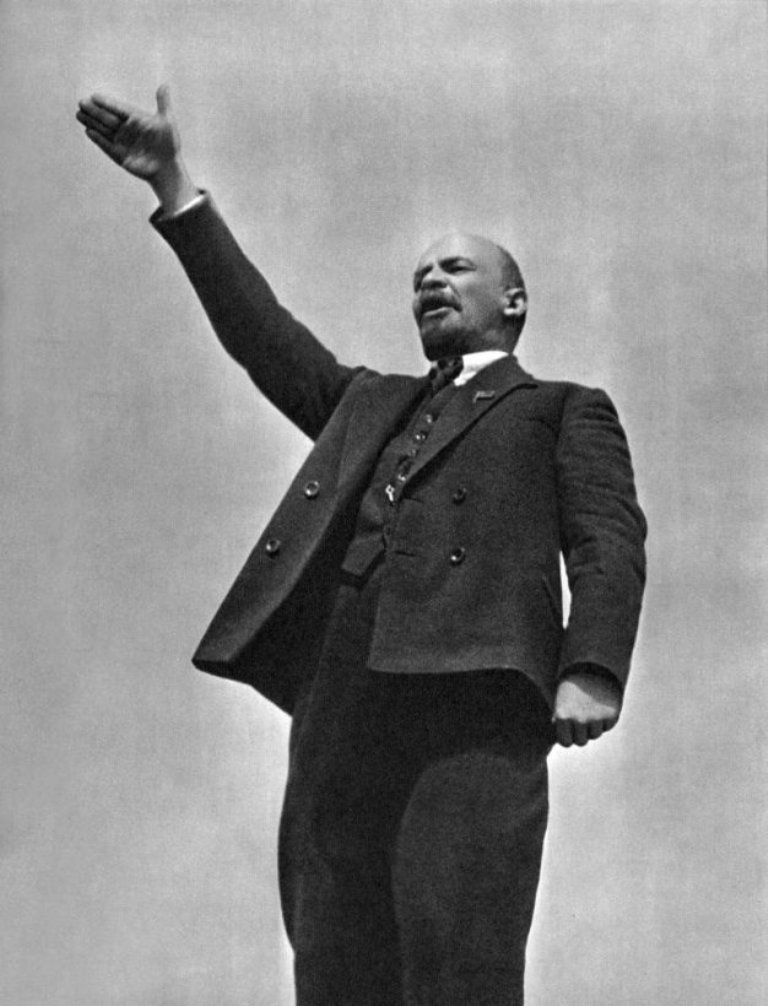
PHOTO: Bolshevik leader Vladimir Lenin

The second plan was ambitious

In parallel with the development of plans for the evacuation of the Romanov family, British intelligence officers also worked to undermine or overthrow the new Bolshevik order.

“A large scale invasion is the only thing that can save the situation and Russia,” the cavalier of military orders, the captain of the Royal Navy, Francis Cromie, telegraphed to London.

Together with the legendary British intelligence officer Sidney Reilly, they drew up plans for the landing of the Entente military formations in Russia. The head of the British diplomatic mission under the Soviet government, Robert Bruce Lockhart, at first was against such a plan, but later, realizing the inevitability of intervention, agreed.

In parallel, British intelligence officers tried to help the Socialist-Revolutionaries and monarchists organize an uprising against the Bolsheviks in Arkhangelsk [2]. There is one version which claims that the British were secretly organizing the assassination of Lenin, however, despite years of research, any evidence of such a plot has never been found.

Soviet historians write that diplomat Lockhart called the assassination of Lenin “the primary and most important task.” To this they added that the ambassadors of France and the United States were also involved in the conspiracy. However, Lockhart’s own reports say nothing of the kind, only about the arrest, but not the murder of the Bolshevik leader.

PHOTO: polar explorer Fridtjof Nansen (1861-1930)

The third plan was desperate

By August 1917, any opportunity to rescue the Imperial Family was looking more and more dismal. The provisional government, trying to somehow ensure the safety of the Tsar and his family, sent them away from radical revolutionaries in Petrograd into exile to Tobolsk in Siberia. This significantly complicated the task for British military and intelligence officers. Now they not only had to devise a plan to take Nicholas out from under the noses of the Bolsheviks, but to also overcome thousands of kilometres with him along the vast expanse of the Russian land. However, the officers did not give up.

The head of the Secret Service, Mansfield Cumming, began developing a new plan to rescue the Romanovs. This time the stake was made on Norwegian businessmen and travelers.

It is known that the British turned to the Norwegian polar explorer Fridtjof Nansen (1861-1930) for help. This scientist attracted the attention of British intelligence because he knew well not only the main Siberian roads, but the waterways along the Yenisei, which could be very useful in the evacuation of the Tsar. The British also brought in the merchant Jonas Leed to develop the new plan. He often traveled to Siberia, representing the interests of Norwegian companies in the wood and coal mining industries.

Very little is known about the details of the plan involving Leed and Nansen. All that is known for certain is that Leed dined several times with representatives of the Secret Service, as well as with the head of intelligence of the British Navy.

Captain Stefan Ellie may also have been one of the participants in this new plan to save the Tsar. He spoke Russian fluently, since his family had lived in Russia since the 1870s. Ellie is one of the few British people who stayed to work in Russia even after the evacuation of the British embassy in late 1917.

Many details of Ellie’s mission remain unknown. But in 2006, his relatives found a notebook among his belongings. One of the spreads showed a hand-drawn map of the area in and around the Ipatiev house in Ekaterinburg, where Nicholas II was transferred in April of 1918, and a description of the house.

According to declassified data, on 24th May 1918, Ellie reported to London about his readiness to carry out an operation, during which “seven important persons” would be taken to Murmansk[3]. In the report, he listed the names of six people who were supposed to take part in the operation. Ellie noted that they were all fluent in Russian and could impersonate local residents. The scout also asked for £1,000[4] “due to increased operating costs.”

Researchers agree that this plan could not have been worked out without the prior approval of the British government and King George V.

PHOTO: Captain Stefan Ellie’s notebook helped learn details of MI6’s latest plan to rescue the Imperial Family

From recently declassified documents, it becomes clear that British intelligence had evidence that Germany was also preparing a plan to take the Imperial Family out of Russia. Technically, the Germans had a chance to do this, since a significant number of their military and equipment were already in Russian territories due to their participation in the First World War.

European royal historian and researcher Karina Urbach, who has access to German archives, confirms that there was a plan to “kidnap Nikolai Romanov” from the German special services. Information about this plan was gradually leaked to British intelligence officers.

Despite the fact that Kaiser Wilhelm II was at war with Russia, but was also the godfather of Tsesarevich Alexei and sincerely wanted to save him. Urbach notes that after the Bolsheviks seized power in Russia, it was Germany that objectively had the best opportunity to rescue the Tsar and his family.

Berlin could have done this with the help of its own spies or, with much more success, through diplomatic negotiations. Researchers believe that Germany could have raised the issue of the “extradition” of the Romanovs as one of the conditions for signing a peace treaty with the Bolsheviks.

Judging by the declassified correspondence of the British Foreign Office, on 28th May 1918, diplomats discussed for the last time whether they should raise the issue of evacuating Nicholas II’s five children during negotiations with Leon Trotsky, who at that time was chairman of the Supreme Military Council. During the discussion, they came to the conclusion that even if Trotsky agrees, the Romanovs will need to be guarded on the way to Murmansk. However, the Bolshevik guard was unreliable, and it was feared that the presence of a British guard could provoke attacks on the Imperial Family along the way. As a result, the British found themselves in a vicious circle – their intervention would only further harm those whom they were trying to save.

Historian Andrew Cook believes that telegrams with details of the evacuation plan for Nicholas II, sent by Major Ellie to London, could have been intercepted by the Bolsheviks. Perhaps this was the reason for the increased security of the Ipatiev House and the Imperial Family in the summer of 1918.

On 17th July 1918, Nicholas II with his wife, their five children and four faithful servants were all brutally murdered in Ekaterinburg—there were no survivors.

Less than a year later, the British battleship Marlborough rescued Dowager Empress Maria Feodorovna, along with other Romanovs with their families to the British naval base in Malta.

NOTES:

[1] Locker-Lampson became somewhat entangled in Russian politics at this time. He said later that he had been asked to participate in the 1916 assassination of Rasputin. It is also alleged that in September 1917 he was involved in Kornilov’s attempted coup against the provisional government of Alexander Kerensky.

[2] The city resisted Bolshevik rule from 1918 to 1920 and was a stronghold of the anti-Bolshevik White Army supported by the military intervention of British-led Entente forces.

[3] Murmansk, Russia’s first ice free port was founded in 1916 by Nicholas II and named Romanov-on-Murman.

[4] In terms of today’s money, this is approximately 50 thousand British pounds (66 thousand US dollars or 4.9 million rubles).

© Paul Gilbert. 18 December 2021
Why didn’t the “right” defend the monarchy in 1917?

PHOTO: Demonstration of the Black Hundreds in Odessa shortly after the announcement of the Manifesto on 17th October 1905[1]

The crisis of the Russian monarchy lasted more than a dozen years. It began during the Revolution of 1905-1907, which forced Nicholas II to make concessions, and ended in 1917, when he was forced to abdicate.

The February 1917 Revolution did not meet any organized resistance at all, neither from the Black Hundreds[2], nor from the military elite, nor from officials or the “moderate right”. Few of Russia’s military elite stood by Nicholas II, including Count Fyodor Arturovich Keller[3] (1857-1918); Alexander Pavlovich Kutepov[4] (1882-1930) and Commander of the Guard Cavalry Corps Huseyn Khan Nakhchivanski[5] (1863-1919) defended both their Emperor and the monarchy. In 1917, the conservative forces in Russia either left the political scene or were forced to “play by new rules.”

It is clear that by 1917 the Black Hundreds had greatly thinned out, were split and even in the Duma itself no longer had any particularly influence in the state of affairs. It is clear that the military could not leave the front and storm the insurgent Petrograd. It is clear that representatives of the military elite, industrialists, “moderate rightists”, even some monarchists like Vasily Vitalyevich Shulgin[6] (1878-1976) took an active part in the revolution itself.

Nevertheless, a number of features of “February” made the resistance of the pro-monarchist elements complicated and senseless. How so?

Circumstances led to a situation in which the Russian monarchists had to become “greater royalists than the Tsar himself.”

It was their belief, that as Nicholas II himself had abdicated the throne, it meant that he freed the rest of his supporters from any obligations to the monarch. Researcher A.A. Ivanov notes an important difference between the Revolution of 1917 and the Revolution of 1905:

“Taking into account past mistakes, the leaders of the liberal opposition managed to play the patriotic card, depriving the right of their main trump card – the monopoly on patriotism. Patriotic rhetoric allowed the liberal opposition (in contrast to the times of the first Russian revolution) to establish close contact with the highest ranks of the army and attract them to their side … thus, leading to the rapid defeat of the right in 1917.”

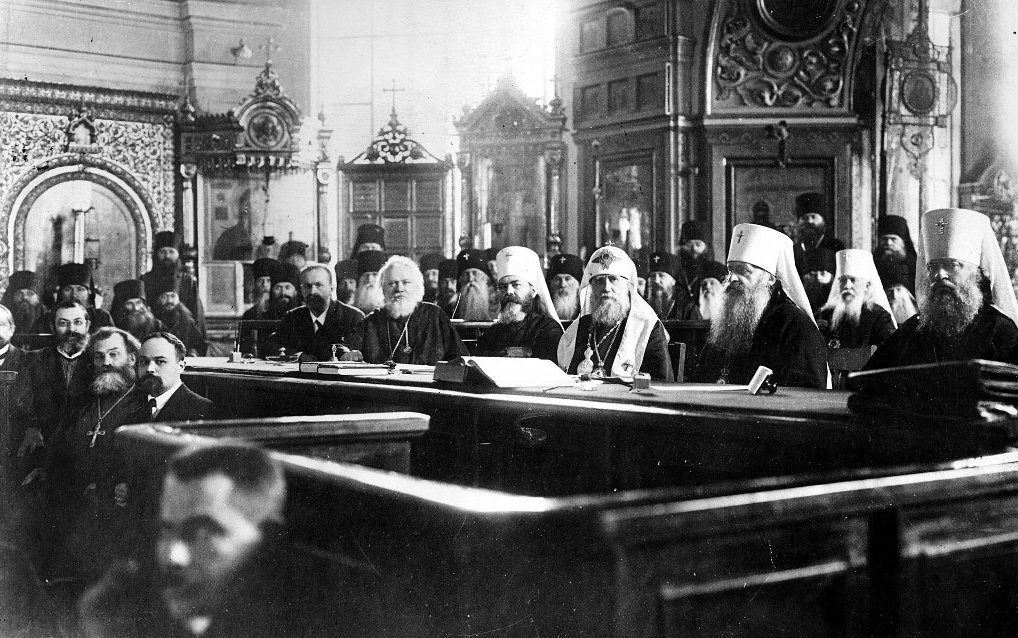
PHOTO: Meeting of the Local Council of the Orthodox Church in the Moscow Diocesan House, which existed from August 1917 to September 1918 (!). The Patriarch was elected in November 1917, already de facto under the Bolsheviks.

Following the example of the liberal opposition, the Bolsheviks also began using patriotic rhetoric to further their cause. Lenin would scream out slogans, such as “The Socialist Fatherland is in danger”, etc. Patriotism is a powerful tool, especially when used correctly and the right words are chosen.

Many future White generals in their memoirs write about the mistakes of the Provisional Government. And they themselves sometimes answer the question of why they didn’t intervene: they would have intervened, “had it not been for the war against the Germans, it’s impossible to turn it into a Civil War, and the Tsar had abdicated”.

Patriotic rhetoric and the formal “voluntary” abdication of the Emperor turned the hypothetical attempts of the right to change the situation into a rebellion against the will of the monarch, in a situation of war with an external enemy.

“The weakness and fragmentation of the monarchist forces, the self-elimination of the government, the “voluntary” abdication of the Tsar and the national character of the revolution, which met with the widest support in all strata of Russian society, deprived the political struggle for the restoration of autocracy … ” added A. A. Ivanov.

A few words must be said here about the Church[7]. After all, de facto, these are the main “pillars” of any monarchy – military power and religion. Russia has never been an exception in this regard. In 1917, the Holy Synod of the Russian Orthodox Church promptly changed the texts of oaths (ordination to the clergy) and prayers (“now we pray for the Provisional Government”), their actions thus recognizing the new shift in power. Those who disagreed were dismissed (as in the army). They even recommended that monarchical literature be removed from the parishes.

There is also a point of view according to which the church was interested in February, since the fall of the monarchy allowed it to free itself from the “excessive tutelage of the state” (which will also later play against them, as in the case of the liberal opposition).

In any case, in 1917, both the military and civilian “right”, simply had nothing to rely on. Foreign policy, the balance of power, brute force, ideology – everything now worked against them …

NOTES:

[1] The Manifesto was issued by Nicholas II, under the influence of Sergei Witte (1849–1915), on 30 October [O.S. 17 October] 1905 as a response to the Russian Revolution of 1905. Nicholas strenuously resisted these ideas, but gave in after his first choice to head a military dictatorship, his first cousin once removed Grand Duke Nicholas Nikolaevich (1856-1929), threatened to shoot himself in the head if the Tsar did not accept Witte’s suggestion. Nicholas reluctantly agreed, and issued what became known as the October Manifesto, promising basic civil rights and an elected parliament called the Duma, without whose approval no laws were to be enacted in Russia in the future.

[2] The Black Hundreds, was a reactionary, monarchist and ultra-nationalist movement in Russia in the early 20th century. It was a staunch supporter of the House of Romanov and opposed any retreat from the autocracy of the reigning monarch.

The Black Hundreds were founded on a devotion to Tsar, church and motherland, and lived by the motto: “Orthodoxy, Autocracy, and Nationality”. Despite certain program differences, all of the Black Hundreds organizations had one goal in common, namely their struggle against the revolutionary movement.

[3] Keller was military leader of the Russian Imperial Army and cavalry general. He was one of the leaders of the White movement in the South of Russia in 1918, a monarchist. He remained loyal to Nicholas II until the end of his life.

On 6th March 1917, Keller sent a telegram addressed to Nicholas II, in which he expressed indignation on behalf of the corps and himself against the troops that had joined the rebels, and also asked the Tsar not to leave the Throne.

The intercepted telegram came to the attention of General Mannerheim, who made an attempt to persuade Keller to submit to the Provisional Government, or, at least, to persuade him to refuse to influence his subordinates in this regard. However, the count did not make concessions, refused to swear allegiance to the Provisional Government, saying:

I’m a Christian and I think it’s a sin to change my oath.”

[4] Kutepov was a Russian military leader, general from infantry (1920), pioneer, active participant in the White movement, and a devout monarchist. Between 1928-1930, he served as Chairman of the Russian General Military Union (ROVS).

During the February Revolution, Colonel Kutepov, who was on a short vacation in Petrograd , was the only senior officer who tried to organize effective resistance to the insurgents.

On 26th January 1930, Kutepov was kidnapped in Paris by Soviet intelligence agents. Documents about the circumstances, place and time of his death are still secret and inaccessible to historians.

[5] A Muslim by religion, Khan Nakhchivanski remained loyal to the Russian Orthodox emperor and refused to swear allegiance to the Provisional Government.

When in the winter of 1917 the February Revolution began in Petrograd, he sent a telegram to the headquarters of the Supreme Commander-in-Chief to offer Nicholas II the use of his corps for suppression of the revolt, but Nicholas II never received this telegram.

It is presumed by a number of historians that Khan Nakhchivanski was executed in February 1919 together with four Romanov Grand Dukes in the Peter and Paul Fortress. However the exact circumstances of Khan Nakhchivanski’s death and his burial place still remain unknown.

[6] Shulgin was a Russian conservative monarchist, politician and member of the White movement. Shulgin opposed the revolution, but he was opposed to the idea of an absolute monarchy in Russia. Together with Alexander Guchkov (1862-1936) he persuaded Nicholas II to abdicate the throne since he believed that a constitutional monarchy with Grand Duke Michael Alexandrovich (1878-1918) being the monarch was possible, and that this or even a republic, if a strong government was established, would be a remedy for Russia. For the same reason he supported the Provisional Government and Kornilov’s coup. When all hope was lost he moved to Kiev where he participated in the White movement.

[7] Click HERE to read my article How the Orthodox Church supported the overthrow of the monarchy, published on 8th March 2020

© Paul Gilbert. 14 December 2021
ROC Metropolitan blames Nicholas II for February 1917 Revolution

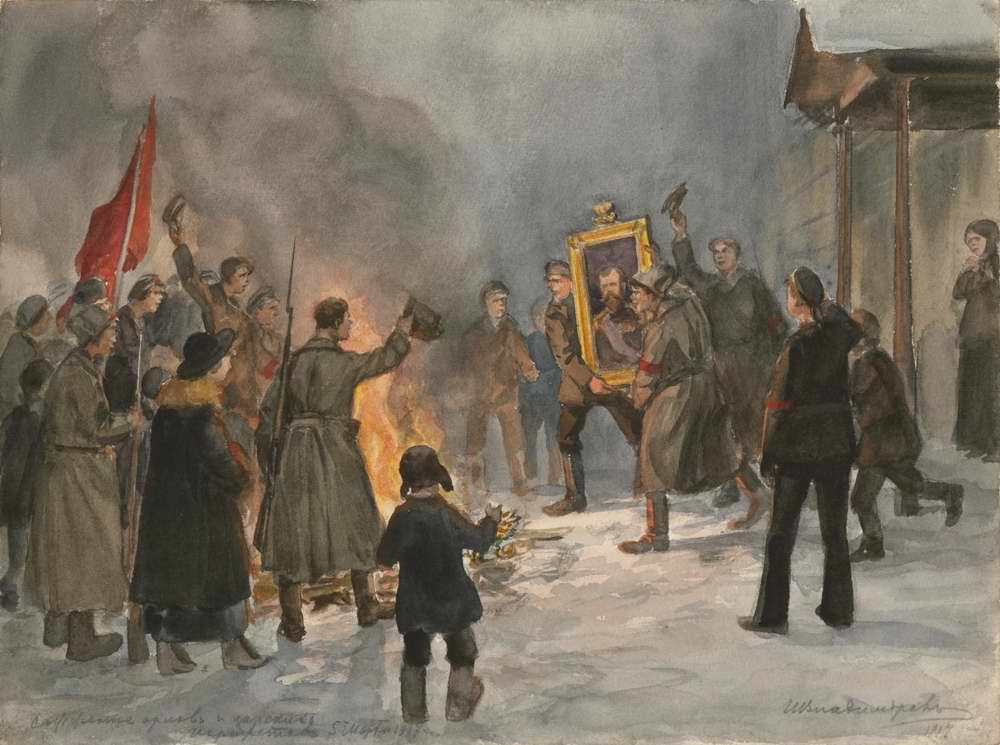
PHOTO: Revolutionaries burning a portrait of Nicholas II on 5th March 1917
Artist: Ivan Alekseevich Vladimirov (1869-1947)

On 23rd February (O.S.) 1917, workers unrest and mass demonstrations began in the capital of the Russian Empire, Petrograd. Thus began the February Revolution, which brought an end to the monarchy and lead the country into chaos.

On 2nd March (O.S.) 1917, Russia’s last emperor Nicholas II, betrayed by the elites, members of his inner circle, generals and even members of his own family abdicated the throne. Although historians continue to argue about the authenticity of the renunciation manifesto, it was then, at the Pskov railway station, that the Imperial Family’s journey to Golgotha ​​began.

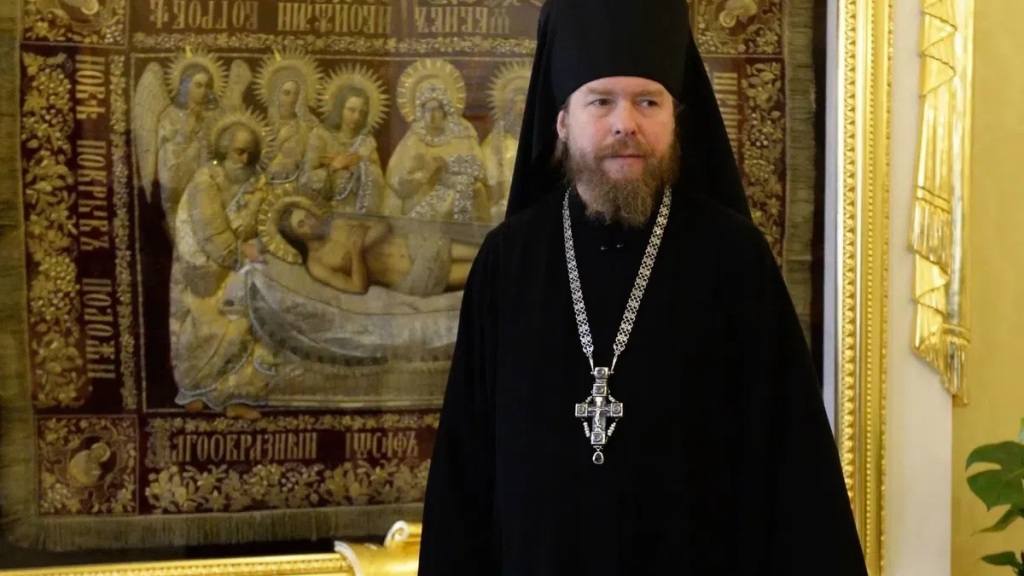
On the recent 104th anniversary of the events which proved fatal for Russia, Metropolitan of Pskov Tikhon (Shevkunov)¹ talked about the drama and lies of the Russian Revolution during a discussion on the YouTube channel “Seraphim”.

Metropolitan Tikhon said that the last Russian emperor Nicholas II was responsible for the February Revolution of 1917, since he was the supreme ruler of the country and failed to discern the impending threat.

“The first person is always to blame for the troubles that befall the country. Always!” – said Tikhon. He explained that Nicholas II was glorified in the person of the saints in a special way – as a passion-bearer², in connection with the tragic circumstances of the deaths of the Imperial family.

At the same time, Tikhon recalled an article by Winston Churchill (1874-1965) in the Illustrated Sunday Herald about the revolutionary events in Russia, where the British politician spoke positively about Nicholas II and emphasized the inevitability of the victory of the Russian Empire in World War I, if not for the revolutionary events.

PHOTO: Metropolitan of Pskov Tikhon (Shevkunov)

“Nicholas II was one of the most successful and yet one of the most tragic leaders of our state,” said Metropolitan Tikhon, referring to the rapid growth of the empire’s population, the economic and industrial boom during the reign of the last emperor. “This is evidence of his caring for the Russian people and the ever-increasing standard of living,” he added.

According to Metropolitan Tikhon, during his 22 year reign, although he was a decent and even selfless person, Nicholas II “bored” Russian society, and “could not see the terrible situation which was developing”. He went on to say that “the aristocratic and noble monarchy,” played a fatal role in the fate of the Russian Empire.

NOTES

¹ Tikhon is the Metropolitan of Pskov and Porkhov and Bishop of the Russian Orthodox Church. He is often referred as the personal confessor of Russian President Vladimir Putin.

² Nicholas II was glorified as a saint by the ROCOR in 1981, and as a passion-bearer by the Moscow Patriarchate in 2000

© Paul Gilbert. 23 March 2021

***

Dear Reader

If you enjoy my articles, news stories and translations, then please help support my research by making a donation in US or Canadian dollars to my project The Truth About Nicholas II – please note that donations can be made by GoFundMePayPal, credit cardpersonal check or money order. Thank you for your consideration – PG

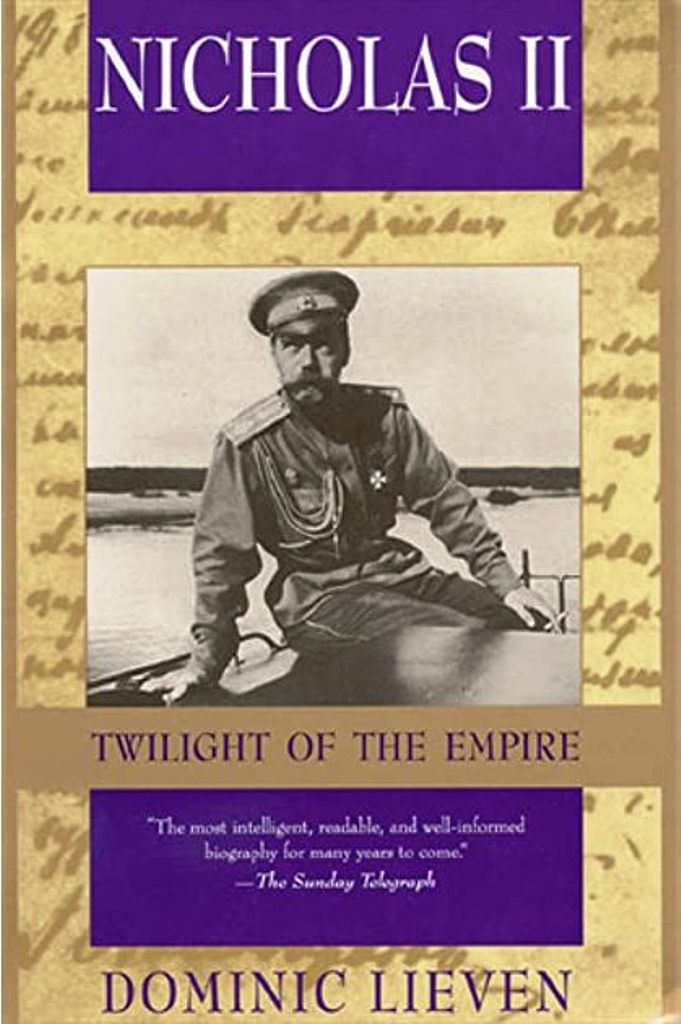
The October Revolution 1917 in the International Context. Interview with Professor Dominic Lieven

CLICK on the IMAGE above to watch VIDEO in English. Duration: 24 minutes.

A remarkable interview with Cambridge Research Professor D. Lieven (born 19 January 1952) about the reasons for and the outcomes of the 1917 October Revolution, as well as his family’s personal experience with it. He also speaks about Russia’s involvement in WW1, the Russian-German relationships, and gives an extraordinarily objective evaluation of Tsar Nicholas II’s abilities as a ruler, and comments on the most important decisions during his reign. Dominic Lieven is a research professor at Cambridge University (Senior Research Fellow, Trinity College) and a Fellow of the British Academy and of Trinity College, Cambridge.

Professor Lieven is the third child, of five children, of Alexander Lieven, of the Baltic German princely family, tracing ancestry to Liv chieftain Kaupo. He is the elder brother of Anatol Lieven, British author, Orwell Prize-winning journalist, and policy analyst, and he is distantly related to Christopher Lieven (1774–1839), who was Ambassador to the Court of St James from Imperial Russia over the period 1812 to 1834, and whose wife was Dorothea von Benckendorff, later Princess Lieven (1785–1857), a notable society hostess in Saint Petersburg and influential figure among many of the diplomatic, political, and social circles of 19th-century Europe. Lieven is a great-grandson of the Lord Chamberlain of the Imperial Court of Russia.

He is the author of numerous books on on Russian history, on empires and emperors, on the Napoleonic era and the First World War, and on European aristocracy, including: Russia’s Rulers Under the Old Regime, Yale University Press (1989); The Aristocracy in Europe 1815/1914, Macmillan/Columbia University Press (1992); Nicholas II: Emperor of all the Russias, John Murray/St Martin’s Press/Pimlico (1993); and The End of Tsarist Russia: The March to World War I and Revolution, Penguin Random House (2015).

***

This video is produced as part of the project for the book The Romanov Royal Martyrs, which is an impressive 512-page book, featuring nearly 200 black & white photographs, and a 56-page photo insert of more than 80 high-quality images, colorized by the acclaimed Russian artist Olga Shirnina (Klimbim) and appearing here in print for the first time. EXPLORE the book / ORDER the book.

© Mesa Potamos Monastery. 30 October 2020

The Bolshevik sale of the Romanov jewels

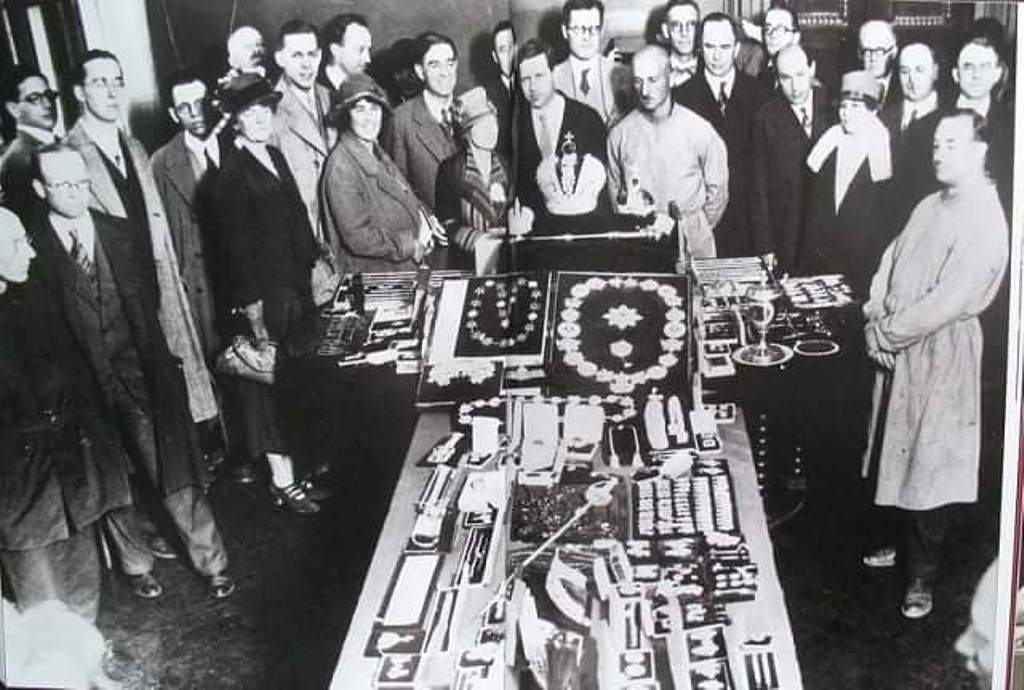
PHOTO: the Russian Crown Jewels, confiscated by the Bolsheviks

There is no greater example of such a large-scale criminal sale in history, than that of the jewels of the Russian Imperial Court – perhaps, the finest collection in the world. The Bolsheviks inherited an impressive legacy, and wasted little time in profiting from the sale of many pieces to eager buyers in the West during the 1920s.

Interesting testimonies have survived to this day about how the jewels were sorted and catalogued, and how the fate of these historically important treasures was determined. They are today preserved in the RGASPI (Russian State Archive of Social and Political History) in Moscow.

PHOTO: early 20th century view of the Gokhran building in Nastasinsky Lane in Moscow. Gokhran was created in 1920, in the first post-revolutionary years, the Gokhran collected jewels from the Romanovs, the Armoury, the Russian Orthodox Church, as well as valuables confiscated from private individuals. Many of these items were sold abroad.

Gokhran

The Bolsheviks made their first attempt to sell the Romanov jewels in May 1918. Then, in New York, customs officers detained two visitors with jewels (worth 350 thousand rubles) that belonged to Grand Duchess Olga Alexandrovna (1882-1960), the youngest daughter of Emperor Alexander III.

The following year, the founding congress of the Third Communist International was held in Moscow. From that time, the agents of the Communist International (Comintern) regularly exported gold jewellery and precious stones from Moscow. At first, there was practically no control over the agents, so many items were stolen rather than helping to “finance a world revolution”.

In order to stop this “lawlessness”, in February 1920, “Gokhran was created to centralize, store and account for all values ​​confiscated by the RSFSR, consisting of gold, platinum, silver bullion, diamonds, coloured precious stones and pearls”. The famine that began in the summer of 1921 forced the Bolsheviks to look for funds to buy bread. In addition, Poland had to be paid off. According to the Riga Peace Treaty of 1921, the western lands of Ukraine and Belarus were withdrawn to Poland, in addition to this, the Bolsheviks pledged to pay Poland 30 million gold rubles within a year.

Here they remembered the crown jewels that were kept in the basements of the Armoury (they were brought here from Petrograd at the beginning of the First World War, without inventories, and in 1917 jewels from the “Imperial palaces” were added). Crown values ​​were forbidden to give, change or sell by the decree of Peter I, issued in 1719. For almost 200 years, the Imperial Treasury was only replenished. Needless to say, the Bolsheviks ignored the autocrat’s Imperial decrees. The Politburo of the Central Committee of the CPSU outlined a program for the implementation of the so-called “Romanov Jewels”. At first, the Bolsheviks only planned to sell the treasure, but in the end they decided to sell the jewels abroad for hard currency. Before the sale, the treasures had to be sorted and evaluated. Gokhran, however, lacked the specialists to carry out such a task. Back in 1921, after thefts were discovered, three appraisers were shot, while many were imprisoned. Therefore, the Deputy People’s Commissar for Finance Krasnoshchekov in Petrograd reached an agreement with former experts and jewellers from Faberge: Franz, Kotler, Maseev, Mekhov, Utkin, and Bock. They started to work for Gokhran, and began to sort and evaluate the Romanovs jewels.

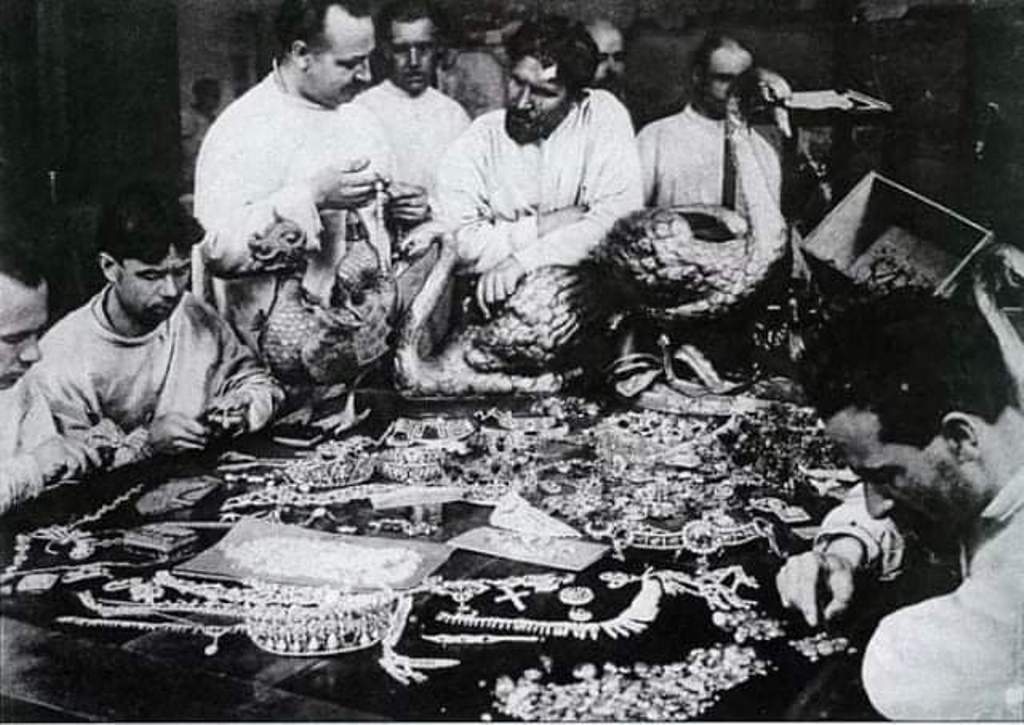
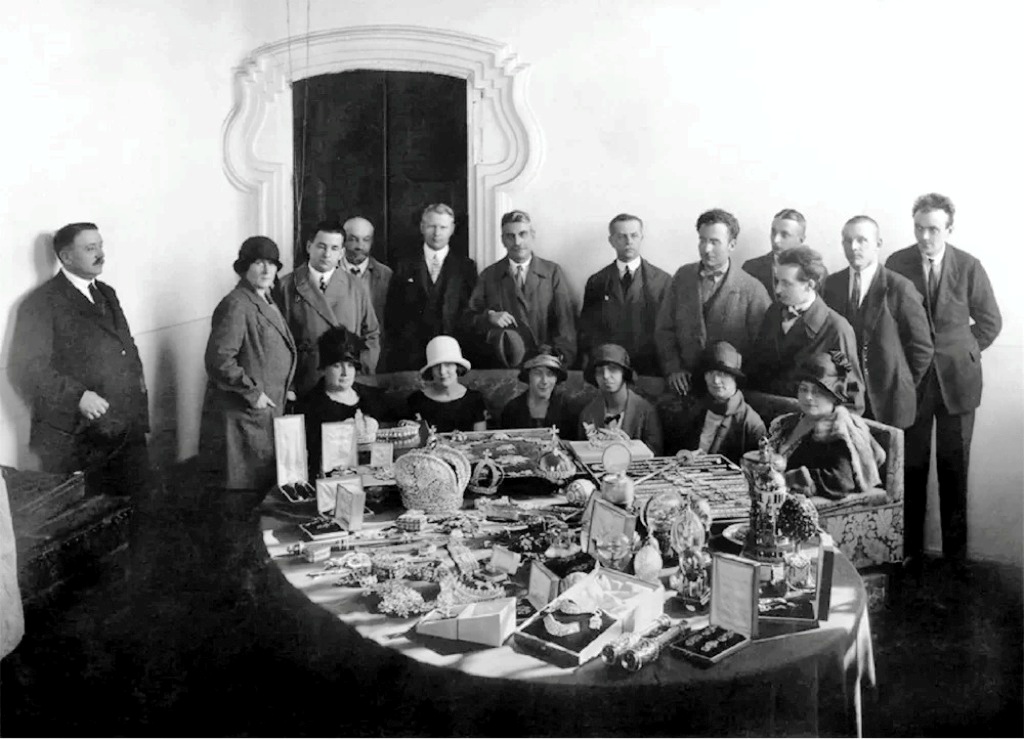
PHOTO: appraisers sort and catalogue the Romanov jewels and other items

The boxes of the “former tsarina”

On 8th March 1922, boxes marked with the “property of the “former tsarina” (the Dowager Empress Maria Feodorovna) were opened in the Armoury Chamber of the Moscow Kremlin. Two commissions were in charge of jewels: the first in the Armoury was responsible for sorting and creating an inventory; while the second sorted and evaluated them at Gokhran.

“In warm fur coats with raised collars, we walked through the frozen rooms of the Armoury,” later recalled a member of the commission, Academician Fersman. – “They brought boxes, there were five of them, among them a heavy iron chest, tied, with large wax seals. Everything was whole. An experienced locksmith easily, without a key, opened an unpretentious, very bad lock. Inside there were jewels of the former Russian Court, each one hastily wrapped in tissue paper. With our hands freezing from the cold, we took out one sparkling gem after another. There were no inventories found among the jewels.”

The following day, Kotler and Franz (both “serious jewellers,” according to Trotsky), said that “if there was a buyer for these valuables, then the estimate would be 458,700,000 gold rubles”. And this, in addition to the coronation treasures, which lay in two separate boxes and were estimated “at more than 7 million gold rubles.” The jewels were examined hastily, within an hour and a half, without a detailed determination of the quality of the stones. The Bolsheviks questioned how much the gems would sell for if they were sold as a separate commodity (they feared a scandal in Europe that could arise in connection with the sale of the crown jewels), experts estimated the amount of 162 million 625 thousand gold rubles.

The members of the commission were amazed. Truly beautiful jewels that belonged to the House of the Romanovs … For example, a diamond necklace with a sapphire cost 3 million rubles, diamond pendants 5 million. The amounts are impressive. Especially when you consider how much these treasures are worth now. For instance, the Faberge “Lilies of the Valley” Easter Egg, which in 1898 Nicholas II presented to his wife Alexandra Feodorovna, cost 6,700 rubles. A little more than a century later, it sold for $10-12 million USD at Sotheby’s, acquired by Viktor Vekselberg and now on display at the Faberge Museum in St. Petersburg.

As a result of such an optimistic assessment, the treasures were quickly (note, again without making inventories) from the Armoury to the Gokhran building in Nastasinsky Lane in Moscow. In the boxes from the palace of Dowager Empress Maria Feodorovna, in addition to the empress’s jewels, rare works of jewellery were kept. Only a few of these items later ended up in Soviet museums, while the rest were sold cheaply to foreigners …

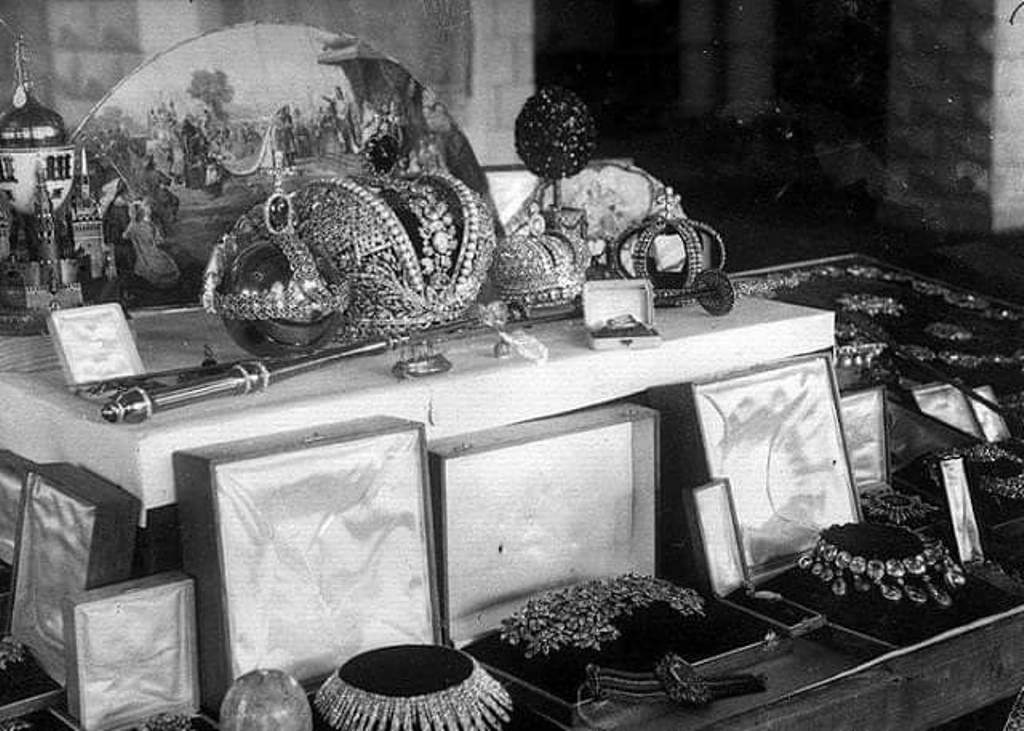
PHOTO: the Imperial Crown of Russia can be seen on the table among 2 Faberge eggs

Poles – the best diamonds

By mid-May, the sorting and appraisal of the crown jewels of the Empresses Maria Feodorovna and Alexandra Feodorovna in Gokhran had been completed. The items of the “former House of Romanov” were divided into three categories, taking into account, first of all, the value of the stones, the artistry of the work and the historical significance of the item. The first category – the inviolable fund – included 366 items valued at 654,935,000 rubles, of which the coronation regalia decorated with selected diamonds and pearls was valued at 375 million rubles. As reported to Leon Trotsky, Deputy Special Commissioner of the Council of People’s Commissars (Council of People’s Commissars) for the registration and concentration of the values ​​Georgy Bazilevich wrote, “when selling these items abroad, the receipt of 300,000,000 rubles is guaranteed.” Products of the second category, which had historical and artistic value, were estimated at 7,382,200 rubles.

At the end of his work, Deputy Chairman of the Council of People’s Commissars and the Council of Labor and Defence Alexei Rykov asked Faberge and Fersman if it was possible to realize coronation values ​​in the foreign market. They answered: it is possible, although there should be no rush. But the Bolsheviks were in a hurry to sell these pieces for the much coveted foreign currency they hoped to gain from such a sale.

In 1922, emeralds from Gokhran were sold in London and Amsterdam under the guise of those mined in the Urals. A year later, Gokhran pearls and diamonds were brought to Amsterdam. In the years following, the Bolsheviks continued to quietly sell diamonds and pearls from Gokhran in Paris.

As for the debt to the Poles, they decided to repay it with jewels. Bazilevich sent Trotsky a memo marked “Top Secret”, which provides a brief estimate of the value of the former “House of Romanov and valuables handed to Poland under the Riga Treaty”:

“In the preparation of of the Bolshevik debt to be paid to Poland the finest diamonds, pearls and coloured stones were selected. In addition to the stones, Gokhran selected gold items, including chains, rings, cigarette cases, bags, etc. in the amount of 2.728.589 rubles … “.

PHOTO: the Romanov jewels on display in Moscow, 1920s

Wholesale export

The apogee of the work of the Gokhran experts was the appearance in 1925-1926 of four issues of the illustrated catalogue “The Diamond Fund of the USSR”. The publication was translated into English, French and German in order to attract foreign buyers and was distributed in Europe.

As a result, “art connoisseur” Norman Weiss was not long in coming. He purchased items from the Diamond Fund in bulk, weighing 9.644 kilograms. The masterpieces of Russian jewellery art cost him 50 thousand pounds! In 1927, the resourceful merchant held an auction in London “Jewels of the Russian State”. The imperial wedding crown, a diamond diadem, and the jewels of Empress Catherine II “floated away” from him.

While the crown jewels were being sold in London, the head of the Armoury Chamber Dmitry Ivanov (he also participated in the cataloguing of the Romanov jewels in 1922) begged the officials to return the museum items sold by Gokhran. His efforts, however, were in vain. At the beginning of 1930, Ivanov became aware of the upcoming seizures of items from Russian museums to be sold abroad. Ivanov could no longer tolerate the theft and sale of Russia’s treasures, and ended up committing suicide.

In 1932, the Romanov treasures bought by Armand Hammer could be purchased at American department stores. Later, he opened an antique shop, which sold Easter eggs that belonged to the empresses, icons in jewelled frames of Nicholas II and Alexandra Feodorovna, a Fabergé cigarette case commissioned by Maria Feodorovna, her notebook embossed with her monogram and an Imperial crown, among many other items.

Of the 773 items of the Diamond Fund, 569 were sold in the 1920s – 1930s. These Romanov treasures were stolen from the Russian Imperial Family by the Bolsheviks, and bought up by greedy, materialistic buyers in the West. It is hardly possible to find in history an example of such a large-scale and criminal sale.

jewels

PHOTO: the Romanov jewels on display in Moscow, 1920s

***

Further reading: I highly recommend History’s Greatest Heist: The Looting of Russia by the Bolsheviks by Sean McMeekin. Published by Yale University Press in 2009

© Paul Gilbert. 9 October 2020

532

Click HERE or on the photo above, to order your copy of RUSSIA’S TREASURE OF DIAMONDS AND PRECIOUS STONES, available from AMAZON in hard cover and paperback editions

Nicholas II, Stalin and Lenin top popularity rating of Russian historical figures

171a

Recent poll shows Nicholas II as the most popular figure in the 20th century Russian history

NOTE: All of the articles pertaining to Nicholas II and his family which were originally published in my Royal Russia News blog, have been moved to this Nicholas II blog. This article was originally posted on 26 June 2018 in my Royal Russia News blog – PG

Public attitudes towards Nicholas II have undergone several shifts since the collapse of the Soviet Union in the early 1990s, with the most recent studies carried out during the last few years showing an increase in appreciation of the monarch. This is partially due to the the efforts of the Russian Orthodox Church, and research by post Soviet Russian historians. Both have worked diligently by challenging the negative assessments of the life and reign of Russia’s last emperor and tsar, disproving the lies and myths which continue to be popular to this day, particularly by Western historians and biographers.

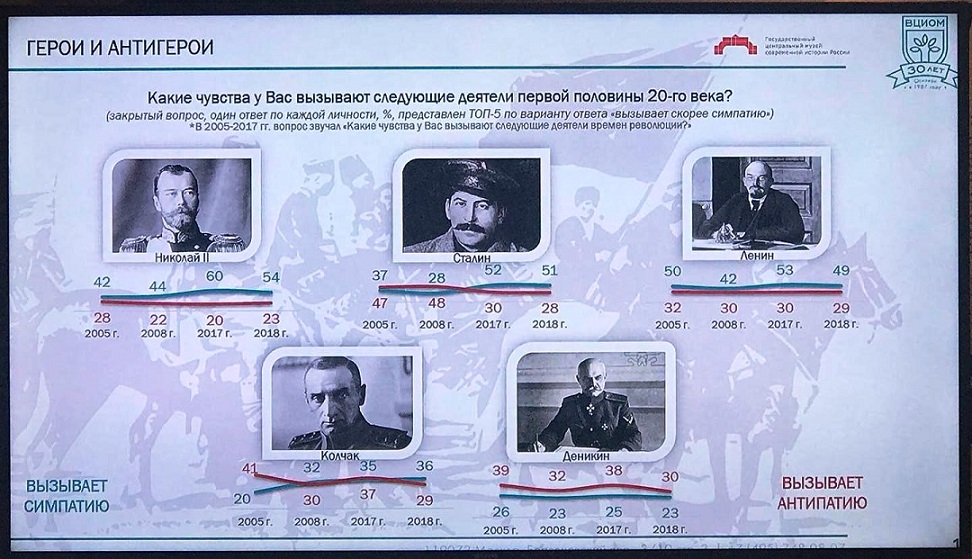
According to the most recent poll, Emperor Nicholas II, Soviet dictator Joseph Stalin, and Bolshevik leader Vladimir Lenin are the most popular figures among Russians from the 20th century.

Research conducted by the Russian state-run public opinion center VTSIOM showed that the last Russian emperor is now the most popular of all historical figures throughout the volatile 20th century – 54 percent of respondents said that they sympathize with the monarch. Joseph Stalin was second with 51 percent and the head of the Bolshevik party and the mastermind behind the 1917 revolution, Vladimir Lenin, was on the third place with 49 percent. Leader of the White Movement during the Russian Civil War, Alexander Kolchak was in fourth place with 36 percent, while general of the White Movement during the Russian Civil War Anton Denikin came in fifth place with 30 percent.

The share of respondents who told researchers that the feeling they had towards these people was strongly negative was 23 for Nicholas II, 28 for Stalin and 29 for Lenin. Most of the other prominent figures of the period, both among the revolutionaries and on the Tsarist sides, cause neither good nor bad emotions in the Russian public, research revealed.

171b

Results of the poll show Nicholas II more popular among Russian than both Stalin and Lenin

The least liked figures were the leader of the Ukrainian anarchists Nestor Makhno, and the founder of the Red Army Leon Trotsky. 58 and 46 percent of Russians described their attitude to them as negative and only 12 and 20 percent confessed to sympathizing with them.

In the same poll researchers asked the Russian public what sources they used to get information about the October Revolution and the Civil War. 79 percent of respondents named schools and universities, 48 percent said they got information from books and 30 percent mentioned films and television series.

A different poll conducted by VTSIOM in late 2017, in connection with the 100th anniversary of the Russian Revolution, revealed that 92 percent of Russians wanted similar events prevented at any cost, up from 78 percent five years ago. Only 5 percent of respondents told researchers that they considered a new revolution necessary (13 percent in 2012). 3 percent of respondents said that they had no opinion on the issue.

Still, 46 percent of the public agreed with the statement that the 1917 revolution was in the interests of the majority of Russians. 13 percent hold that the revolution benefited a minority and 33 percent said that only a small group of people managed to gain anything from the events of 1917.

38 percent of Russians currently think that the 1917 Revolution was a major stimulus for the social and economic development of the country. 23 percent agreed that the revolution “had opened a new era in Russia’s history.” At the same time, 14 percent of the poll participants said that the revolution had seriously impeded the development of Russia and 13 percent called the events a total disaster. 12 percent remained undecided over the role that the revolution had played in the Russian history.

© Russia Today and Paul Gilbert. 8 December 2019

Yakov Yurovskys’ ashes remain hidden from vandals in Moscow

123a

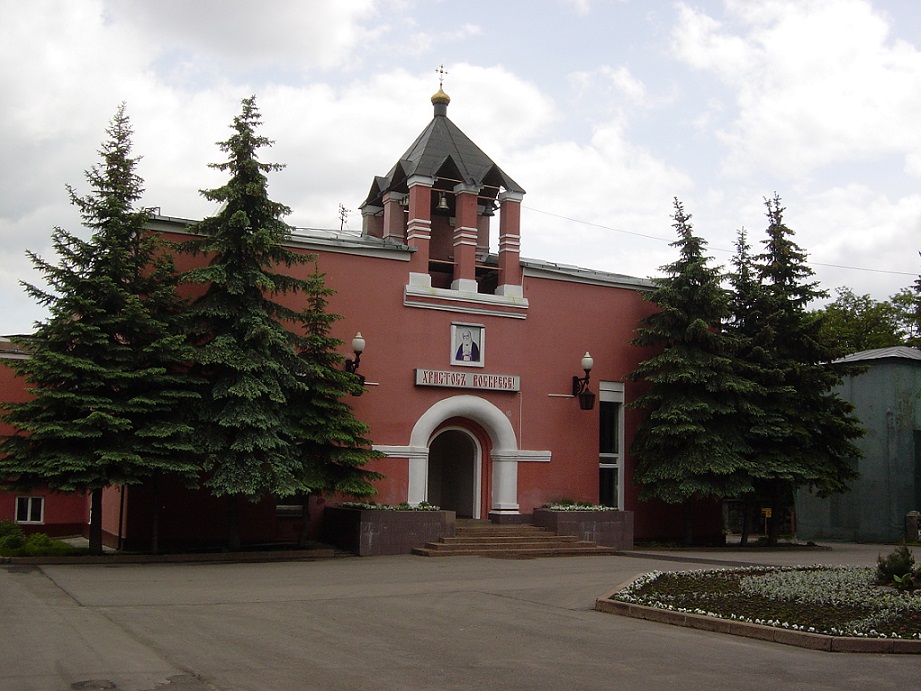
Situated on the grounds of the New Donskoy Cemetery in Moscow is a small church, above the entrance is the inscription ‘Christ is Risen’. In 1927, it was a crematorium and columbarium, the latter of which remains intact to this day.

Parishioners attending liturgies performed in the Orthodox Church, are unaware that behind the false walls are the ashes of Russia’s most notorious murderer: Yakov Mikhailovich Yurovsky (1878-1938).

Yakov Mikhailovich (real name Yangel Khaimovich) Yurovsky was born on 19th (O.S. 7th) June 1878 in Kainsk of the Tomsk province into a large Jewish working family, the eighth of ten children. He was best known as the chief executioner of Emperor Nicholas II, his family, and four retainers on the night of 16/17 July 1918.

The regicide who died on 2nd August 1938, of perforation of a duodenal ulcer was cremated in the Don Crematorium in Moscow. His ashes were placed in an urn and placed behind a wall, in one of the cells of the columbarium. An urn containing the ashes of Yurovsky’s wife Maria Yakovlevna Yurovskaya were later placed next to those of her husband. Today, it is impossible to guess that the two urns contain their remains, as all the inscriptions and identification marks are draped with fabric.

123f

PHOTO: Restored church at the New Donskoy Cemetery in Moscow

The Don Crematorium was the first crematorium built in Moscow and until 1947 the only mass crematorium operating in the USSR. It was constructed in 1926 in the unfinished church of St. Seraphim of Sarov in the New Donskoy Cemetery. Opened in 1927, more than 150 old Bolsheviks were cremated here. The crematorium was closed in 1992, whereupon it was transferred to the Russian Orthodox Church (ROC).

In 1998, Divine Liturgies resumed after the reconstruction of the building. In autumn 2011, the Russian Orthodox Church decided to regain the territory of the columbarium of the Don Crematorium and reconstruct it.

A baptismal font now stands in place of the crematorium oven. Everywhere there are icons, children’s drawings of the Workshop of Father Seraphim, a Christmas nativity scene. God’s grace! The church staff are ashamed of being under the same roof with the columbarium, and shudder when people come to inquire of the whereabouts of the niche containing Yurovsky’s urn.

You reap what you sow . . . 

According to local Moscow journalist Felix Grozdanov, “workers in a private conversation admitted that they are strictly forbidden to show this place. It is not for nothing that it was stored in a special columbarium – entrance there for a long time was allowed by passes only to family relatives or important persons. It is forbidden to show this place during excursions which are regularly held here.”

The shroud of secrecy intensified after a number of acts of vandalism were carried out by monarchists seeking revenge for Yurovsky’s role in the murder of Russia’s last tsar and his family. “They came and spat on the glass of Yurovsky’s cell, where his urn was placed. They even tried to smash the glass,” one cemetery worked noted.

© Paul Gilbert. 23 November 2019

95 years ago, Ekaterinburg was renamed Sverdlovsk

124

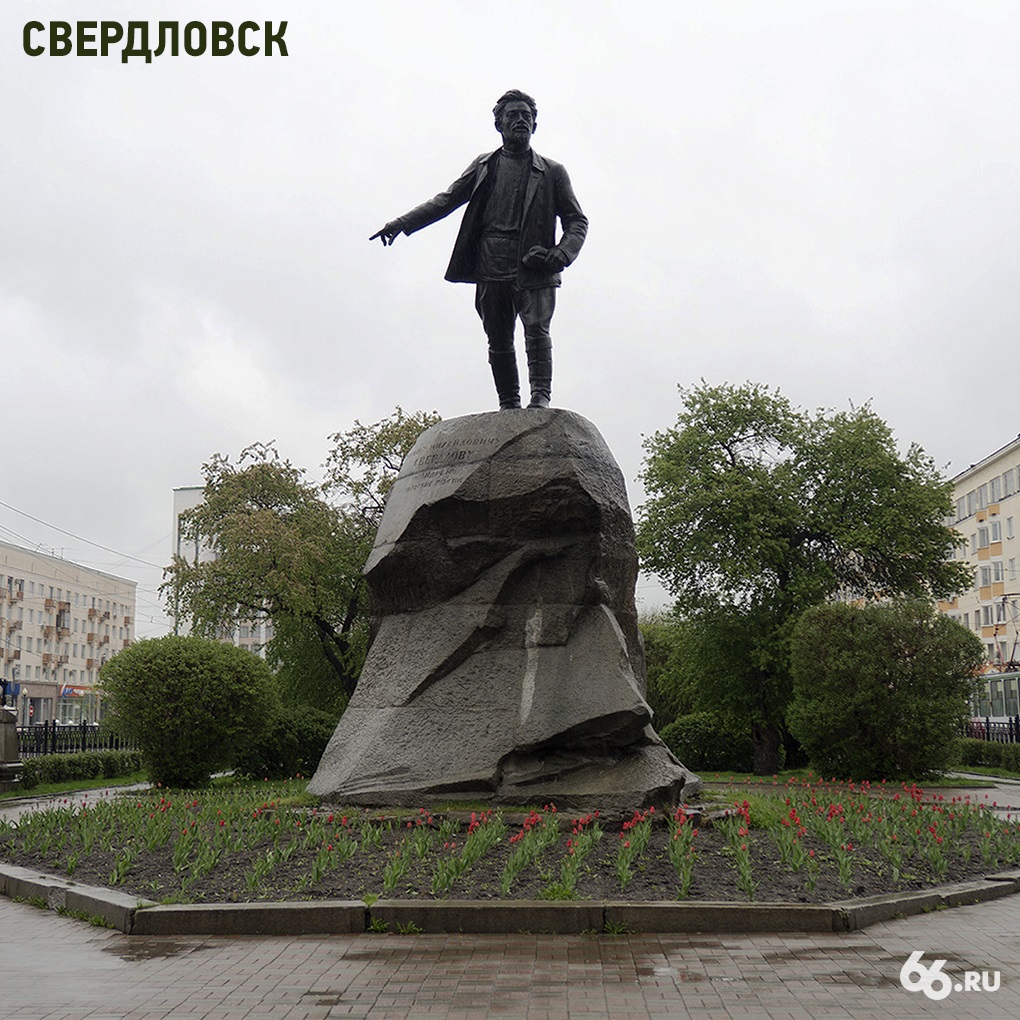
Monument to Yakov Sverdlov, established on Lenin Avenue in 1925

Almost a century ago, Ekaterinburg was renamed Sverdlovsk and lived with the Bolshevik name for 67 years, until 1991, after the fall of the Soviet Union, the city returned to its historical name. Few know that the capital of the Urals could have been called differently.

Today – 14th November – marks the 95th anniversary of the renaming of Ekaterinburg to Sverdlovsk. Ekaterinburg was founded on 18 November 1723 and named after the second wife of Peter the Great, who after his death became the Empress Catherine (Yekaterina)  I (1684-1727).  In 1924, however, Soviet newspapers condemned the Empress, and proposed alternative names for the city. So began the first renaming of Ekaterinburg.

A campaign was launched in early 1924, whereby a local newspaper came out with the headline “Rename the city of Ekaterinburg!”. Following this, propaganda was published explaining why Ekaterinburg was a bad name. The newspapers wrote derogatory comments about Empress Catherine I, referring to her as “a soldier’s wife under the Russian army”, “Menshikov’s laundress”, and an “illiterate, poor, depraved woman”.

At the same time, journalists offered alternative names. The very first option was Sverdlovsk, in honour of the revolutionary Yakov Mikhailovich Sverdlov (1885-1919), a Bolshevik party administrator and chairman of the All-Russian Central Executive Committee, and mastermind behind the murders of the Imperial Family.

The 1922 book by White Army general, Mikhail Diterikhs, ‘The Murder of the Tsar’s Family and members of the House of Romanov in the Urals’, sought to portray the murder of the Imperial Family as a Jewish plot against Russia. It referred to Sverdlov by his Jewish nickname “Yankel”. This book was based on an account by Nikolai Sokolov, special investigator for the Omsk regional court, whom Diterikhs assigned with the task of investigating the disappearance and murders of the Imperial Family while serving as regional governor under the White regime during the Russian Civil War.

Other names suggested included Red Urals, Leninburg, Uralgrad, or even Revanchburg – in honour of the execution of the last tsar, while, the newspapers also suggested Uralosverdlovsk, Andreigrad, and Krasnouralsk. But journalists in subsequent publications explained to residents why Sverdlovsk was the best name. Public discussions went on for nine months, and in October 1924 the Ekaterinburg City Council adopted a resolution on renaming the city Sverdlovsk. In mid-November, the document was signed at the CEC of the USSR, and the following year, in 1925, a monument to Yakov Sverdlov was established on Lenin Avenue.

Yakov Sverdlov was known in Ekaterinburg among the revolutionaries under the names “Comrade Mikhailovich” and “Comrade Andrei.” He spoke at lot at rallies, led the Bolsheviks, and even served a year in the Ekaterinburg Central on Repin Street. He was a member of the Central Committee of the party, chairman of the commission on the development of the first Constitution of the RSFSR. According to Yevgeny Burdenkov, a researcher at the Museum of the History of Ekaterinburg, Sverdlov transferred many of his people from the Urals to work in Moscow, and it was they who promoted the idea of ​​renaming Ekaterinburg to Sverdlovsk as a sign of gratitude.

Sverdlov is commonly believed to have died of either typhus or most likely influenza, during the 1918 flu pandemic, after a political visit to Oryol. He is buried in the Kremlin Wall Necropolis, in Moscow.

It is interesting to note that Sverdlovsk Oblast, the federal subject (an oblast) of Russia located in the Ural Federal District, in which the city of Ekaterinburg, serves as its administrative center still retains its Bolshevik name. In January 2019, Russian state deputies again raised the issue of renaming Sverdlovsk Oblast, however, the issue remains unresolved.

© Paul Gilbert. 14 November 2019

When Holy Russia’s Bells Were Silenced

119b

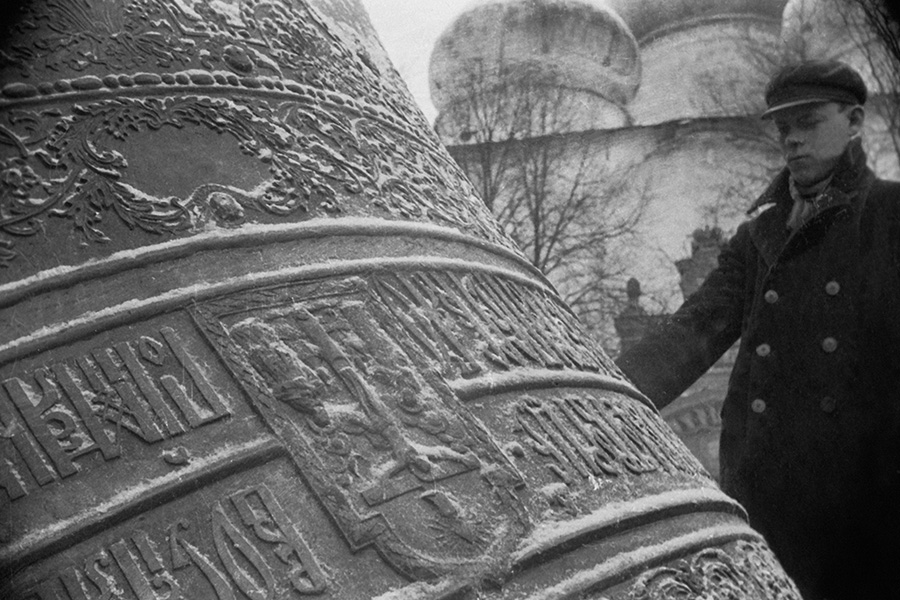
A young boy inspects one of the bells felled by the Bolsheviks

Prior to the 1917 Revolution, more than 1 million bronze bells rang in churches, cathedrals and monasteries throughout the Russian Empire.

After the October Revolution of 1917, church bells were especially despised by the new Bolshevik order. Bell ringing went against the party’s anti-religious campaign, and by the beginning of the 1930s all church bells had been silenced. Under Soviet law, all church buildings, as well as bells, were placed at the disposal of the Local Councils, which “based on state and public needs, used them at their own discretion.” In 1933, at a secret meeting of the All-Russian Central Executive Committee, a plan for the procurement of bell bronze was initiated. Each republic and region received a quarterly quota for their respective procurement of bell bronze. Within a few years, in a well organized campaign, nearly everything which represented Orthodox Russia was destroyed.

The closure of more than 20 specialized bell factories led to the loss of skills in this ancient craft, and the professional knowledge, handed down by many generations of Russian foundry workers, was lost. The bell manufacturers in the city of Valdai, worked longer than others, but by 1930, they ceased to exist.

Until now, no one can say even approximately how many bells have been destroyed over the past century. Some of them were lost when churches were demolished, some were destroyed intentionally, while others destroyed “for the needs of industrialization.” Even the bells cast by glorified masters for some of Russia’s oldest and most famous Orthodox places of worship did not escape this fate. They included the Ivan the Great Bell Tower (Moscow), Christ the Saviour (Moscow), and St. Isaac’s Cathedrals (Leningrad); the Solovetsky, Valaam, Simonov, Savvino-Storozhevsky monasteries; along with thousands of chapels, churches, cathedrals, and monasteries throughout the former Russian Empire. In 1929, a 1,200-pound bell was removed from the Kostroma Assumption Cathedral. In 1931, many bells of the Savior-Euthymius, Rizopolozhensky, Pokrovsky monasteries of Suzdal were sent for remelting. There were no bells left in Moscow.

The story of the destruction of the famous bells (19 bells with a total weight of 8,165 pounds) of the Trinity-Sergius Lavra was particularly tragic – they were handed over to the Rudmetalltorg (the Metal Scrap Trust in Moscow). In his diary about the events in the Trinity-Sergius Lavra, the writer M. Prishvin wrote: “I witnessed the death … the majestic bells of the Godunov era were felled – it was like a spectacle of public execution.”

119a

The spoils of revolution and Soviet dogma

Most church bells were destroyed. A small number of bells, which were of artistic value, were registered with the People’s Commissariat of Education, which disposed of them based on “state needs.” Other bells seized were sent to large construction sites of Volkhovstroy and Dneprostroy for technical needs, such as the manufacture of boilers for dining rooms! The Moscow authorities found one peculiar use of some of the Moscow bells in 1932. Bronze high reliefs cast from 100 tons of church bells were used for the construction of the Lenin Library.

To eliminate the most valuable bells, it was decided to sell them abroad. “The most appropriate way to eliminate our unique bells is to export them abroad and sell them there on a par with other luxury goods …”, wrote the ideological atheist Gidulyanov.

The bells of the Danilov Monastery were sold to Harvard University in the United States, while the unique bells of the Sretensky Monastery were sold to England. A large number of bells went to private collections.

The gateway 30-meter bell tower of the Church of Simeon Stolpnik in Moscow, was demolished on the eve of World War II, fearing it as a possible landmark for enemy air raids. Holy Russia was silenced, depriving it of a single ringing bell.

© Paul Gilbert. 30 October 2019

New Revelations on Lenin’s Order to Murder the Tsar

075a

Bolshevik leader Vladimir Lenin; Russia’s last Emperor and Tsar Nicholas II

In an interview with the media outlet Рамблер (Rambler), Russian historian Vladimir Khrustalev stated that researchers still lack access to many archival files related to the maintenance and fate of the Imperial family during their final days in Ekaterinburg.

He argues that all the documents of 1918-1919, which mentioned the name of the Romanovs, were carefully removed from all open archival funds. In his opinion, they could not be destroyed, but transferred to special stores, where they remain to this day.

Khrustalev sees no reason to doubt the ultimate tragic fate of Nicholas II and his family which befell them in the Urals on the night of 16/17 July 1918. According to Khrustalev, the purging of archival documents was undertaken by the leadership of the Communist Party in order to cover their tracks and defer any accusations that the top leadership of the Communists , represented primarily by Lenin and Sverdlov, purposefully undertook an act of regicide. After all, the Soviet official point of view for a long time was that the liquidation of the family of the last emperor was carried out on the initiative of the local Ural Soviet leaders, who issued the central power of the Bolsheviks with a fait accompli.

075b

Russian historian Vladimir Khrustalev

Until now, no order issued by Lenin, Trotsky, Sverdlov, or any other Bolshevik party member concerning the massacre of the last Russian tsar and his family has been found in the archives. According to some Russian historians, this is not because no such order was given in writing, but precisely because the order was issued verbally. This was done, so as not to leave any evidence of their heinous crimes.

First, the Bolsheviks gathered almost all the arrested Romanovs (not only Nicholas II and his family, but many of their relatives) in the Urals in order to make it easier to eliminate them. And at some time gave the appropriate order. All evidence of such an order remains in sealed archives.

© Paul Gilbert. 2 July 2019